

Maddy summaryHRES 410 is a non-binding House resolution requiring President Trump to comply with the Constitution’s Foreign Emoluments Clause regarding a $400 million Boeing 747-8 jet gift from Qatar’s royal family. It directs the President to immediately submit all plans for the aircraft to Congress and obtain explicit congressional consent before accepting it, as required by the Constitution. The resolution cites historical precedent where all prior presidents sought Congress’s approval for foreign gifts, including items like medals, horses, and the Statue of Liberty. It emphasizes that accepting the jet without consent would violate the Constitution and pose national security risks. The bill focuses solely on procedural compliance, not the merits of the gift itself.
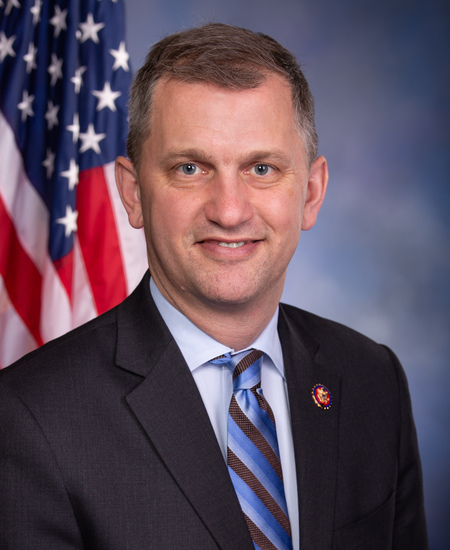
Rep. Sean Casten
Sponsored bills
Maddy summaryHR 3405 requires the Secretary of State to provide Congress with all documents and a detailed report within 30 days regarding negotiations between the U.S. and Qatar about transferring an aircraft to the U.S. government for eventual transfer to an entity controlled by former President Donald Trump. The report must detail any promises made to Qatar, potential private contracts, and legal reviews related to the transfer. The bill also prohibits federal funding for any action supporting the transfer of foreign-owned aircraft to the U.S. government, the President, or Trump’s presidential library. This applies specifically to aircraft transfers involving Qatar and Trump-controlled entities, focusing on transparency and funding restrictions.
Maddy summaryHR 3398 (the Aaron Salter, Jr., Responsible Body Armor Possession Act) bans civilians from purchasing, owning, or possessing "enhanced body armor" (defined as bullet-resistant gear meeting National Institute of Justice RF1 standards) without exception. The law directly affects most private citizens who might seek such armor, while exempting law enforcement officers (including corrections officers), government agencies, tribes, and individuals who legally owned enhanced body armor before the law took effect. Key provisions include creating a new federal criminal offense punishable by up to five years in prison for violations, with clear definitions of "enhanced body armor" and "covered law enforcement officer" based on existing legal standards. The bill focuses on restricting access to high-level protective gear for non-official use, not on regulating standard body armor.
Maddy summaryHR 3367, the "Improving Training for School Food Service Workers Act of 2025," requires school food service workers in public schools to receive mandatory training during paid working hours. The bill mandates that training must be offered in-person when appropriate, include hands-on practice, and cost workers nothing. If training occurs outside regular hours, workers must be paid at their regular rate (including overtime), consulted about scheduling, and protected from penalties for not attending. This law amends the Child Nutrition Act of 1966 and does not override existing state or local labor laws governing employer-employee relationships.
Maddy summaryHR 3376 creates the Water Affordability, Transparency, Equity, and Reliability Trust Fund, funded by increasing the corporate tax rate from 21% to 24.5% starting in 2025, with annual funding capped at $35 billion or 1/20th of 20-year infrastructure needs. The bill allocates funds to clean water programs (42%), safe drinking water programs (42.5%), household water well systems (1%), colonias assistance (0.5%), and Indian health services (3%), requiring specific prioritization of low-income and minority communities for many programs. It mandates an EPA study on water affordability, discriminatory practices, and civil rights violations in water service, including data collection on service disconnections affecting vulnerable populations. The bill also includes provisions for lead service line replacement, PFAS contamination response, and job training grants for water system operators with specific requirements to prioritize low-income communities.
Maddy summaryThe SERVICE Act of 2025 creates a federal grant program to fund local veteran response teams within law enforcement agencies. These teams, composed of veteran officers and community partners, will provide 24/7 crisis response for at-risk veterans, coordinate with the Department of Veterans Affairs, and offer mental health training focused on military-related issues like PTSD. The program directly affects veterans in crisis and law enforcement agencies that receive grants to establish these teams. It requires teams to track outcomes and share best practices, with funding tied to existing crime control grants for fiscal years 2026-2030.
Maddy summaryThis bill amends the Higher Education Act to clarify eligibility for Public Service Loan Forgiveness (PSLF). It corrects a technical wording error in the law that previously required borrowers to be *currently employed* in public service at the time of application. The change specifies that borrowers only need to have *completed* 10 years (120 payments) of qualifying public service employment to qualify. This directly affects federal student loan borrowers working in government or nonprofit roles who were previously disqualified due to the outdated wording. The amendment removes a barrier preventing eligible borrowers from receiving loan forgiveness they earned.
Maddy summaryHR 3243, the Therapeutic Fraud Prevention Act of 2025, bans the provision of paid conversion therapy aimed at changing a person's sexual orientation or gender identity, and prohibits advertising such therapy as effective, safe, or without risk. It directly affects LGBTQ+ individuals and their families who might be targeted by these practices, as professionals have determined conversion therapy is ineffective and harmful. The law treats violations as deceptive acts under consumer protection laws, empowering the Federal Trade Commission and state attorneys general to enforce it through civil actions. It explicitly excludes legitimate gender transition support and non-discriminatory counseling from the ban.
Maddy summaryHR 3184, the PFAS Alternatives Act, funds research to develop turnout gear (firefighter safety clothing) without harmful PFAS chemicals, directly affecting firefighters who wear this gear. It authorizes $25 million annually (2025-2029) for grants to eligible organizations to research and test PFAS-free gear, requiring partnerships with firefighting groups to translate findings into practice. The bill also allocates $2 million yearly (2027-2031) for training programs on safe gear use and decontamination. Its goal is to reduce firefighters' exposure to chemicals linked to occupational illnesses during operations.
Maddy summaryHR 3199, the Captive Primate Safety Act of 2025, bans the import, export, sale, breeding, and possession of certain nonhuman primates (including chimpanzees, gorillas, and lemurs) in interstate or foreign commerce. It directly affects pet owners, breeders, zoos, and wildlife facilities that currently handle these primates. The bill allows limited exceptions for existing owners who register their primates with the U.S. Fish and Wildlife Service within 180 days, agree to stop breeding/selling, and prevent public contact. It amends the Lacey Act to implement these restrictions, with enforcement beginning immediately regardless of regulatory timelines.