

Affordable Housing Credit Improvement Act of 2021 This bill revises provisions of the low-income housing tax credit and renames it as the affordable housing credit . The bill increases the per capita dollar amount of the credit and its minimum ceiling amount beginning in 2021 and extends the inflation adjustment for such amounts. The bill modifies tenant income eligibility requirements and the average income formula for determining such income. It also revises rules for student occupancy of rental units and tenant voucher payments, and prohibits any refusal to rent to victims of domestic abuse. The bill further modifies the credit to increase state allocations of the credit; repeal the qualified census tract population cap; prohibit local approval and contribution requirements; increase the credit for certain projects designated to serve extremely low-income households; increase the credit for certain bond-financed projects designated by state agencies; eliminate the basis reduction for properties that receive certain energy-related tax benefits; and increase the population cap for difficult development areas (i.e., areas with high construction, land, and utility costs relative to area median gross income). The bill also includes Indian and rural areas as difficult development areas and modifies other requirements relating to casualty losses, acquisition credits, and foreclosures.
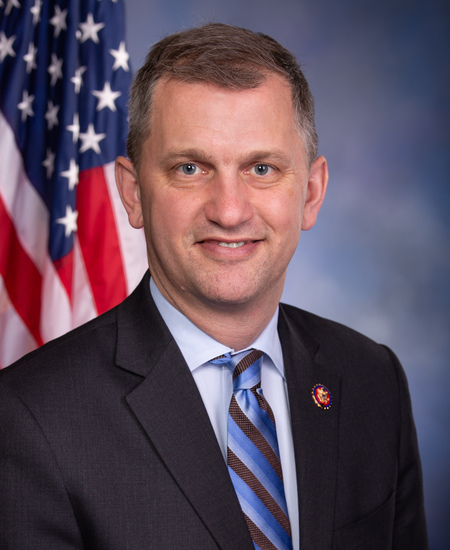
Rep. Sean Casten
Sponsored bills
Comprehensive Care for Alzheimer's Act This bill allows the Center for Medicare and Medicaid Innovation (CMMI) to test a Dementia Care Management Model that provides comprehensive care to Medicare beneficiaries with Alzheimer's disease or a related dementia. Under the model, participating health care providers receive payment under Medicare for comprehensive care management services that are provided to individuals with diagnosed dementia, excluding Medicare Advantage enrollees, hospice care recipients, and nursing home residents. Required services include medication management, care coordination, and health, financial, and environmental monitoring, as well as trainings and other support services for unpaid caregivers. Providers must furnish services through interdisciplinary teams and must ensure access to a team member or primary care provider 24-7. The CMMI must set payments and determine quality measures for the model in accordance with specified requirements. The bill also allows the CMMI to design a similar model under Medicaid.
Commission to Study and Develop Reparation Proposals for African Americans Act This bill establishes the Commission to Study and Develop Reparation Proposals for African Americans. The commission shall examine slavery and discrimination in the colonies and the United States from 1619 to the present and recommend appropriate remedies. The commission shall identify (1) the role of the federal and state governments in supporting the institution of slavery, (2) forms of discrimination in the public and private sectors against freed slaves and their descendants, and (3) lingering negative effects of slavery on living African Americans and society.
Supporting Eating Disorders Recovery Through Vital Expansion Act or the SERVE Act This bill provides for inpatient and outpatient treatment of eating disorders under TRICARE for dependents of members of the uniformed services. Dependents are eligible for such care regardless of (1) their age, except with respect to residential service; and (2) whether the eating disorder is their primary or secondary diagnosis. The bill also requires the Department of Defense (DOD) and the Department of Homeland Security (with respect to the Coast Guard) to identify, treat, and rehabilitate members of the armed forces who have an eating disorder. Finally, DOD and the Department of Veterans Affairs must jointly develop, publish, and disseminate clinical practice criteria and guidelines on the identification and treatment of eating disorders.
SALT Fairness for Working Families Act This bill increases the limit on the individual income tax deduction for certain state and local taxes, which is currently $10,000 per year ($5,000 for a married taxpayer filing a separate return). The bill increases the limit to $15,000 (twice that amount in the case of a joint return) and requires the increased limit to be adjusted for inflation after 2021.
Providing Responsible Emergency Plans for Animals at Risk of E merging Disasters Act or the PREPARED Act This bill establishes requirements governing the care of animals by entities, such as zoos, in emergencies or disasters. Specifically, the bill requires each research facility, dealer, exhibitor, intermediate handler, and carrier to develop and follow a contingency plan to provide for the humane handling, treatment, transportation, housing, and care of their animals in the event of an emergency or disaster.
Flood Level Observation, Operations, and Decision Support Act or the FLOODS Act This bill addresses forecasting and the communication of flood, tornado, and hurricane events by the National Oceanic and Atmospheric Administration (NOAA). Among other provisions, the bill directs NOAA to establish a National Integrated Flood Information System to better inform and provide for more timely decision-making to reduce flood-related effects and costs; establishes partnerships with institutions of higher education and federal agencies to improve total water predictions; designates a service coordination hydrologist at each National Weather Service River Forecast Center to increase impact-based decision support services at the state and local level; requires NOAA to evaluate and improve flood watches and warnings and communication of information to support preparation and responses to floods; ensures that the tornado warning improvement and extension program periodically examines the value of incorporating innovative observations, such as acoustic or infrasonic measurements, observations from phased array radars, and observations from mesonets; requires NOAA to estimate and communicate the frequency of precipitation; establishes an Interagency Coordinating Committee on Water Management to ensure that federal agencies that engage in water-related matters, including water storage and supplies, water quality and restoration activities, water infrastructure, transportation on rivers and inland waterways, and water forecasting, work together where such agencies have joint or overlapping responsibilities; and directs NOAA to conduct an analysis of gaps in the availability of snow-related data to assess and predict floods and flood impacts.
Water Affordability, Transparency, Equity, and Reliability Act of 2021 This bill increases funding for water infrastructure, including funding for several programs related to controlling water pollution or protecting drinking water. Specifically, it establishes a Water Affordability, Transparency, Equity, and Reliability Trust Fund. The fund may be used for specified grant programs. The bill increases the corporate income tax rate to 24.5% to provide revenues for the fund. In addition, the bill revises requirements concerning the clean water state revolving fund (SRF) and the drinking water SRF. It also creates or reauthorizes several grant programs for water infrastructure.
International Human Rights Defense Act of 2021 This bill establishes in the Department of State a permanent Special Envoy for the Human Rights of LGBTQI (lesbian, gay, bisexual, transgender, queer, or intersex) Peoples who shall serve as the principal State Department advisor regarding human rights for LGBTQI people and represent the United States in diplomatic matters relevant to the human rights of LGBTQI people. The special envoy shall periodically provide Congress with a U.S. global strategy to prevent and respond to criminalization, discrimination, and violence against LGBTQI people. The State Department and the U.S. Agency for International Development may provide assistance to prevent and respond to such activities against LGBTQI people. The bill also requires that annual country reports on human rights practices include information on criminalization, discrimination, and violence based on sexual orientation and gender identity.
Public Servants Protection and Fairness Act of 2021 This bill establishes an alternative formula to calculate Social Security retirement benefits for those who receive pensions for certain non-covered employment. (The existing formula is known as the windfall elimination provision.) The alternative formula adjusts an individual's total lifetime earnings based on the proportion of covered earnings (i.e., earnings subject to Social Security payroll taxes). It applies to individuals who (1) first become eligible for benefits after 2022, (2) have earnings from non-covered service performed after 1977, and (3) have less than 30 years of coverage (i.e., years in which a beneficiary is considered to have contributed a substantial amount into the Social Security trust funds). Beneficiaries receive the higher benefit amount as calculated under the alternative method or the existing formula. In addition, the bill provides rebates for certain beneficiaries currently impacted by the existing formula. The Social Security Administration must include non-covered earnings in Social Security account statements, and the Government Accountability Office must study the availability of certain information related to retirement plans maintained by state and local governments.