

Maddy summaryThis bill creates a new grant program to fund high-quality workforce development programs at community colleges. It directs the Secretary of Labor to award competitive grants to community colleges that partner with employers in high-skill, high-wage, or in-demand industries to develop programs leading to nationally or regionally portable postsecondary credentials. The grants require evidence-based program design, employer engagement, and tracking of outcomes like program completion rates and job advancement for participants. Funded at $65 million annually from 2026-2031, the program prioritizes serving individuals with employment barriers, incumbent workers, and new workforce entrants through community college partnerships.
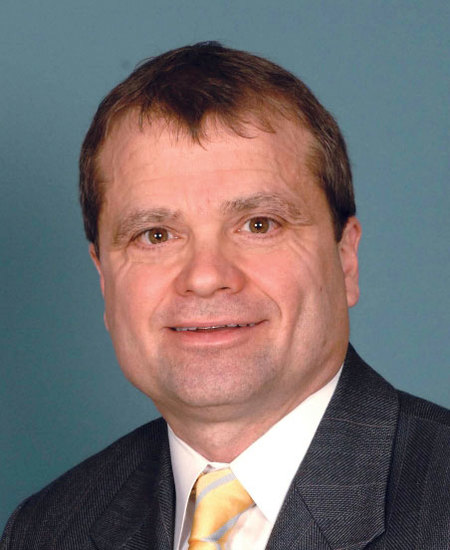
Rep. Mike Quigley
Sponsored bills
Maddy summaryThe Department of Peacebuilding Act of 2025 would establish a new federal department within the executive branch dedicated to promoting peacebuilding, nonviolent conflict resolution, and violence prevention both domestically and internationally. The department would include seven specialized offices focused on peace education, domestic peacebuilding, international peacebuilding, technology for peace, arms control, research, and human rights. It would develop new policies to address violence in communities, create a Peace Academy for training peacebuilders, and establish grant programs for schools and community organizations to implement peacebuilding initiatives. The bill requires the department to consult with other federal agencies on matters related to conflict prevention and mandates that at least 85% of funds would support domestic peace programs. The department would also research and report on violence prevention metrics and develop peace education curricula for schools.
This resolution supports the designation of Career and Technical Education Month to celebrate career and technical education across the United States.
Protecting Sensitive Locations Act This bill prohibits immigration enforcement actions within 1,000 feet of a sensitive location except in exigent circumstances, such as the imminent risk of death, violence, or physical harm to any person. Sensitive locations include health care facilities; schools and school bus stops; places that provide assistance for people such as children, pregnant women, and abuse victims; child care facilities; places that provide disaster or emergency services; places of worship; courthouses and lawyers’ offices; facilities used as polling places; certain labor union facilities; and public assistance offices. The prohibition shall apply to Department of Homeland Security officers and agents, as well as state employees pursuing immigration enforcement actions. If an enforcement action is carried out in violation of this prohibition (1) no information resulting from the action may be entered into the record in a resulting removal proceeding, and (2) the affected individual may move to immediately terminate such a proceeding. U.S. Immigration and Customs Enforcement and U.S. Customs and Border Protection shall annually report to Congress about enforcement actions taken at sensitive locations in the preceding year.
Maddy summaryThe Scientific Integrity Act requires federal agencies that fund, conduct, or oversee scientific research to adopt policies preventing political interference in scientific work. These policies must prohibit suppressing, altering, or delaying the communication of scientific findings and ensure hiring and decisions are based on expertise - not politics. Agencies must appoint a Scientific Integrity Officer to enforce the policies, handle complaints, and submit annual reports to Congress and the Office of Science and Technology Policy. The bill directly affects scientists and staff in covered agencies by safeguarding their ability to share research freely and maintain ethical standards in scientific communication.
Maddy summaryHR 1097, the SECURE Firearm Storage Act, requires federally licensed gun dealers, importers, and manufacturers to securely store firearms and business records when their premises are closed. Specifically, it mandates that firearms must be locked using hardened steel rods through the trigger guard (with shielded locks) or stored in locked fireproof safes, cabinets, or vaults, while paper records must be kept in secure locations like locked safes. The bill imposes tiered penalties: $1,000-$10,000 fines for first violations, license suspension for second violations, and license revocation for third violations. These requirements take effect 90 days for record storage and one year for firearm storage after enactment.
Maddy summaryHRES 116 is a non-binding House resolution condemning pardons granted to individuals convicted of assaulting Capitol Police officers. It expresses the House's disapproval of such pardons but does not alter any laws or affect legal proceedings. The resolution has no legal force and serves only as a formal statement of disapproval by the sponsoring lawmakers. It directly addresses the pardons of specific individuals found guilty in criminal cases related to the January 6, 2021, Capitol breach.
Maddy summaryThis bill establishes a federal right to access contraception, protecting individuals' ability to obtain contraceptives and health care providers' ability to offer them without government interference. It prohibits states from banning or restricting contraceptive services, products, or information, including laws that force providers to deny care based on personal beliefs or limit access to specific methods. The law immediately overrides conflicting state regulations and ensures that contraception remains available regardless of factors like race, income, disability, or location. It applies to all individuals and providers, building on existing federal protections like the Affordable Care Act's coverage requirements.
Maddy summaryHRES 106 is a non-binding resolution calling on the United Nations Security Council to immediately impose an arms embargo on Burma’s military (the Tatmadaw). It directly targets the military junta responsible for the 2021 coup, ongoing human rights abuses, and violence against civilians, including ethnic minorities like the Rohingya. The resolution specifies that lifting the embargo would require the military to end violence, release detained leaders, allow humanitarian access, restore internet, and transition power to a civilian government. It also urges the international community to support affected civilians and promote peace dialogues. This resolution expresses congressional support for UN action but does not create new U.S. policy.
This resolution condemns Russia's nuclear escalatory rhetoric and implied threats on the potential use of nuclear weapons in the context of its invasion of Ukraine. The resolution also (1) condemns Russia's purported suspension of participation in the New START Treaty, (2) emphasizes the value of arms control agreements between the United States and Russia, and (3) calls on the administration to continue pursuing nuclear arms control and risk reduction with Russia and China.