

Safe Step Act This bill requires a group health plan to establish an exception to medication step-therapy protocol in specified cases. A medication step-therapy protocol establishes a specific sequence in which prescription drugs are covered by a group health plan or a health insurance issuer. A request for such an exception to the protocol must be granted if (1) an otherwise required treatment has been ineffective, (2) such treatment is expected to be ineffective and delaying effective treatment would lead to irreversible consequences, (3) such treatment will cause or is likely to cause an adverse reaction to the individual, (4) such treatment is expected to prevent the individual from performing daily activities or occupational responsibilities, (5) the individual is stable based on the prescription drugs already selected, or (6) there are other circumstances as determined by the Employee Benefits Security Administration. The bill requires a group health plan to implement and make readily available a clear process for an individual to request an exception to the protocol, including required information and criteria for granting an exception. The bill further specifies timelines under which plans must respond to such requests.
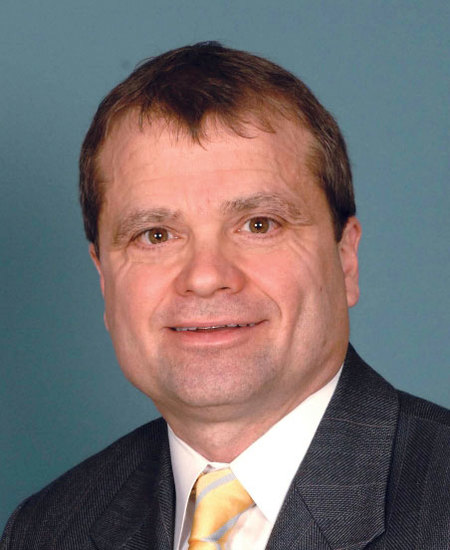
Rep. Mike Quigley
Sponsored bills
Dental Care for Veterans Act This bill expands eligibility for veterans for dental care provided by the Department of Veterans Affairs (VA). Specifically, the bill makes all veterans who are enrolled in the VA health care system eligible for VA-provided dental services. Currently, only veterans who have a service-connected dental issue or meet other narrow criteria are eligible for certain dental services. The bill phases in eligibility over four years based upon existing eligibility, degree of service-connected disability or other disability, prisoner of war status, award of a Purple Heart, financial need, or VA health care eligibility.
Ethan's Law This bill establishes a framework to regulate the storage of firearms on residential premises at the federal, state, and tribal levels. At the federal level, the bill establishes statutory requirements for firearms on residential premises to be safely stored if a minor is likely to gain access without permission or if a resident is ineligible to possess a firearm. An individual who violates the requirements is subject to criminal penalties. A firearm stored in violation of the requirements is subject to seizure and forfeiture. At the state and tribal levels, the bill requires the Department of Justice to award grants to implement functionally identical requirements for the safe storage of firearms.
Clean Corridors Act of 2021 This bill directs the Department of Transportation to award grants to certain governmental entities and planning organizations to install electric vehicle charging infrastructure and hydrogen fueling infrastructure along designated alternative fuel corridors.
Huntington's Disease Disability Insurance Access Act of 2021 This bill expedites payment of Social Security Disability Insurance (SSDI) benefits and eligibility for Medicare coverage for those with Huntington's disease. This is an inherited disorder that causes brain cells to die, including in areas of the brain that help to control voluntary movement. Specifically, the bill eliminates the 5-month waiting period for SSDI benefits and the subsequent 24-month waiting period for Medicare coverage for individuals with Huntington's disease. Under current law, individuals generally must wait five months after the onset of disability to begin receiving SSDI benefits and an additional 24 months to become eligible for Medicare.
Increasing Access to Quality Cardiac Rehabilitation Care Act of 2021 This bill accelerates and expands certain changes that are scheduled to take effect relating to the coverage of cardiac, intensive cardiac, and pulmonary rehabilitation programs under Medicare. Currently, such programs require physician supervision. Effective January 1, 2024, physician assistants, nurse practitioners, and clinical nurse specialists may also supervise these programs. The bill expedites the effective date of these changes to January 1, 2022, and also allows these practitioners to administer programs in their offices, prepare and sign treatment plans, and prescribe exercise.
Federal Bird Safe Buildings Act of 2021 This bill requires the General Services Administration (GSA) to develop and implement strategies for reducing bird fatalities from collisions with public buildings. Specifically, the GSA must incorporate relevant features and strategies into public buildings that are newly constructed, acquired, or substantially altered so as to reduce bird fatalities. The GSA must also develop a related design guide and annually certify its active use. The bill's provisions do not apply to buildings and sites on the National Register of Historic Places, the White House and its grounds, the Supreme Court building and its grounds, or the U.S. Capitol and any buildings on its grounds.
Animals for Regulatory Fairness Act of 2021 or the AARF Act of 2021 This bill requires the Food and Drug Administration to allow an applicant for approval to market a new drug to use a non-animal test to demonstrate the safety and effectiveness of the drug if the non-animal test satisfies all other applicable requirements.
This bill directs the Speaker of the House and the President pro tempore of the Senate to arrange for the award of three Congressional Gold Medals to the U.S. Capitol Police (USCP) and other law enforcement agencies that protected the U.S. Capitol on January 6, 2021. Following the award of these medals, one medal shall be given to the USCP, one medal shall be given to the Metropolitan Police Department of the District of Columbia, and one medal shall be given to the Smithsonian Institution and displayed with a plaque listing all law enforcement agencies that participated in protecting the Capitol on January 6, 2021.
Equality Act This bill prohibits discrimination based on sex, sexual orientation, and gender identity in areas including public accommodations and facilities, education, federal funding, employment, housing, credit, and the jury system. Specifically, the bill defines and includes sex, sexual orientation, and gender identity among the prohibited categories of discrimination or segregation. The bill expands the definition of public accommodations to include places or establishments that provide (1) exhibitions, recreation, exercise, amusement, gatherings, or displays; (2) goods, services, or programs; and (3) transportation services. The bill allows the Department of Justice to intervene in equal protection actions in federal court on account of sexual orientation or gender identity. The bill prohibits an individual from being denied access to a shared facility, including a restroom, a locker room, and a dressing room, that is in accordance with the individual's gender identity.