

Maddy summaryHR 4272, the Stop Fentanyl Now Act of 2023, directly affects schools, public health systems, and law enforcement by expanding prevention and response efforts to the fentanyl crisis. The bill requires schools to train staff on carrying and administering naloxone (an opioid overdose reversal drug) and provides grants to states for school-based programs, treatment access, and harm reduction tools like fentanyl test strips. It also increases law enforcement resources to disrupt fentanyl trafficking, including targeting online sales, and removes legal barriers for possessing fentanyl test strips. These provisions aim to reduce overdose deaths by improving education, treatment access, and prevention strategies in communities most impacted by fentanyl-laced pills.
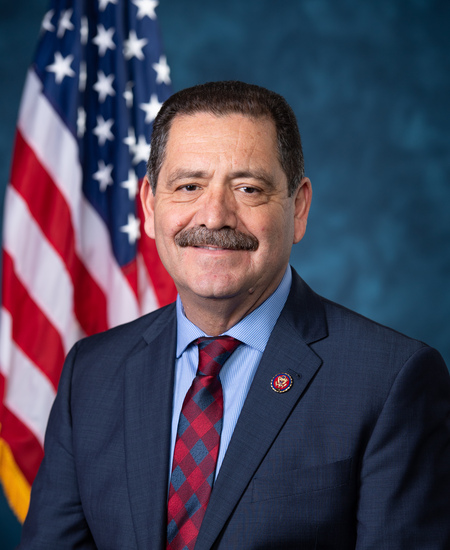
Rep. Jesús G. "Chuy" García
Sponsored bills
Maddy summaryHR 4283 increases the federal excise tax on firearm sales by 0.5 percentage points to fund gun violence prevention efforts. The bill creates a new Gun Violence Prevention Trust Fund, allocating tax revenue to four specific accounts: community violence prevention programs (via the Department of Justice), gun violence research (at CDC and NIH), hate crimes data collection and enforcement (per the Jabara-Heyer NO HATE Act), and firearm forensics (via ATF). It also adjusts existing occupational and transfer taxes on firearms for inflation starting in 2024. The tax increase applies to all firearms, frames, and receivers (with limited manufacturer exemptions), directly affecting firearm manufacturers, importers, and federal agencies managing the fund.
Maddy summaryHR 4241, the Horse Transportation Safety Act of 2023, prohibits transporting horses between states or territories in multi-level motor vehicles (like certain livestock trailers with stacked levels). This directly affects commercial horse transporters moving animals across state lines. The bill adds a civil penalty of $100-$500 per horse per violation for knowingly violating this rule, with separate penalties for each horse transported. It amends the Horse Protection Act to address safety concerns related to transporting horses in vehicles not designed for such travel.
Maddy summaryHR 4268, the Reproductive Health Travel Fund Act of 2023, would provide $350 million annually (2024-2028) in federal grants to nonprofit organizations that help individuals cover travel and logistical costs for accessing abortion care across state lines. The bill directly supports people living in states with abortion bans or severe restrictions who must travel for care, including expenses like transportation, lodging, childcare, meals, and lost wages. Grants may not fund abortion procedures themselves but cover related logistical barriers identified in the bill’s findings, such as increased travel times and costs post-Dobbs. Eligible organizations must provide unbiased, medically accurate assistance, with priority given to those serving individuals traveling to access abortion services.
Maddy summaryHR 3519, the Hot Foods Act of 2023, amends the Food and Nutrition Act of 2008 to allow Supplemental Nutrition Assistance Program (SNAP) benefits to be used for hot foods or hot food products ready for immediate consumption at participating retailers. This change directly affects SNAP recipients who purchase such hot foods and retailers that sell them. The key provision removes the previous exclusion of hot foods from SNAP eligibility, while adding a limit that no more than 50% of a retailer's total gross sales from SNAP can come from hot foods. The bill clarifies that hot foods can be purchased for home or immediate consumption, aligning SNAP rules with current retail practices for prepared foods.
Maddy summaryThe SAFE Act of 2023 extends a 2018 law that prohibits slaughtering animals for human consumption to include horses, donkeys, and other equine animals, such as ponies. It amends Section 12515 of the Agriculture Improvement Act of 2018 by updating the language to replace "dog or cat" with "dog, cat, or equine" in both the section title and the main prohibition. This change directly affects the livestock industry and slaughter facilities by banning the processing of equines for food. The bill modifies existing law without adding new enforcement mechanisms, closing a gap in animal protection.
Maddy summaryHR 4285, titled the Protect Vulnerable Immigrant Youth Act, would amend the Immigration and Nationality Act to remove numerical caps on certain employment-based visas. Specifically, it changes two sections to add a new visa category (J) to the list of categories exempt from annual numerical limits, allowing more employment-based visas to be issued without current restrictions. This change would directly affect employers and foreign workers seeking employment-based visas under the newly designated category (J), though the bill does not specify what the (J) category entails. The bill focuses solely on adjusting visa allocation rules rather than addressing youth protection or other aspects implied by its title.
Maddy summaryThe LGBTQI+ and Women's History Education Act of 2023 would provide $2 million annually for five years to develop educational resources about women's and LGBTQI+ history for K-12 classrooms. The bill directs the Smithsonian's National Museum of American History to create inclusive teaching materials that address historical gaps where women and LGBTQI+ individuals, particularly those of color and with disabilities, have been underrepresented. These resources would include digital content, print materials, and professional development for teachers to help implement more comprehensive curricula. The bill aims to address findings showing only 13% of named historical figures in textbooks are women and that LGBTQI+ history is often omitted or marginalized in school curricula. The program would require annual reports to Congress on how funds are used, with the program set to sunset in 2028.
Maddy summaryHJRES 76 proposes renaming the Robert E. Lee Memorial in Arlington National Cemetery to the "Arlington House National Historic Site." This procedural bill would replace all official references to the memorial with the new name and repeal two prior resolutions (1955 and 1972) that established the memorial. The change affects how the site is identified in federal laws, documents, and records but does not alter its management or historical significance. The bill focuses solely on the official designation, not on policy changes or historical interpretation.
Maddy summaryThis non-binding resolution (HRES 532) expresses congressional support for a "Third Reconstruction" to address systemic poverty and low wages affecting approximately 140 million Americans, with disproportionate impacts on communities of color, women, and essential workers. It proposes concrete policy shifts including establishing a living wage, guaranteeing universal healthcare and housing, expanding voting rights, ending debt burdens, and redirecting military spending toward social programs. The resolution frames poverty as a moral crisis - citing it as the fourth-leading cause of death - and calls for updating poverty measures to reflect modern costs of living. It does not create new laws but urges Congress to prioritize these changes through budget and legislative action.