

Maddy summaryThe John R. Lewis Voting Rights Advancement Act of 2023 would strengthen the Voting Rights Act of 1965 by updating the criteria for which states and localities must obtain federal preclearance before changing voting practices. It would establish new standards for proving vote dilution and vote denial by requiring courts to consider historical discrimination, racial polarization in voting, and whether voting practices disproportionately burden minority voters. The bill would also require states and localities to provide public notice of voting changes and share demographic data about polling locations. These changes would primarily affect jurisdictions with a history of voting rights violations, aiming to prevent discriminatory voting practices before they take effect.
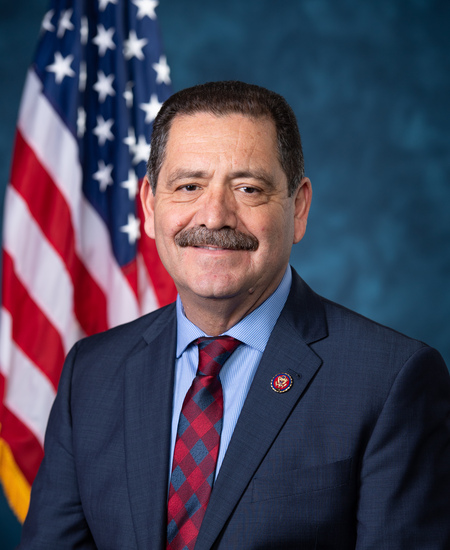
Rep. Jesús G. "Chuy" García
Sponsored bills
Maddy summaryThe Humane Cosmetics Act of 2023 bans cosmetic animal testing in the United States, prohibiting companies from conducting or contracting such testing after its enactment (effective 1 year later). It also bans selling or transporting cosmetics developed using animal testing conducted after that date within U.S. interstate commerce. The law directly affects cosmetic manufacturers, retailers, and suppliers operating in the U.S. market, requiring them to use non-animal testing methods for safety evaluations. Exceptions exist for foreign regulatory requirements or when no alternative testing methods are available for specific ingredients.
Maddy summaryThe Opening Doors for Youth Act of 2023 authorizes $1 billion to $1.25 billion annually (2024-2029) to fund youth employment programs for eligible youth aged 14-24, including both in-school and out-of-school youth. The bill establishes two main program types: summer employment programs requiring 4+ week placements at minimum wage, and year-round programs requiring 180+ days of employment with employer wage contributions (at least 25% of wages). Key provisions include mandatory work-readiness training, career counseling, financial literacy education, and supportive services like transportation, child care, and housing assistance. The bill also creates a competitive grant program for local community partnerships to improve high school graduation rates and connect youth with employment opportunities in high-skill, high-wage industries.
Maddy summaryThe No Tax Breaks for Union Busting Act would deny tax deductions for employers who attempt to influence employees' decisions about union activities, including unfair labor practices like firing workers for organizing or using captive audience meetings. It targets expenses related to union-busting tactics, such as consulting fees and other costs used to sway workers' opinions about collective bargaining. Employers would need to report these expenses on tax returns and would no longer be able to deduct them from taxable income. The bill aims to prevent employers from using tax-deductible expenses to influence union elections, aligning with existing rules that deny tax deductions for political spending. It would apply to expenses incurred in taxable years beginning 240 days after enactment.
Maddy summaryThis bill creates a new grant program to fund partnerships between Hispanic-serving institutions (HSIs) and local school districts with high Hispanic/Latino enrollment (at least 25% Hispanic/Latino students and 50% poverty rate). It authorizes $150 million for fiscal year 2024 to support specific activities like aligning high school coursework with college requirements, providing college application assistance, addressing non-academic barriers (such as housing and food insecurity), and developing teacher pipeline programs. The grants require eligible partnerships to report on outcomes, disaggregating data by student demographics to measure impact on Hispanic/Latino students' college enrollment, persistence, and completion rates. The program directly affects HSIs, qualifying school districts, and the Hispanic/Latino students they serve, aiming to close educational gaps through targeted collaboration.
Maddy summaryHRES 682 is a symbolic resolution designating the week beginning September 11, 2023, as "National Hispanic-Serving Institutions Week." It does not create new programs or funding but formally recognizes Hispanic-Serving Institutions (HSIs) for their role in educating Hispanic students and underserved communities. The resolution calls for the public to observe the week with ceremonies during Hispanic Heritage Month, highlighting HSIs' contributions to higher education access and economic mobility. This resolution affects no specific entities or policies, as it is purely commemorative.
Maddy summaryHR 5436, the Expand Emergency Housing Act, modifies housing funding rules to expand emergency assistance. It waives a public service expenditure cap for fiscal year 2024 funds dedicated to preventing, preparing for, and responding to homelessness and emergency rental assistance. The bill also requires HUD to revise regulations so emergency grant payments (up to 6 consecutive months) provided to individuals or families do not count as "income payments" for eligibility purposes. This directly benefits people facing housing instability by making emergency aid easier to access without reducing their eligibility for other assistance programs.
Maddy summaryHR 5428, the No Tax Breaks for Union Busting (NTBUB) Act, prevents employers from deducting certain expenses related to influencing workers' decisions about union representation. It targets spending on tactics like anti-union meetings, workplace surveillance, or consultants during organizing campaigns, making these costs non-deductible for tax purposes. Employers must report such expenses on their tax returns, including details about the activities and amounts spent. The bill aims to remove tax incentives for employer interference in union elections, aligning with federal labor law protections for workers' collective bargaining rights.
Electronic Currency And Secure Hardware Act or the ECASH Act This bill requires the Department of the Treasury to support the development of an electronic dollar. The electronic dollar must be payable to the bearer; considered legal tender; an obligation of the United States; placed into circulation by Treasury; able to be directly used by the public; and capable of instantaneous, offline transactions using hardware devices not involving a third-party intermediary. The bill also provides for privacy requirements applicable to any hardware device used for electronic dollar transactions. Merchants who accept physical currency and the federal government must accept electronic dollars as a form of payment. The bill also establishes the Electronic Currency Innovation Program to direct the development and implementation of electronic currency, the Digital Dollar Council to coordinate Treasury's activities with other government entities, and the Monetary Privacy Board to review and evaluate the electronic dollar program. Finally, the bill provides for the establishment of a Treasury Electronic Currency Innovation Fund Account to carry out related programs.
Maddy summaryThis bill expands SNAP eligibility for college students by modifying existing rules. It allows students attending higher education institutions (as defined by the Higher Education Act) to qualify for SNAP benefits if they have a zero expected family contribution (EFC) from FAFSA or meet specific criteria for independent student status under the Higher Education Act. The changes replace outdated language about "employment" with "attending school or working" and remove barriers that previously excluded many low-income students. This directly affects low-income undergraduate and graduate students who may face food insecurity while enrolled in college. The policy change takes effect 180 days after enactment.