

Maddy summaryThe Community Schools and Health Equity Act establishes a competitive grant program led by the Department of Education to fund school-based health services in community schools. Eligible recipients, such as local school districts and community partnerships, can use these funds to hire staff like nurses and social workers, provide wraparound support including nutrition and housing assistance, and address social determinants of health. The legislation prioritizes grants for schools serving high numbers of low-income students, English learners, and families in medically underserved areas. To ensure accountability, grantees must annually report on student outcomes and health impacts, while the Education and Health and Human Services Secretaries must coordinate to reduce administrative burdens and share technical assistance.
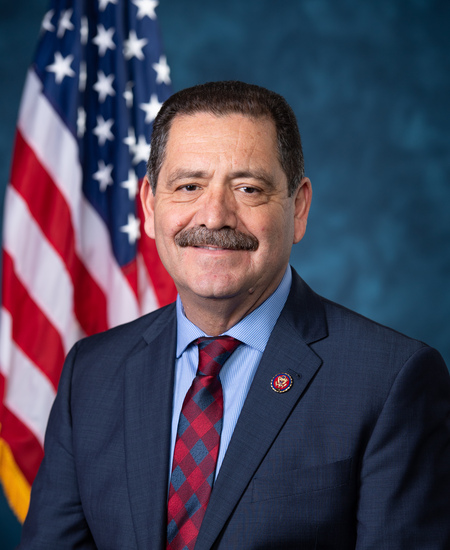
Rep. Jesús G. "Chuy" García
Sponsored bills
Maddy summaryThe Diversity Visa Protection and Modernization Act limits the executive branch's ability to completely stop the Diversity Visa Program, which provides immigration opportunities to applicants from countries with low rates of migration to the United States. Instead of allowing indefinite or broad pauses, the bill permits only targeted restrictions on specific countries, individual security denials, or temporary suspensions lasting no more than 60 days. Any such limitation requires the relevant government officials to notify Congress and publish details about the threat and legal basis at least seven days in advance. Additionally, the law ensures that individuals who have already received a Diversity Visa cannot lose their eligibility due to a temporary program-wide suspension.
Maddy summaryThis resolution expresses the House of Representatives' sense that Congress must urgently restore the Voting Rights Act of 1965 to protect against racial discrimination in voting and ensure fair political representation for all Americans. It specifically calls for ending the 60-vote threshold in the Senate to allow for easier passage of legislation and proposes structural changes to the Supreme Court, including term limits for justices, a binding code of ethics, and potentially expanding the court's size. The text argues that recent Supreme Court decisions have weakened voting protections and enabled partisan gerrymandering, threatening the political power of communities of color and undermining democratic institutions. By outlining these specific legislative and structural goals, the bill aims to rebuild public trust in the judiciary and strengthen the mechanisms that guarantee equal access to the ballot box.
Maddy summaryThe Federal Workforce Reproductive Rights Protection Act prevents federal agencies from relocating headquarters or major operations to states with laws restricting or banning abortion, while also barring the use of funds to build or lease facilities in those locations. To support federal employees who need to access reproductive health care, the bill allows workers to decline transfers to restrictive states, grants up to 21 days of paid leave for travel to obtain such services, and provides reimbursement for travel costs without requiring disclosure of the specific medical procedure. Additionally, the legislation prohibits government agencies from investigating an employee's use of abortion services when reviewing security clearances or making personnel decisions and protects workers from retaliation if they exercise these new rights.
Maddy summaryThis bill, titled the Artificial Intelligence Data Center Moratorium Act, halts the construction and upgrading of large-scale artificial intelligence data centers until specific federal laws are passed. It defines these facilities as sites with high power capacity or advanced cooling systems used for developing AI models. The moratorium remains in effect until new legislation ensures federal safety reviews for AI products, mandates that economic benefits reach workers rather than just wealthy owners, prevents increases in utility bills, avoids environmental harm, requires community approval, bans government subsidies, and guarantees union jobs with strong labor standards. Additionally, the bill restricts the export of computing hardware, such as semiconductors and networking equipment, to countries that do not adopt these same protective laws for AI development.
Maddy summaryThe Right to Vote Act establishes legal protections against government actions that make it more difficult for citizens to vote in federal elections. It prohibits any rule or practice that diminishes voting ability unless the government proves it is the least restrictive way to achieve an important interest, and it similarly blocks substantial impairments unless they significantly further a specific government goal. The bill creates a new legal pathway for voters to challenge these restrictions in federal court, requiring judges to expedite these cases and shifting the burden of proof to the government to justify any voting barriers. These protections apply to all U.S. states, territories, and the District of Columbia for elections occurring on or after September 1, 2026.
Maddy summaryThis bill redesignates the existing National Parks and Public Land Legacy Restoration Fund as the America's Legacy Restoration Fund to address deferred maintenance on federal lands. It directs revenue from recreation fees and a portion of energy development income into the fund, which must be used primarily for repairing critical infrastructure like roads, trails, and buildings managed by agencies such as the National Park Service and the Forest Service. The legislation establishes strict rules requiring that most funds go toward non-transportation projects, mandates transparency through public dashboards tracking project status, and sets aside a small percentage for matching private donations. Additionally, the bill increases entrance fees for foreign visitors to ensure they contribute to the fund, while prohibiting the use of these specific funds for land acquisition or employee bonuses.
Maddy summaryThe Pell Grant Preservation and Expansion Act of 2026 aims to increase financial aid for college students by raising the maximum Pell Grant amount to $15,000 by the 2031-2032 award year and ensuring the program is fully funded through mandatory spending rather than annual appropriations. The bill also expands eligibility for students who receive means-tested government benefits by automatically assigning them a lower financial need score, while simultaneously allowing Dreamer students - undocumented immigrants who meet specific criteria such as graduating high school or serving in the military - to qualify for federal aid. Additional provisions restore the total number of semesters a student can receive Pell Grants from 12 to 18 and adjust the rules for satisfactory academic progress to reduce penalties for students who struggle to meet grade requirements. Finally, the legislation restores Pell Grant eligibility for some students who previously received outside scholarships and sets the law's effective date for July 1, 2026.
Maddy summaryThe Open Meetings Act of 2026 requires the Judicial Conference to publish notice of its meetings at least 30 days in advance on its official website. It mandates that these meetings be live-streamed with audio accessible to the public without charge or registration, and the recordings must be archived and published online within seven days. The bill allows for exceptions to public access when matters are legally prohibited from disclosure or when a majority vote determines a session should be closed for sensitive reasons, provided the reason is stated publicly. These changes directly affect the transparency and public accessibility of proceedings within the federal judicial system.
Maddy summaryThis House resolution reaffirms the United States' commitment to protecting refugees and displaced persons by calling for the restoration of the Refugee Admissions Program and asylum protections. It urges federal officials to lift current bans on refugee entry, resume vetting for approved applicants, and increase humanitarian aid to host countries. The measure highlights the economic contributions of refugees and emphasizes the need for fair, humane policies that align with international obligations and domestic law.