

Maddy summaryThe NO BAN Act (HR 9244) prohibits U.S. immigration authorities from denying visas or entry based on national origin, religion, or sex. It amends immigration law to explicitly ban such discrimination in visa decisions and tightens restrictions on the president’s power to suspend entry of certain groups under Section 212(f). The bill requires specific evidence, narrow tailoring, time limits, and congressional notification for any entry restriction, while mandating public reports on visa denials and waivers. It directly affects nonimmigrant visa applicants (e.g., students, workers) and federal agencies administering immigration policy.
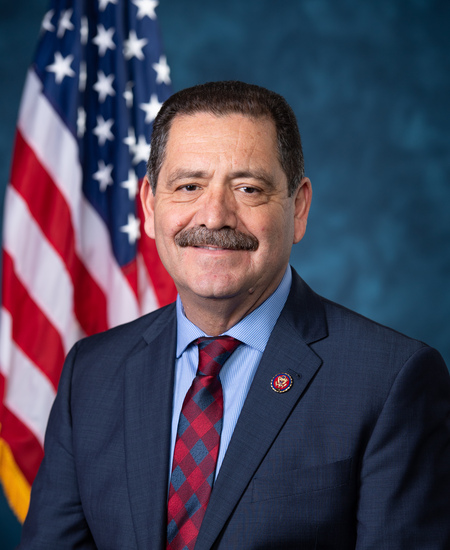
Rep. Jesús G. "Chuy" García
Sponsored bills
Feed the Community Act This bill allows a tax exemption for charitable donations of food transportation vehicles and food storage equipment to tax-exempt charitable organizations for providing food to individuals and communities in need.
Maddy summaryH.J. Res. 193 proposes a constitutional amendment to eliminate legal immunity for federal officials, including the President, from criminal prosecution for actions taken while performing official duties. It also prohibits the President from granting a pardon to themselves. The amendment would apply to all federal officers (such as the President, Vice President, and members of Congress) except for Congress members acting in their legislative role as defined in the Constitution. If ratified by 38 states, this change would become part of the U.S. Constitution, requiring no further congressional action.
Maddy summaryThe Environmental Health in Prisons Act requires federal, state, local, and tribal carceral facilities to monitor and publicly report on environmental conditions including air quality, water quality, noise levels, and exposure to hazards like mold, pests, and extreme temperatures. It mandates that facilities provide clear, accessible information about environmental health risks to both incarcerated people and staff, and establishes a grant program to help state and tribal facilities improve environmental conditions through infrastructure upgrades and health-focused programs. The bill also creates an advisory panel including public health experts and formerly incarcerated people, and prohibits retaliation against individuals who report environmental health concerns or participate in monitoring efforts.
Maddy summaryThe Corner Post Reversal Act amends federal law to establish a six-year deadline for filing lawsuits challenging federal agency actions. It requires that any legal challenge to an agency decision must be initiated within six years of the agency's final action, unless another law specifies a different timeframe. This change directly affects individuals, organizations, or entities seeking to contest agency decisions in court by limiting the window for legal action. The bill does not alter substantive policies but modifies procedural rules governing judicial review of agency actions.
Maddy summaryHCONRES 119 is a non-binding congressional resolution expressing that people wrongfully or unjustly deported after establishing long-term ties in the U.S. (such as DACA recipients, veterans, or those with expunged convictions) deserve a fair process to return. It proposes creating a centralized unit within the Department of Homeland Security (DHS), modeled after DHS’s existing ImmVets program for veterans, to review applications for re-entry. The resolution does not change immigration law but urges DHS to establish this dedicated process to address systemic barriers like lengthy delays, complex procedures, and limited access to legal help. It specifically targets individuals separated from families after years in the U.S., including those deported due to errors, protests, or outdated convictions. The resolution emphasizes repairing past injustices without altering current legal frameworks.
Maddy summaryHRES 1355 is a non-binding resolution supporting the designation of July 10 as Journeyman Lineworkers Recognition Day. It honors lineworkers who maintain electrical infrastructure under hazardous conditions, including during disasters, and commemorates Henry Miller, the first president of the International Brotherhood of Electrical Workers, who died on July 10, 1896, while troubleshooting an electrical outage. The resolution encourages public recognition of these workers' contributions but does not create new laws or policies.
Maddy summaryHR 8988, the "Get Foreign Money Out of U.S. Elections Act," expands federal law to prohibit foreign-controlled businesses from influencing U.S. elections. It bans contributions or spending by any for-profit business entity where foreign nationals own 50% or more of voting shares, or where foreign entities collectively own 5% or more (or exert control over election activities). Businesses must certify compliance before making election-related spending, including contributions to political committees, and recipients cannot reuse uncertified funds for further election activities. This bill directly affects foreign-owned corporations, partnerships, and similar entities seeking to participate in U.S. elections.
Maddy summaryHR 8825, the Right to Vote Act, establishes a fundamental right for all citizens of legal voting age to vote in federal elections. It directly affects voters across all states and territories by prohibiting government actions that make voting harder (like restrictive ID laws or reduced polling places) unless those actions are the least restrictive way to serve a significant government interest. The bill creates two legal standards: "retrogression" (diminishing voting access) and "substantial impairment" (making voting significantly harder), allowing voters to sue in federal court to challenge such restrictions. Courts must expedite these cases, and the law applies to all federal elections occurring on or after September 1, 2024.
Maddy summaryThis bill (HR 2365, Public Law 118-66) directs the U.S. Department of Health and Human Services (HHS) to establish the National Parkinson’s Project. It requires HHS to create and update a coordinated national plan for preventing, diagnosing, treating, and researching Parkinson’s disease and related disorders (including multiple system atrophy and progressive supranuclear palsy), while coordinating federal research and care efforts across agencies like the NIH, CDC, and VA. The law mandates annual progress assessments, an advisory council with patient advocates and diverse experts, and annual reports to Congress on federal Parkinson’s programs and recommendations for improvement. It affects federal agencies managing Parkinson’s-related programs and aims to improve care coordination and research efficiency for patients and caregivers, with the law sunsetting in 2035.