

Maddy summaryThe SNAP Benefits Fairness Act of 2023 amends a specific provision in the Food and Nutrition Act of 2008 to remove a rule that previously limited eligibility for Supplemental Nutrition Assistance Program (SNAP) benefits. It directly affects individuals applying for or receiving SNAP benefits by eliminating a barrier related to certain income or asset calculations. The key change involves striking a subsection (formerly (B)) and renumbering subsequent sections in the eligibility rules. This amendment will take effect on January 1 following the bill's enactment.
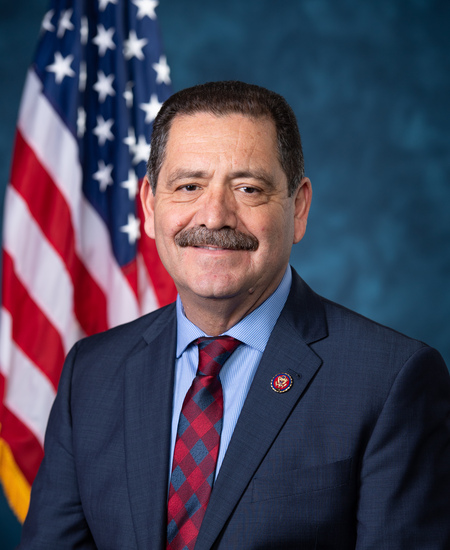
Rep. Jesús G. "Chuy" García
Sponsored bills
Maddy summaryThis bill requires financial institutions with 100 or more employees to submit diversity and inclusion data to federal regulators. It amends the Dodd-Frank Act to mandate that agencies like the Federal Reserve collect specific information on workforce demographics and inclusion practices from covered entities. The key provision directs agency directors to establish requirements for these disclosures, focusing on transparency in corporate diversity reporting. This policy change directly affects large financial firms by creating a standardized data collection process for regulators.
Maddy summaryHR 7438 directs the U.S. Treasury to mint commemorative coins for the 2026 FIFA World Cup, including 100,000 $5 gold coins, 500,000 $1 silver coins, and 750,000 half-dollar coins. The coins will be sold to the public at face value plus surcharges ($35, $10, and $5 per coin, respectively), with all surcharge revenue paid to FWC2026 US, Inc. for U.S. soccer programs. These funds must support soccer initiatives, particularly in underserved communities and youth development, as specified in the bill. The coins are legal tender but will only be issued during 2026, with no net cost to the U.S. government.
Maddy summaryHR 6751 authorizes the U.S. Mint to produce commemorative coins honoring Roberto Clemente, a Hall of Fame baseball player and humanitarian, including 50,000 $5 gold coins, 400,000 $1 silver coins, and 750,000 half-dollar coins. The coins must feature Clemente's image and inscriptions like "Roberto Clemente" and "2027," with all sales including a surcharge ($5-$35 per coin) paid to the Roberto Clemente Foundation. The foundation, which supports youth sports, education, and disaster relief programs, will use these funds for its mission, while the U.S. Treasury must recover all production costs. The coins will be sold exclusively in 2027, with no net cost to the government.
Maddy summaryThe Jeanette Acosta Invest in Women’s Health Act of 2024 would expand access to preventive cancer screenings (including breast, cervical, ovarian, and uterine cancer screenings) for women, with a focus on low-income women, women of color, rural communities, and underserved populations. It authorizes $20 million annually for grants to health care providers - such as family planning centers - to increase screenings and establishes a training program for health care providers on best practices and cultural competency to address racial disparities. The bill also mandates a study analyzing cancer screening rates and disparities by race, income, geography, and insurance status, with reports to Congress every five years. These provisions aim to improve early detection, reduce mortality, and address systemic barriers in women’s cancer care.
Maddy summaryThe "Think Differently About Emergencies Act" (HR 6249) requires the Federal Emergency Management Agency (FEMA) to report to Congress within 120 days on how it supports individuals with intellectual or developmental disabilities and their families during major disasters. The report must detail FEMA’s resources, training, programs, and outreach efforts to states, localities, and nonprofits for these individuals. Within one year, FEMA and the Comptroller General must also review current assistance, identify legal barriers, and propose recommendations to improve support and streamline disaster recovery processes for people with disabilities.
Maddy summaryThis bill renames a specific U.S. Postal Service facility in Rockford, Illinois, to honor Jay P. Larson. The building at 5225 Harrison Avenue will officially be called the "Jay P. Larson Post Office Building." All government documents, maps, and records referencing the location will automatically update to use the new name. This is a purely administrative designation with no policy changes or direct impact on citizens or services.
Maddy summaryThe Our Homes, Our Votes Act requires landlords and public housing agencies managing federally assisted housing (including public housing, Section 8, and supportive housing programs) to include voter registration forms in lease agreements. When tenants sign their lease, it automatically serves as a voter registration application for federal elections, unless they opt out. Landlords must ensure forms include basic eligibility information, provide language access for limited-English speakers, and submit completed forms to election officials within 10 days. This applies to all tenants in covered housing units, streamlining registration without requiring separate action.
Maddy summaryHRES 1588 is a House resolution supporting Transgender Day of Remembrance (TDoR) by recognizing the epidemic of violence against transgender people and memorializing those killed between October 1, 2023, and September 30, 2024. It specifically honors 38 transgender or gender-nonconforming individuals whose lives were lost to violence during that period, highlighting that transgender women of color face disproportionate risks. The resolution acknowledges systemic issues like underreporting, barriers to healthcare, and higher rates of homelessness and suicide within the community. It calls for the U.S. government to prioritize solutions to this violence while affirming transgender people's right to dignity and safety. As a symbolic resolution, it does not create new laws or policies but formally recognizes these issues for congressional record.
Maddy summaryThe Half-Century Update for Water Access and Affordability Act establishes a federal program to provide financial assistance to low-income households struggling to pay water bills. It requires states and water utilities to implement programs that offer direct bill discounts, debt relief, water efficiency upgrades, and crisis assistance to households earning up to 200% of the poverty level or 80% of local median income. The bill prohibits disconnections for non-payment, allows automatic enrollment for households already receiving other federal assistance, and mandates data collection to track program impacts on water service access. The legislation authorizes $20 billion annually from 2025-2035 to fund this assistance, with specific requirements to ensure universal access and prevent discrimination in program implementation.