

Maddy summary# Summary of Proposed Immigration Legislation This comprehensive immigration bill proposes sweeping reforms across multiple areas of U.S. immigration policy. The key provisions can be categorized as follows: ## Family Immigration Reforms - Expands eligibility for family-based visas - Creates new pathways for family reunification - Reforms the "child out" rule for H-4 visa holders who age out - Establishes new procedures for sponsors of unaccompanied children ## Employment-Based Immigration - Increases diversity visas from 55,000 to 80,000 - Creates new categories for doctoral STEM graduates - Eliminates per-country limits for employment-based visas - Addresses visa backlogs by creating new categories for beneficiaries with priority dates over 10 years old - Increases visa numbers for certain employment-based categories (e.g., 23.55% instead of 28.6% for certain categories) - Creates a Regional Economic Development Immigrant Visa Pilot Program (10,000 visas annually) ## Diversity and Integration Programs - Creates a United States Citizenship and Integration Foundation to promote citizenship preparation - Establishes pilot programs for immigrant integration at state and local levels - Creates English as a Gateway to Integration grant program ($100 million for 2024-2025) - Creates Workforce Development and Shared Prosperity grant program ($100 million for 2024-2025) - Requires in-state tuition rates for refugees, asylees, and certain special immigrants - Waives English requirements for seniors applying for naturalization ## Immigration Court Reforms - Increases immigration judge numbers by 55 annually through 2028 - Creates a right to counsel for vulnerable individuals (children, victims of abuse, etc.) - Establishes an Immigration Counsel Fund with a $25 surcharge on immigration fees - Requires all noncitizens to receive legal orientation programs - Modernizes court technology for improved efficiency - Creates procedures for ensuring court appearance compliance ## Refugee and Asylum Processing - Expands alternatives to detention for family units - Improves processing for asylum seekers - Creates programs to facilitate safe and efficient repatriation - Establishes reintegration support for repatriated individuals ## Naturalization and Citizenship - Creates citizenship pathways for U.S. high school graduates - Waives English requirements for seniors - Creates a National Citizenship Promotion Program - Establishes naturalization ceremonies at historic locations The bill aims to create a more efficient immigration system, address backlogs in immigration courts, promote immigrant integration, create clearer pathways to citizenship, and reform both family-based and employment-based immigration systems. It represents a comprehensive approach to modernizing U.S. immigration policy.
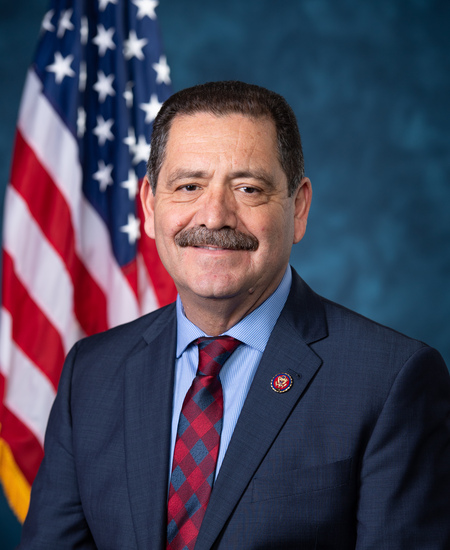
Rep. Jesús G. "Chuy" García
Sponsored bills
Maddy summaryHR 3086, the "Find It Early Act," requires health insurance plans to cover breast cancer screenings with no cost-sharing for certain individuals at higher risk of breast cancer. The bill affects people with increased risk (based on medical criteria or dense breast tissue) or those needing screening due to factors like age, race, ethnicity, or family history. Key provisions mandate coverage for 2D/3D mammograms, ultrasounds, MRI, and other technologies without frequency limits for these groups. This applies to group health plans, Medicare, Medicaid, TRICARE, and VA healthcare systems starting January 1, 2024. The law aims to improve early detection by removing financial barriers to necessary screenings.
Maddy summaryThe Green New Deal for Health Act establishes a federal Office of Climate Change and Health Equity within the Department of Health and Human Services to coordinate climate and health efforts across government agencies. It requires health care facilities to become more climate-resilient through infrastructure upgrades, mandates climate risk disclosure for medical products, and creates new training programs for health professionals on climate-related health risks. The bill expands Medicare coverage for home resiliency services like heat pumps and solar batteries for individuals medically vulnerable during climate disasters, and provides funding for community mental health programs focused on climate resilience. It prioritizes support for environmental justice communities and individuals disproportionately affected by climate change, including those with certain health conditions, ages, or social vulnerabilities.
Maddy summaryThis bill establishes minimum nurse-to-patient ratios for registered nurses in hospital units (such as 1:1 in trauma units, 2:1 in critical care units, and 3:1 in emergency rooms), requiring hospitals to develop and maintain staffing plans that meet these standards. It mandates transparency in documenting staffing levels, ensures hospitals verify nurses' competence for specific units, and enforces compliance through Medicare and Medicaid programs with penalties for violations. The bill protects nurses who refuse unsafe assignments due to staffing concerns and includes initiatives to improve nurse retention and address staffing shortages. It directly affects hospitals, nurses, and patients by aiming to improve patient safety and care quality through standardized staffing requirements. The bill applies to all hospitals, with extended implementation timelines for rural facilities.
Maddy summaryThe End Child Poverty Act would establish a new universal child assistance program providing monthly payments to children under 19 who reside in the United States and meet citizenship or immigration status requirements. Payments would equal 1/12 of the annual poverty guideline difference between a two-person household and a single individual, calculated using current federal poverty standards. The bill would repeal the existing Child Tax Credit and Earned Income Tax Credit while creating two new refundable tax credits: a $600 credit for adult dependents (over 18) and a $600 credit for adults and families (with a $1,200 amount for joint returns). The program would be administered by a new Office of Universal Child Assistance within the Social Security Administration, with automatic enrollment for eligible children unless they opt out.
Maddy summaryHR 1754, the Healthcare Ownership Transparency Act, requires Medicare-participating healthcare providers (called "covered firms") to disclose detailed financial and ownership information to the Centers for Medicare & Medicaid Services (CMS). Specifically, it mandates that firms owned by private equity funds submit 28 types of data - including debt structure, fees paid to private equity, political spending, vendor relationships, and leadership details - for each of the previous 10 years. Non-private equity-owned firms must also report core financial metrics like debt levels and political spending. The bill creates a new task force to study healthcare consolidation and private equity’s impact, and requires the GAO to analyze disclosed data to assess effects on costs, staffing, and quality. This aims to increase transparency around ownership structures influencing healthcare costs and operations.
Maddy summaryThe Housing Is a Human Right Act of 2023 creates federal grant programs to address homelessness and housing instability, prioritizing people who are homeless, housing unstable, or cost-burdened, including members of populations at higher risk of homelessness such as people of color, veterans, and justice system-involved individuals. It establishes a CDBG Plus program to fund permanent supportive housing, infrastructure for basic needs like public restrooms, and alternatives to criminalizing homelessness, while requiring community involvement and non-discrimination protections in program implementation. The bill creates new taxes on luxury real estate transactions and large landlords to fund these initiatives, and includes provisions to improve voting access for homeless individuals. It defines key terms like "homeless" and "housing unstable" to guide eligibility and requires programs to follow a Housing First approach that provides housing without preconditions like sobriety or treatment requirements.
Maddy summaryHR 1692, the Health Care Affordability Act of 2023, adjusts how health insurance subsidies are calculated for people buying coverage through the marketplace. It replaces the previous subsidy formula with a sliding scale based on income, where households earning up to 150% of the poverty line pay 0% of premiums, and those at 400% or more pay 8.5%. The change applies to all income tiers between these points, with percentages increasing incrementally (e.g., 2% for 150-200% income). This directly affects individuals purchasing health insurance through the marketplace who qualify for subsidies under the Affordable Care Act. The bill amends Section 36B of the Internal Revenue Code and takes effect for tax years beginning after December 31, 2022.
Maddy summaryHR 1666 extends deadlines for ambulance service reimbursement rules under Medicare. It amends Section 1834(l) of the Social Security Act by changing dates from 2025 to 2028 in two specific provisions: paragraph (12)(A) and paragraph (13)(A). This delay gives ambulance providers additional time to adjust to existing Medicare payment rules. The bill directly affects Medicare-certified ambulance services and the patients relying on ground ambulance care covered by Medicare.
Maddy summaryThis bill increases Medicare reimbursement for clinical social workers from 75% to 85% of the payment rate for psychologists under Part B. It also removes an exclusion that previously prevented skilled nursing facilities from billing Medicare for social worker services provided to residents. The bill expands covered services to include specific mental health assessments and interventions identified by HCPCS codes (like 96156, 96158-96161, etc.) for Medicare beneficiaries. These changes take effect for services provided on or after January 1, 2024, directly affecting Medicare patients and clinical social workers.