Maddy summaryHR 989 would turn Executive Order 11246 into law, requiring federal contractors and subcontractors to follow its equal employment nondiscrimination rules. This bill directly affects businesses working with the U.S. government by making these requirements legally binding. The key provision ensures the existing order has the full force of law, rather than being subject to executive changes.
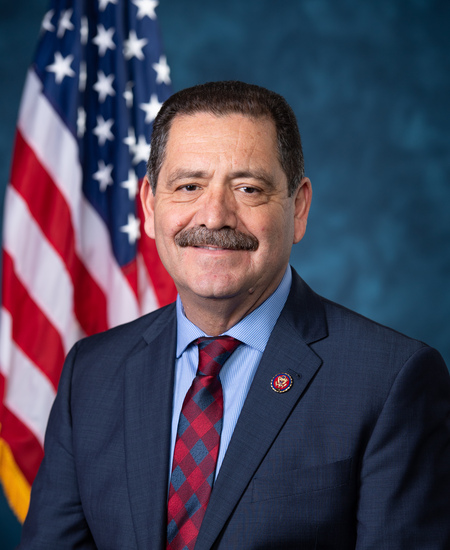
Rep. Jesús G. "Chuy" García
Sponsored bills
Maddy summaryThis bill expands access to family and medical leave under the FMLA by reducing the required employment period from 12 months to 90 days for most workers. It also lowers the employer size threshold from "50 or more employees" to "1 or more employees," requiring nearly all employers to provide this leave. The changes specifically apply to private-sector workers, federal employees (covered under Title 5), and congressional staff, removing previous eligibility barriers. Key provisions include updating definitions in the FMLA and modifying federal employee leave rules to align with the 90-day requirement. This directly affects millions of workers who previously had to wait a full year for leave eligibility.
Maddy summaryThis bill modifies corporate tax rules to prevent companies from avoiding US taxes by moving operations overseas. It targets tax breaks that companies currently use when they outsource work to foreign countries or reorganize as foreign entities (so-called "inverted corporations"). The bill requires companies to pay tax on foreign profits based on each country where they operate, limits tax deductions for interest by multinational corporations, and treats foreign corporations managed in the US as domestic for tax purposes. These changes aim to close loopholes that allow companies to reduce their US tax burden through foreign operations.
Maddy summaryThis bill establishes a federal right to access contraception, protecting individuals' ability to obtain contraceptives and health care providers' ability to offer them without government interference. It prohibits states from banning or restricting contraceptive services, products, or information, including laws that force providers to deny care based on personal beliefs or limit access to specific methods. The law immediately overrides conflicting state regulations and ensures that contraception remains available regardless of factors like race, income, disability, or location. It applies to all individuals and providers, building on existing federal protections like the Affordable Care Act's coverage requirements.
Maddy summaryThe Caring for All Families Act expands family medical leave eligibility under the FMLA to include domestic partners, adult children, children of domestic partners, and extended family members such as grandparents, grandchildren, siblings, and in-laws. It also adds new "parental involvement and family wellness" leave allowing employees to attend school activities for their children/grandchildren or meet routine medical needs for themselves, their children, spouse/domestic partner, or elderly individuals with family-like relationships. Employees may take up to 4 hours per 30-day period or 24 hours per year for these purposes, with the leave being in addition to existing FMLA protections. This bill directly affects private sector employees covered by the FMLA and federal employees, broadening who qualifies for leave and expanding leave purposes to include family wellness activities.
Maddy summaryThe Stop Arming Cartels Act of 2025 prohibits civilian possession, sale, or transfer of rifles capable of firing .50 caliber ammunition, with exceptions for government use and rifles lawfully owned before the bill's enactment. It requires owners of such rifles to register them with the federal government within 12 months, without fees, and adds these rifles to the National Firearms Act registry. The bill also creates new federal firearm restrictions for significant foreign narcotics traffickers identified under the Foreign Narcotics Kingpin Designation Act and expands reporting requirements for rifle sales to include all rifles. This directly affects civilian rifle owners, sellers, and individuals designated as foreign narcotics traffickers.
Stop the Wait Act of 2025 This bill phases out the initial waiting period for Social Security Disability Insurance (SSDI) benefits and eliminates the waiting period for certain disabled individuals to become eligible for Medicare. Under current law, individuals generally must wait five months after the onset of disability to begin receiving SSDI benefits. The bill would gradually reduce this waiting period before eliminating it entirely in the year 2030. Further, the bill would eliminate the 24-month waiting period for certain disabled workers and other individuals to become eligible for Medicare. Under current law, individuals under the age of 65 may generally enroll in Medicare after they have been eligible for SSDI or Social Security child’s, widow’s, or widower’s benefits by reason of disability for 24 months. The bill would eliminate this waiting period for individuals for whom the annual cost of certain medical insurance would exceed a specified percentage of their household income (i.e., those who cannot afford minimum essential coverage). Medicare eligibility for these individuals must be available retroactively to the first month that an individual qualified for SSDI or Social Security child’s, widow’s, or widower’s benefits by reason of disability.
Maddy summaryHR 959 creates a new Office within the U.S. Department of State to monitor and address Islamophobia abroad. The bill requires the State Department to include specific, detailed reports on Islamophobia in its annual human rights and religious freedom reports. These reports must describe incidents like violence against Muslims or mosques, government propaganda promoting hatred, and how foreign governments respond to such issues. The law directly affects how the U.S. government documents religious discrimination in foreign countries, mandating new reporting requirements for the State Department starting 180 days after enactment.
National Origin-Based Antidiscrimination for Nonimmigrants Act or the NO BAN Act This bill imposes limitations on the President's authority to suspend or restrict aliens from entering the United States. It also prohibits religious discrimination in various immigration-related decisions, such as whether to issue an immigrant or nonimmigrant visa, unless there is a statutory basis for such discrimination. The President may temporarily restrict the entry of any aliens or class of aliens after the Department of State determines that the restriction would address specific and credible facts that threaten U.S. interests such as public safety. The bill also imposes limitations on such restrictions, such as requiring the President, State Department, and the Department of Homeland Security (DHS) to (1) only issue a restriction when required to address a compelling government interest, and (2) narrowly tailor the suspension to use the least restrictive means to achieve such an interest. Before imposing a restriction, the State Department and DHS shall consult with Congress. The State Department and DHS shall report to Congress about the restriction within 48 hours of the restriction's imposition. If such a report is not made, the restriction shall immediately terminate. Individuals or entities present in the United States and unlawfully harmed by such a restriction may sue in federal court. The bill transfers the authority to suspend the entry of aliens traveling to the United States on a commercial airline that failed to comply with regulations related to detecting fraudulent travel documents from the Department of Justice to DHS.

This bill provides for the presentation of a Congressional Gold Medal to the Freedom Riders, in recognition of their contribution to civil rights by fighting for equality in interstate travel.