Maddy summaryThe POLL Act requires states to develop plans ensuring voting wait times don't exceed 30 minutes at any polling place during federal elections. It establishes standards for allocating voting resources (including voting systems and poll workers) based on factors like voting-age population, past turnout, and needs of disabled voters and those with limited English proficiency. The bill creates a private right of action for voters who experience excessive wait times, allowing them to seek civil penalties. Additionally, it authorizes $500 million annually in federal funds to help states implement these changes and meet the new requirements.
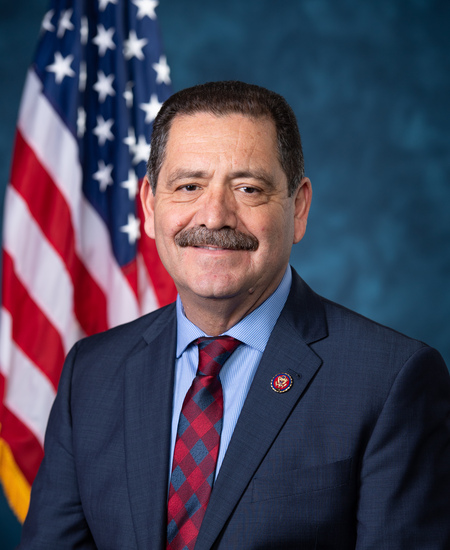
Rep. Jesús G. "Chuy" García
Sponsored bills
Maddy summaryThe Sustaining Our Democracy Act establishes a federal program providing funding to states for election administration improvements, increased voter access, and protection of election workers. States must submit detailed plans for using funds to upgrade voting equipment, expand early and mail voting options, secure election infrastructure, and address disparities in voting access for underserved communities. The bill prohibits states from using funds for activities that restrict voting access or suppress participation, and creates an Office of Democracy Advancement and Innovation to administer the program. Funded through a $2.5 billion Trust Fund for fiscal years 2026-2035, this legislation directly affects all 50 states, the District of Columbia, and U.S. territories receiving federal election funding.
Maddy summaryThis bill requires the U.S. Department of State to include specific, detailed reporting on reproductive rights in its Annual Country Reports on Human Rights Practices. It mandates descriptions of each country's policies regarding access to contraception, abortion services, and comprehensive reproductive health care, alongside data on pregnancy-related deaths, discrimination against women and LGBTQI+ individuals, and disparities based on race, disability, or other factors. The bill also directs the State Department to consult with civil society organizations and health experts to ensure thorough reporting on these issues. This change aims to align U.S. reporting with international human rights standards and address past omissions of reproductive rights from these reports.
Maddy summaryHRES 629 is a non-binding House resolution honoring Dr. Paul Farmer and calling for U.S. policy changes to address global health inequities. It directly affects low- and middle-income countries by urging the federal government to adopt a "21st-century global health solidarity strategy," including increasing U.S. global health funding to $125 billion annually (to meet the UN 0.7% GNI target) and supporting national health systems through Dr. Farmer’s "Five S’s" framework (staff, space, stuff, systems, social support). The resolution also mandates addressing systemic economic harms like debt, tax evasion, and colonial legacies through debt cancellation, tax reform, and reparations for historical injustices. It emphasizes concrete policy shifts rather than funding alone, requiring coordinated multilateral action to close health financing gaps and reform global governance institutions.
Maddy summaryThis bill adjusts health insurance subsidies by modifying the premium tax credit structure under the Internal Revenue Code. It replaces previous income thresholds with a sliding-scale formula, increasing subsidies for households earning between 150% and 400% of the federal poverty level - reducing their required premium payments as income rises within these tiers. The changes apply to tax years beginning after December 31, 2025, directly affecting middle-income individuals and families purchasing coverage through health insurance marketplaces. It also repeals specific provisions from a prior reconciliation law related to health care.
Maddy summaryThe Medical Debt Relief Act of 2025 would prevent medical debt from being reported as negative information on credit reports. It defines medical debt as any debt related to medical services, products, or devices and prohibits credit reporting agencies from including such debt - even if sent to collections - in credit reports. The bill also requires the Consumer Financial Protection Bureau to update regulations within one year to ban creditors from using medical debt when making credit decisions. This change directly affects consumers with unpaid medical bills and alters standard credit reporting practices.
Maddy summaryThis bill removes a barrier preventing most low-income students from accessing SNAP benefits. It amends the Food and Nutrition Act to explicitly allow students enrolled at least half-time in recognized higher education programs to qualify for SNAP, reversing a prior exclusion. The key change eliminates the previous requirement that students meet specific exceptions (now deleted) and adds a new eligibility category under Section 3(m)(5). This directly affects low-income undergraduate and graduate students at colleges and training programs who were previously ineligible. The changes take effect January 2, 2026.
Maddy summaryHR 4796, the Restoring Essential Healthcare Act, repeals a provision that blocked Medicaid payments to certain healthcare providers during a specific period. It directly affects Medicaid beneficiaries who received care from these providers between the enactment of the prior law (Public Law 119-21) and this bill's enactment. The key provision retroactively restores Medicaid payments for services already provided during that blocked period, treating the payment restriction as if it never existed. This change ensures eligible individuals and providers receive reimbursement for covered care delivered during the prohibited timeframe.
Fix Our Flooded Basements Act of 2025 This bill expands the disaster assistance provided to individuals and households for repairs to and property in flood-damaged basements. It also expands eligibility and coverage for certain group flood insurance. Under current law, the Individual Assistance (IA) program of the Federal Emergency Management Agency (FEMA) limits home repair assistance for flood-damaged basements to damage affecting the safety, sanitation, or functionality of the home (e.g., structural damage, hazardous conditions). The bill allows home repair assistance for disaster-caused mold, mildew, and moisture damage in basements regardless of whether the damage affects safety, sanitation, or functionality. Additionally, flood-damaged basements are eligible for home repair assistance even when the basement is not required for occupying the dwelling. Also, currently, IA assistance for flood-damaged personal property in basements is limited to washers, dryers, and property essential for occupying the dwelling. The bill expands IA personal property assistance to more broadly cover property damaged by disaster-caused flooding in basements. The scope of such assistance must at least equal the coverage for such damage by a standard policy under the National Flood Insurance Program (e.g., covering air conditioning units and freezers in basements). Additionally, FEMA must expand the eligibility and coverage of the group flood insurance it provides to IA recipients, including increasing the maximum coverage and expanding coverage for basements. The bill also excludes from the maximum for IA housing assistance expenses for (1) hazard mitigation measures in flood-damaged basements, and (2) premiums for group flood insurance policies.

Maddy summaryHR 4763, the PTO Act, requires most employers to provide employees with at least 1 hour of paid annual leave for every 25 hours worked, with a maximum of 80 hours per year. It applies to private-sector workers and certain government employees, protecting their right to use paid leave for any purpose without disclosing the reason. The bill mandates employers to maintain health benefits during leave, allow carryover of up to 40 hours of unused leave, and pay out unused leave upon separation. It also prohibits employers from discriminating against employees for using paid leave or requiring them to find replacements while on leave. The law includes enforcement mechanisms, allowing employees to file complaints with the Department of Labor or pursue private lawsuits.