

Maddy summaryHRES 876 is a non-binding House resolution calling on the U.S. government to formally recognize Israel's actions in Gaza as genocide under the Genocide Convention. It directs the U.S. to cease arms transfers to Israel where genocide is suspected, ensure Israel complies with International Court of Justice orders, investigate potential genocide-related crimes, and support UNRWA funding. The resolution specifically cites findings from the UN Commission of Inquiry, the International Association of Genocide Scholars, and major human rights organizations regarding Israel's conduct. It affects U.S. foreign policy and military aid decisions toward Israel, requiring the administration to take concrete steps to fulfill U.S. legal obligations under the Genocide Convention. The resolution does not alter U.S. law but sets a policy stance for congressional action.
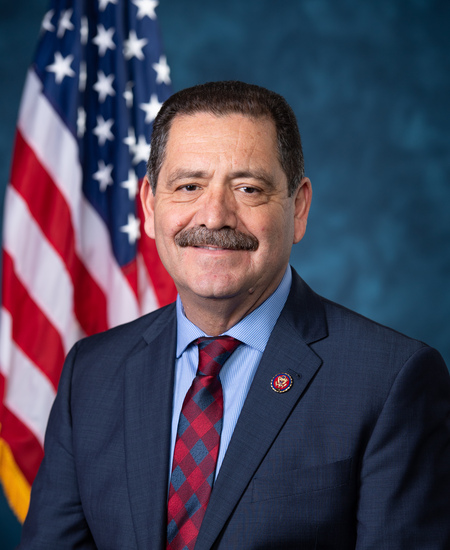
Rep. Jesús G. "Chuy" García
Sponsored bills
Maddy summaryHR 5941, the Restoring Access for Detainees Act, requires U.S. Immigration and Customs Enforcement (ICE) to provide immigration detainees in DHS custody with specific communication access. It mandates 200 free monthly minutes for general outgoing calls, unlimited free minutes for contacting legal counsel, courts, consulates, or oversight offices, and special initial contact provisions during arrival or transfer. Detention facilities must allow uninterrupted legal communication time, cannot restrict minutes for legal calls, and must provide private spaces for confidential legal discussions. The bill also requires facilities to establish clear, publicly available communication policies that comply with these requirements.
Maddy summaryThis bill, HR 5973, requires federal immigration enforcement personnel to follow strict limits on force use, including proportional application, mandatory de-escalation efforts, and prohibitions on equipment like flash bangs or rubber bullets except for specific public safety threats. It mandates body-worn and vehicle cameras for all operations, with footage retained for one year (three years for force incidents or complaints), and grants affected individuals the right to inspect recordings. The law also requires annual training on force policies, First Amendment compliance, and racial bias avoidance, while demanding detailed quarterly reports to Congress on force usage, assaults on agents, and equipment approvals. These provisions directly affect all federal immigration agents conducting enforcement actions, aiming to increase transparency and accountability during operations.
Maddy summaryThis bill requires states to allow eligible voters to register or update their registration at polling places on election day for federal elections, including during early voting periods. It applies to all states except those with existing laws eliminating voter registration requirements for federal elections. The key mechanism mandates that voters can both register and cast their ballot on the same day at designated polling locations. The requirement takes effect for the November 2026 general election and all subsequent federal elections.
Maddy summaryHRES 846 is a symbolic resolution designating October 2025 as National Domestic Violence Awareness Month. It expresses the House's support for raising awareness about domestic violence and its impacts, and calls for continued congressional attention to ending domestic violence through existing programs. The resolution does not create new laws, allocate funding, or directly affect any specific groups - it is purely a statement of support. It references statistics on domestic violence prevalence but focuses on awareness rather than policy changes.
Maddy summaryHouse Resolution 838 recognizes Día de los Muertos (Day of the Dead) as an annual celebration honoring deceased loved ones, particularly within Mexican-American, Latino, and Indigenous communities. The resolution acknowledges the holiday's cultural significance, including its historical roots and role in fostering family bonds, and expresses solidarity with families who have lost loved ones, especially those who died in immigration custody. It urges federal agencies to ensure humane treatment of individuals in immigration custody during cultural observances but does not create new legal requirements or policy changes. As a commemorative resolution, it serves only to symbolically affirm the holiday's importance without altering laws or funding.
Head Start Shutdown Protection Act of 2025 This bill requires the Department of Health and Human Services to reimburse a state, local government, or school district that uses its funds to maintain participation in the Head Start program or the Early Head Start program during a government shutdown in which there is a lapse in federal appropriations for the programs. The Head Start programs provide comprehensive early childhood education and development services to low-income children. The programs seek to promote school readiness through the provision of educational, health, nutritional, social, and other services.
Maddy summaryThis bill restores the pre-January 20, 2025, administrative structure of the Head Start program within the Department of Health and Human Services. It establishes a central Office of Head Start with 12 regional offices, requiring the Secretary to maintain all prior staffing levels, organizational structure, and functions. The bill prohibits the Secretary from restructuring the office or reducing staff without providing 60 days' notice to Congress and the public, ensuring continuity in program oversight. It directly affects the Office of Head Start, its regional offices, and HHS staff managing Head Start operations.
Maddy summaryHCONRES 57 is a symbolic resolution honoring Wadee Alfayoumi, a 6-year-old Palestinian-American boy murdered in a hate crime in Illinois on October 14, 2023. It commemorates his life and condemns the perpetrator’s anti-Muslim, anti-Palestinian hate speech that led to his death. The resolution states that the U.S. has "zero tolerance for hate crimes, Islamophobia, anti-Semitism, and anti-Palestinian and anti-Arab discrimination." As a concurrent resolution, it does not create new laws or policies but serves to recognize the victim and affirm national principles against hate-based violence.
Maddy summaryThis resolution formally recognizes the vital role of Spanish-language media in serving over 41 million U.S. residents who speak Spanish at home. It affirms that access to Spanish-language news and entertainment is essential for community engagement, combating misinformation, and supporting democratic participation. The House resolution specifically commends Spanish-language media professionals and encourages policies that sustain this media sector, which provides culturally relevant information on elections, health, and civic life. As a symbolic gesture (not a law), it has no direct policy changes but highlights the sector's importance to Latino communities and national inclusivity.