

Maddy summaryHR 7125, the Stop Body Camera Paywalls Act, requires states and local governments seeking certain federal law enforcement grants to certify they do not charge fees for public access to body camera footage, dash camera footage, or prison surveillance recordings. To qualify for Byrne or COPS grant programs, applicants must confirm no financial barriers exist for the public requesting these specific video recordings. The bill makes certification mandatory for grant eligibility, directly affecting law enforcement agencies receiving federal funds under these programs.
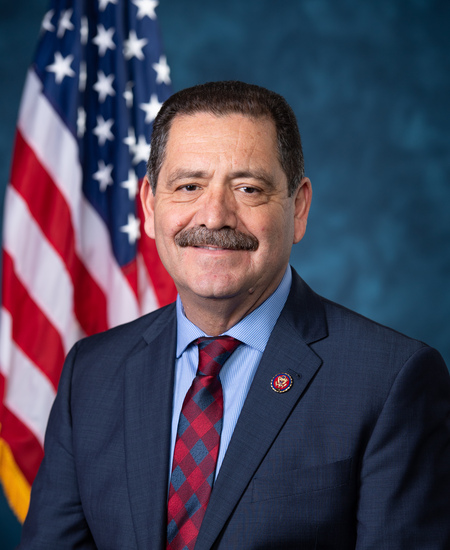
Rep. Jesús G. "Chuy" García
Sponsored bills
Maddy summaryHRES 996 is a resolution introduced by multiple House members to impeach Kristi Lynn Arnold Noem, the Secretary of Homeland Security, for alleged violations of law and the Constitution. It outlines three articles of impeachment: obstructing congressional oversight by denying access to detention facilities and withholding funds, violating public trust through warrantless arrests and excessive force (including tear gas on children), and self-dealing by awarding federal contracts to associates without competitive bidding. If approved by the House, this resolution would formally charge Noem, triggering a Senate trial to determine her removal from office. The resolution itself does not enact new policy but initiates the constitutional impeachment process against a sitting Cabinet official.
Maddy summaryThe Returning Home Act establishes a federal grant program to provide rental assistance and housing support for individuals recently released from prison, jail, juvenile facilities, or halfway houses. It allocates $100 million annually to fund 24 months of rental assistance, family stipends for household support, and services like housing counseling, case management, and help with security deposits. The program prioritizes people at risk of homelessness after incarceration, requiring grantees to use at least 60% of funds for direct rental payments and 15% for landlord incentives. It explicitly replaces "offender" language with "individual" throughout to focus on people reentering communities, not criminal labels.
Maddy summaryHR 7046, the Qualified Immunity Abolition Act of 2026, removes qualified immunity as a defense in civil rights lawsuits against law enforcement officers. It directly affects federal, state, and local law enforcement officers by eliminating their ability to avoid liability in cases where they allegedly violated constitutional rights. The bill amends Section 1983 of federal law to prohibit using four specific defenses: claiming good faith, believing conduct was lawful, arguing rights weren't clearly established, or asserting the law was unclear at the time. This change means officers can no longer dismiss lawsuits based on these arguments after the bill's enactment. The law applies to all civil actions pending or filed after the effective date.
Maddy summaryThis bill establishes minimum salary and wage standards for paraprofessionals and education support staff in public schools. It requires states to set a minimum annual salary of $45,000 for full-time staff (increasing with inflation after 2030) and a minimum hourly wage of $30 for part-time staff (also inflation-adjusted). The federal government will provide $25 billion in FY2026, with annual funding increases, to help states implement these standards through grants. States must ensure all local schools meet these minimums within 4 years of receiving funds, with 98% of grant money allocated directly to schools for salary increases or professional development.
Maddy summaryHR 6088, the *Restoring Food Security for American Families and Farmers Act of 2025*, repeals specific sections (10101-10108) from a prior reconciliation law. This action revives previous provisions related to food security programs that were modified by those repealed sections. The bill directly affects federal food assistance and agricultural support programs by restoring their prior legal framework. It does not create new policies but reverses recent changes to existing food security measures.
Maddy summaryThis bill updates federal nutrition law to include Puerto Rico in the Supplemental Nutrition Assistance Program (SNAP), allowing it to transition from its current funding method to the same SNAP benefits available to U.S. states. Puerto Rico must submit a 180-day plan to the USDA detailing its transition to SNAP, with approval required within another 180 days. The transition period lasts up to 5 years from the bill's effective date, during which Puerto Rico would continue receiving block grants while preparing for full SNAP participation. This change directly affects Puerto Rico's 1.4 million residents who currently receive nutrition assistance under a separate funding structure.
Maddy summaryThe MORE Act (HR 5068) would remove cannabis from the federal list of controlled substances, effectively decriminalizing it at the federal level while establishing a new tax on cannabis products. The bill creates an Opportunity Trust Fund that would distribute tax revenues to support communities disproportionately impacted by cannabis prohibition, including funding for expungement programs, job training, and equitable licensing initiatives for minority business owners. It also includes provisions to prevent discrimination based on cannabis use in federal programs, immigration proceedings, and workplace policies. The bill would require federal courts to expunge non-violent cannabis convictions and establish a process for resentencing individuals currently serving time for such offenses. These provisions aim to address racial disparities in cannabis enforcement and create more equitable opportunities in the legal cannabis industry.
Maddy summaryHR 909, the Crime Victims Fund Stabilization Act of 2025, modifies how funds from the False Claims Act are deposited into the Crime Victims Fund. It specifies that from 2025 through 2029, certain False Claims Act proceeds (specifically those for qui tam plaintiff payments and government damage reimbursements) cannot be deposited into the fund. This change directly affects the composition of the Crime Victims Fund by excluding these specific revenue streams during the specified period. The bill does not create new benefits or alter victim services; it only adjusts fund allocation rules for existing False Claims Act revenues.
Maddy summaryHR 7014 designates Burma for temporary protected status (TPS) under U.S. immigration law, providing eligible Burmese nationals temporary legal status in the U.S. The bill establishes an 18-month TPS period beginning November 25, 2025, for Burmese nationals who have continuously resided in the U.S. since the bill's enactment, are admissible as immigrants (with limited exceptions), and register with Homeland Security. It also requires the Secretary of Homeland Security to grant prior consent for travel abroad for those with emergency circumstances and ensures returning travelers retain their TPS status. This policy change directly affects Burmese nationals meeting these specific criteria, offering temporary protection from deportation.