

Maddy summaryHR 7543, the Plastic Pellet Free Waters Act, prohibits plastic pellets and pre-production plastic materials from being discharged into waterways through wastewater, spills, or runoff from specific facilities. It directly affects plastic manufacturing, molding, packaging, and transportation facilities regulated under existing environmental rules. Within 60 days of enactment, the EPA must issue a rule banning these discharges and update all relevant wastewater, stormwater, and performance standards in permits. The law requires all permits and standards for these facilities to reflect the new ban, ensuring plastic pellets cannot enter water systems. This is a concrete regulatory change to prevent plastic pollution at its source.
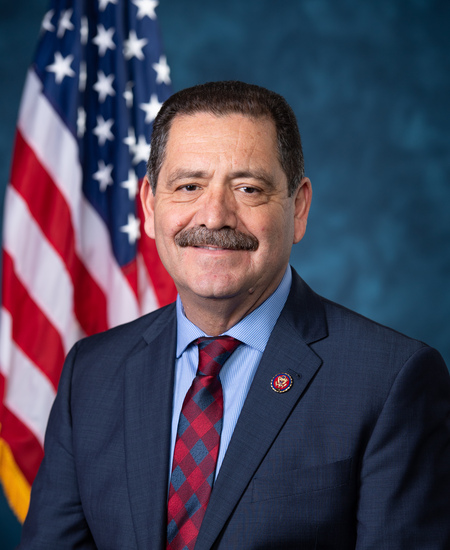
Rep. Jesús G. "Chuy" García
Sponsored bills
Maddy summaryThis bill requires the Department of Defense to obtain a clean audit opinion for its financial statements or face automatic spending reductions. If the Pentagon fails to achieve this by fiscal year 2026, non-exempt programs would lose 0.5% of funding in the first year of failure and 1% annually thereafter, with cuts applied across all programs within the affected department. Military personnel, reserve, National Guard, and Defense Health Program accounts are exempt from these reductions. Any funds saved through these cuts would be deposited into the General Fund for deficit reduction, not redirected to military operations.
Maddy summaryThis bill would remove longstanding U.S. trade restrictions on Cuba by repealing key laws including the Cuban Democracy Act of 1992 and the LIBERTAD Act of 1996. It would allow U.S. businesses to trade with Cuba without restrictions, enable telecommunications services between the U.S. and Cuba, and eliminate limits on U.S. citizens sending remittances to Cuba. The bill also extends normal trade relations to Cuban goods, meaning Cuban products would enter the U.S. market without special tariffs. This would directly affect U.S. businesses, travelers, and Cuban citizens who receive remittances. The changes would take effect 60 days after enactment, with some provisions applying to goods entering the U.S. market 15 days after enactment.
Maddy summaryThe GRADUATE Act (HR 7536) amends tax law to expand the deduction for qualified education loan payments. It allows individuals to deduct up to $10,000 annually (plus $500 per dependent) for interest paid on such loans, increasing the previous limit. The deduction phases out for taxpayers with modified adjusted gross income above $125,000 ($250,000 for joint filers), with the new thresholds applying to taxable years after 2025. This directly affects individual taxpayers with education debt who itemize deductions, reducing their taxable income but not forgiving loan balances. The bill modifies existing tax code sections without creating new government programs or altering loan repayment terms.
Maddy summaryHR 7541, the U.S. Farmworker Protection Act, sets a 400,000 annual cap on H-2A visa positions for temporary agricultural workers, with exceptions for jobs covered by union collective bargaining agreements. This directly affects agricultural employers seeking H-2A workers and U.S. farmworkers who may face wage or job competition from the program. The key mechanism limits total certified H-2A positions per fiscal year (excluding union-represented roles), addressing concerns about the program's rapid growth - from 82,099 jobs in 2008 to 384,865 in 2024 - potentially impacting U.S. farmworker wages and conditions. The bill does not change existing H-2A rules but adds this numerical restriction to Congress's stated policy concerns.
Maddy summaryThe Pensions for All Act requires most private sector employers and self-employed individuals to either provide a retirement plan comparable to the Federal Employees Retirement System (FERS) or enroll in FERS. It establishes reduced contribution requirements for smaller employers (with revenue under $100 million) and lower-income self-employed individuals (with income under $125,000), with specific calculation methods based on business size and income. The bill imposes a $10-per-day penalty for failure to provide an adequate retirement plan, with inflation adjustments after 2026, and creates tax credits for eligible retirement contributions through the Internal Revenue Code. The law specifically applies to non-federal workers, as federal employees are already covered by FERS.
Maddy summaryHR 7545 prohibits U.S. security assistance funds from being used to support Israeli military actions that violate international law, specifically targeting the detention of Palestinian minors, destruction of Palestinian property, and unilateral annexation of occupied land. It requires annual certifications from the State Department confirming U.S. funds aren't supporting these activities and mandates detailed reports on Israeli detention practices, property seizures, and settlement compliance. The bill directly affects U.S. security aid to Israel, including Foreign Military Financing and offshore procurement funds for defense articles. Key mechanisms include funding restrictions, annual reporting requirements, and a GAO report analyzing how offshore procurement funds impact Israel’s military budget and settlement activities.
Maddy summaryHRES 1058 is a non-binding House resolution recognizing the federal government’s duty to develop a Transgender Bill of Rights. It calls for specific policy changes, including amending civil rights laws to explicitly prohibit discrimination based on gender identity in employment, housing, and public accommodations; protecting access to gender-affirming medical care; and streamlining legal recognition of gender identity on federal documents like passports and voter registration. The resolution also proposes expanding protections for transgender and nonbinary individuals in healthcare, education, immigration, and correctional facilities, while emphasizing community-led policy development. As a resolution, it does not create new law but sets a framework for future legislative action.
Maddy summaryHR 7497 establishes a new grant program to fund trauma-informed mental health support in schools, authorizing $50 million annually from 2027-2031. It directly affects students, teachers, school staff, and community mental health providers by requiring grantees to develop collaborative services between schools and local mental health systems. Key provisions include funding evidence-based staff training on trauma-informed practices, creating school-community partnerships, and ensuring culturally competent services for students - including those with disabilities. The bill mandates that funds supplement, not replace, existing resources and requires grantees to coordinate with agencies like child welfare and juvenile justice through formal interagency agreements.
Maddy summaryHRES 1056 is a non-binding House resolution calling for the U.S. to formally end the Monroe Doctrine as official policy and develop a "New Good Neighbor" approach to relations with Latin American and Caribbean nations. It proposes specific policy shifts, including ending unilateral sanctions (like the Cuba embargo), reforming international financial institutions to support equitable development, and ending U.S. interference in regional judicial processes. The resolution directly affects U.S. foreign policy toward 34 countries in the region and aims to reshape diplomatic, economic, and security cooperation. As a resolution, it does not create new law but urges the State Department and Congress to adopt these changes.