

COVID - 19 Hate Crimes Act This bill requires a designated officer or employee of the Department of Justice (DOJ) to facilitate the expedited review of COVID-19 (i.e., coronavirus disease 2019) hate crimes and reports of COVID-19 hate crimes. It defines COVID-19 hate crime as a violent crime that is motivated by two things: (1) the actual or perceived characteristic (e.g., race or ethnicity) of any person, and (2) the actual or perceived relationship to the spread of COVID-19 of any person because of that characteristic. The bill requires DOJ to issue guidance for state and local law enforcement agencies on (1) the establishment of online hate crime reporting processes and the availability of online reporting in multiple languages, and (2) the expansion of culturally competent education campaigns. Additionally, DOJ and the Department of Health and Human Services must issue guidance on best practices for mitigating racially discriminatory language in describing the COVID-19 pandemic.
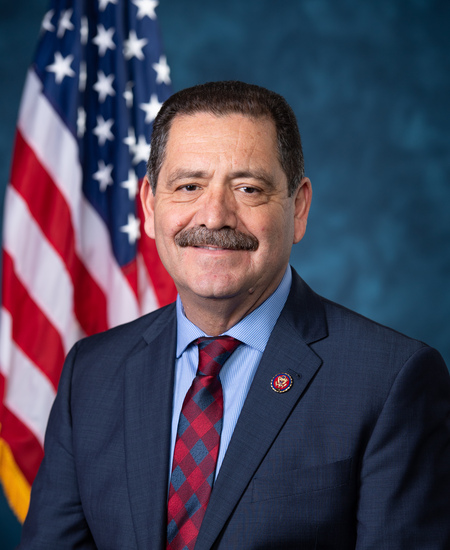
Rep. Jesús G. "Chuy" García
Sponsored bills
COVID-19 in Immigration Detention Data Transparency Act This bill requires U.S. Immigration and Customs Enforcement (ICE), U.S. Customs and Border Protection (CBP), and the Office of Refugee Resettlement (ORR) to collect and report various information about detained individuals, including data on COVID-19 (i.e., coronavirus disease 2019) testing. During the COVID-19-related declared public health emergency and for one year after, ICE, CBP, and ORR shall publicly post on a website certain data about its detention facilities, including COVID-19 testing numbers for detained individuals and detention facility staff, COVID-19 case outcomes, vaccinations, and COVID-19-related information about detained individuals who were released or removed from the United States. The Centers for Disease Control and Prevention (CDC) shall issue guidance as to the COVID-19-related data that ICE, CBP, and ORR must collect and report weekly to the CDC. The CDC shall periodically report to Congress a summary of this data and an analysis of the trends and pattern of the spread of the disease. ICE, CPB, and ORR shall ensure that each detained individual receives all medical records related to any COVID-19 test administered to the individual. ICE, CPB, and ORR shall also report to Congress on (1) the COVID-19 safety protocols in its facilities, and (2) information relating to their efforts to ensure that each detained individual has access to legal counsel. This bill's data collection and reporting requirements that apply to ICE, CPB, and ORR shall also apply to any contract facilities that they use to hold detained individuals.
Resources for Victims of Gun Violence Act of 2021 This bill establishes the Advisory Council to Support Victims of Gun Violence. Among other things, the advisory council must assess the needs of victims of gun violence and disseminate information about helpful resources.
Pregnant Workers Fairness Act This bill prohibits employment practices that discriminate against making reasonable accommodations for qualified employees affected by pregnancy, childbirth, or related medical conditions. A qualified employee is an employee or applicant who, with or without reasonable accommodation, can perform the essential functions of the position, with specified exceptions. Specifically, the bill declares that it is an unlawful employment practice to fail to make reasonable accommodations to known limitations of such employees unless the accommodation would impose an undue hardship on an entity's business operation; require a qualified employee affected by such condition to accept an accommodation other than any reasonable accommodation arrived at through an interactive process; deny employment opportunities based on the need of the entity to make such reasonable accommodations to a qualified employee; require such employees to take paid or unpaid leave if another reasonable accommodation can be provided; or take adverse action in terms, conditions, or privileges of employment against a qualified employee requesting or using such reasonable accommodations. The bill sets forth enforcement procedures and remedies that cover different types of employees in relation to such unlawful employment practices. The Equal Employment Opportunity Commission must provide examples of reasonable accommodations that shall be provided to affected employees unless the employer can demonstrate that doing so would impose an undue hardship. The bill prohibits state immunity under the Eleventh Amendment to the Constitution from an action for a violation of this bill.
This resolution supports the designation of National Child Poverty Prevention Month.
Stop EITC and CTC Seizures Act This bill prohibits the Department of the Treasury from reducing a taxpayer's tax refund for student loan debt to the extent that such reduction would cause the refund to be less than the sum of the earned income tax credit and the child tax credit.
Fairness for Farm Workers Act This bill extends overtime pay protections to agricultural workers. The bill requires employers, beginning in 2022, to compensate agricultural workers for hours worked in excess of their regular hours (i.e., 55 hours in 2022, 50 hours in 2023, 45 hours in 2024, and 40 hours in 2025) at not less than one and one-half times the employee's regular rate. For employers with 25 or fewer employees, the overtime pay requirements begin in 2025. These overtime pay requirements do not apply, as under current law, to employees who are the parent, spouse, child, or other member of the employer's immediate family. The bill also repeals the exemption from overtime pay requirements for employers in various agriculture-related industries, including certain small farms, irrigation projects, sugar processing, and cotton ginning and compressing.
Demilitarizing Local Law Enforcement Act of 2021 This bill eliminates the authority of the Department of Defense to transfer surplus military property to federal and state agencies for law enforcement activities.
I am Vanessa Guillén Act of 2021 This bill addresses the policies and procedures of the Department of Defense (DOD) for cases or allegations of sex-related offenses.
Promoting Energy Alternatives is Key to Emission Reductions Act of 2021 or the PEAKER Act of 2021 This bill addresses the emissions from peaker plants and provides financial incentives for renewable energy to reduce the need for peaker plants. Peaker plants are defined as fossil fuel-fired power plants or units of power plants that are run primarily to meet peak electricity demand. In other words, peaker plants are run where there is above average energy demand, such as during extremely hot or cold weather. The bill establishes an additional investment tax credit for renewable energy generation and battery storage to replace the need for peaker plants in disadvantaged communities. In addition, the Department of Energy (DOE) must establish a grant program to provide up to $1 billion annually through FY2032 to eligible entities for clean energy projects. Specifically, grants must be awarded to assist eligible entities in carrying out (1) projects associated with the construction, installation, or acquisition of qualifying renewable energy facilities and qualifying energy storage facilities; or (2) community energy proposals or community energy studies to reduce or replace the need for peaker plants. Entities that are eligible to receive grants include state or local governments, nonprofit organizations, community-owned energy generation facilities or energy storage facilities located in disadvantaged communities, community-based energy cooperatives, or certain partnerships. DOE must also assess and report on the location of each peaker plant, the quantity and type of pollution each plant is producing, and related data as specified by the bill.