

Fair and Open Skies Act This bill prohibits the Department of Transportation (DOT) from issuing a foreign air carrier permit or an exemption from certain air carrier certificate requirements under the United States-European Union Air Transport Agreement of April 2007, unless DOT finds that issuing the permit or exemption would be consistent with Article 17 bis of the agreement, which provides that opportunities created by the agreement do not undermine labor standards or the labor-related rights and principles contained in the laws of the respective parties to the agreement; and imposes conditions on the permit or exemption necessary to ensure compliance with Article 17 bis . The bill modifies policy considerations relating to air carrier certificates to require DOT to consider preventing entry into U.S. markets by flag of convenience carriers (i.e., foreign air carriers established in a country other the home country of their majority owner in order to avoid regulations of the home country) and preventing the undermining of labor standards. In carrying out such air carrier certificate requirements, DOT must consider preventing entry of flag of convenience carriers into U.S. markets as being in the public interest and consistent with public convenience and necessity for safety in air transportation and air commerce. In formulating U.S. international air transportation policy relating to the elimination of discrimination and unfair competition, the Department of State and DOT must include in their considerations the undermining of labor standards.
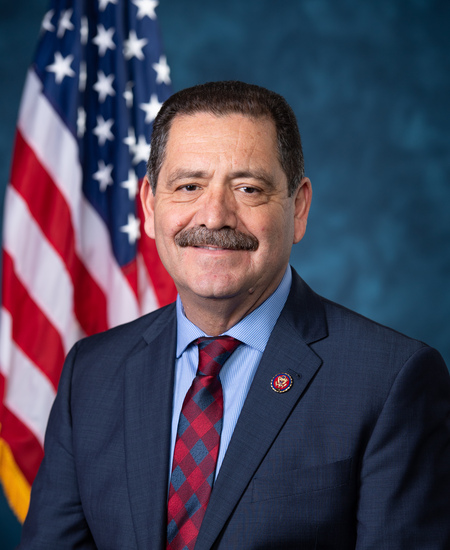
Rep. Jesús G. "Chuy" García
Sponsored bills
Big Cat Public Safety Act This act revises requirements governing the trade of big cats (i.e., species of lion, tiger, leopard, cheetah, jaguar, or cougar or any hybrid of such species) under the Lacey Act to limit the possession, breeding, and exhibition of big cats. The Lacey Act prohibits any person from importing, exporting, buying, selling, transporting, receiving, or acquiring big cats across state lines or the U.S. border. However, some exemptions are provided for certain entities, such as universities and wildlife sanctuaries. (Sec. 3) The act expands the Lacey Act prohibitions to include a prohibition on possessing or breeding big cats. Breeding means facilitating propagation or reproduction (whether intentionally or negligently), or failing to prevent propagation or reproduction. Owners of big cats that were born before this act's enactment may keep their big cats, but the owners must register them with the U.S. Fish and Wildlife Service. The act modifies the list of entities that are exempt from prohibitions to export, buy, sell, transport, receive, acquire, possess, or breed big cats. The modified list includes exemptions for entities or facilities exhibiting animals to the public if they (1) hold a Class C license in good standing under the Animal Welfare Act, and (2) do not allow individuals to come into direct physical contact with big cats. However, direct contact is allowed if the individual is a trained professional, a veterinarian, or directly supporting conservation programs that do not involve commercial activities and meet other specified restrictions. (Sec. 4) A person who knowingly violates the act must be fined not more than $20,000, or imprisoned for no more than five years, or both. The act considers each violation to be a separate offense. The offense must be deemed to have been committed not only in the district where the violation first occurred, but also in any district in which the defendant may have taken or been in possession of the prohibited wildlife species. (Sec. 5) The act extends forfeiture provisions to fish, wildlife, or plants that are bred or possessed; thus, big cats bred or possessed in violation of the act are subject to forfeiture. (Sec. 6) The Department of the Interior must issue regulations to implement this act.
This act designates the facility of the United States Postal Service located at 303 East Mississippi Avenue in Elwood, Illinois, as the Lawrence M. "Larry" Walsh Sr. Post Office.
Maddy summaryThis resolution (HRES 1528) is a symbolic statement, not a binding law, expressing the House of Representatives' "sense" that the federal government should develop a restaurant workers' bill of rights through consultation. It outlines proposed protections for the 11+ million restaurant workers in the U.S., including eliminating the $2.13 tipped minimum wage, guaranteeing paid sick/family leave, ensuring workplace safety, and expanding healthcare access. The resolution itself does not create new policies but calls for future legislative action to address issues like wage theft, sexual harassment, and lack of benefits. It directly affects restaurant workers - particularly women, people of color, and immigrant workers - who face higher poverty rates and workplace challenges than the general workforce.
Rebuild America's Schools Act of 2022 This bill provides support for long-term improvements to public elementary and secondary school facilities. First, the bill sets forth allocations to states and establishes a need-based grant program for local educational agencies (LEAs) to improve school facilities. Further, the bill specifies allowable uses of grant funds, including carrying out major repairs, improving indoor air quality, and making facilities accessible to disabled individuals. Additionally, the bill requires LEAs that receive funds for new construction, modernization, or renovation projects to comply with hazard-resistance building codes and performance criteria under the WaterSense program of the Environmental Protection Agency. Further, the bill requires such LEAs to adopt certain green practices (environmental standards) and requires the use of iron, steel, and manufactured products that are made in the United States (Buy America). The bill restores school infrastructure tax credit bonds. The bill also sets forth reporting requirements, including annual reports on grant program projects and a report by the Government Accountability Office that requires a study of the geographic distribution of projects, the impact of selected projects on student and staff health and safety, and the accessibility of projects to high-poverty schools. The bill also establishes the Office of School Infrastructure and Sustainability within the Department of Education. Next, the bill extends through FY2027 the Impact Aid Construction program. Finally, the bill establishes a grant program to assist LEAs with repairing or replacing concrete foundations affected by pyrrhotite (an iron sulfide material linked to crumbling foundations).
Orphaned Well Cleanup and Jobs Act of 2021 This bill establishes incentives and requirements to permanently plug orphaned (i.e., abandoned) oil and gas wells and clean up pollution leaking from such wells. Specifically, the bill directs the Department of the Interior to establish grant programs to plug and clean up orphaned wells located on federal, state, tribal, and private land. Interior must also issue regulations that require each operator of an idled well on federal land to pay an annual, nonrefundable fee for each well. If the operator fails to pay the fee, then Interior may assess a civil penalty. Revenues generated from such fees must be used for activities related to cleaning up orphaned wells. Additionally, the bill requires the review of the adequacy of bonds or other financial arrangements for oil and gas development on public land leased from the federal government. Such bonds or financial arrangements are currently required to ensure developers have adequate financial resources to remediate and reclaim public land, water, or other resources after wells are abandoned or oil and gas development ceases.
VA Employee Fairness Act of 2021 This bill repeals provisions excluding any matter or question concerning professional conduct or competence; peer review; or the establishment, determination, or adjustment of employee compensation from the applicability of collective bargaining rights for Veterans Health Administration employees.
This resolution condemns violence against Garifuna communities (Afro-Indigenous people of Honduras) and calls for various efforts to protect the land rights and other rights of those communities.
Boundary Waters Wilderness Protection and Pollution Prevention Act This bill withdraws certain federal lands and waters in Minnesota from mining and related activities. Specifically, the bill withdraws approximately 234,328 acres of federal land and waters in a specified area in the Rainy River Watershed of Superior National Forest from entry, appropriation, and disposal under the public land laws; location, entry, and patent under the mining laws; and operation of the mineral leasing, mineral materials, and geothermal leasing laws. The area is adjacent to the Boundary Waters Canoe Area Wilderness and the Boundary Waters Canoe Area Wilderness Mining Protection Area. Land or interest in land within such area that is acquired by the United States shall be immediately withdrawn in accordance with this bill. The Forest Service is authorized to permit the removal of sand, granite, iron ore, and taconite from national forest system lands within such area if the removal is not detrimental to the water quality, air quality, and health of forest habitat within the Rainy River Watershed.
Restoring Community Input and Public Protections in Oil and Gas Leasing Act of 2021 This bill modifies several provisions related to oil and gas leasing on public lands. Among other requirements, the bill replaces the competitive auction process with a competitive-sealed bidding process. It also eliminates non-competitive bidding. Additionally, the bill increases royalty rates, rental rates, and the minimum bid amount. Further, the bill creates a fee for nominating lands for leasing. Lease sales must be held in each state no more than three times per year instead of quarterly. The bill also decreases lease term durations from 10 to 5 years. Certain lease information must be made available on public websites, including the names of all current and former lessees and operators. The bill also adds a number of new provisions related to protection of private surface estate owners. Finally, the bill establishes requirements to protect water resources, including by requiring oil or gas operators to replace certain water supplies affected by drilling, hydraulic fracturing (i.e., fracking), or production operations. In addition, the Bureau of Land Management must issue regulations governing the use of fracking under oil and gas leases for federal lands. The regulations must require (1) baseline water testing, and (2) public disclosure of each chemical used for fracking.