

Maddy summaryHRES 77 is a non-binding House resolution expressing support for the Treaty on the Prohibition of Nuclear Weapons. It calls on the President to make nuclear disarmament central to U.S. national security policy and urges specific actions: pursuing new arms control talks with Russia and China, renouncing first-use of nuclear weapons, ending the president’s sole authority to launch nukes, removing weapons from hair-trigger alert, and canceling plans to modernize the U.S. nuclear arsenal. The resolution directly addresses the President, Secretary of State, Secretary of Defense, and other federal leaders, urging them to lead global efforts to reduce nuclear risks. It does not create new laws or policies but formally endorses the treaty’s goals and outlines concrete steps for U.S. nuclear policy reform.
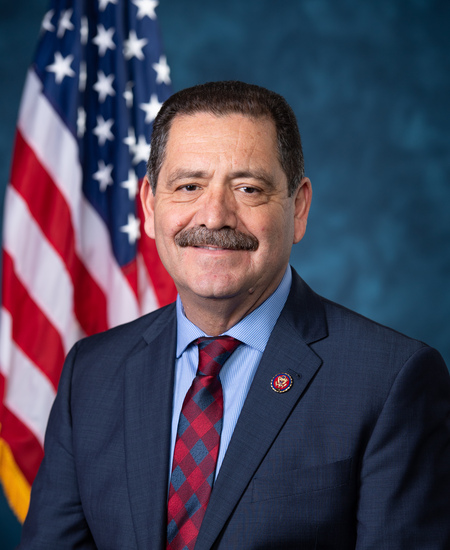
Rep. Jesús G. "Chuy" García
Sponsored bills
Maddy summaryHR 660, "Ethan's Law," requires gun owners in homes where minors (under 18) or individuals prohibited from owning firearms under federal/state law reside to store firearms securely. It makes unsecured storage unlawful if a minor or prohibited person could access the firearm, with fines of $500 per violation and enhanced penalties (up to 5 years in prison) if injury or death occurs. The bill also establishes a federal grant program to help states implement similar secure storage laws and provides funding incentives for states that already have such laws in place.
Maddy summaryHR 666, the Access to Counsel Act, requires U.S. immigration officers to provide certain travelers a meaningful opportunity to consult with legal counsel within one hour of starting secondary inspection at ports of entry. It directly affects travelers including U.S. citizens, lawful permanent residents returning from abroad, visa holders, refugees, and parolees seeking entry. Key provisions mandate phone access to counsel, allow advocates to present evidence to officers, and require in-person meetings when possible. Lawful permanent residents cannot abandon their status without first consulting a lawyer unless they waive this right in writing. The bill takes effect 180 days after enactment.
Maddy summaryHR 525, the Mentoring to Succeed Act of 2023, creates a federal grant program to fund school-based mentoring for at-risk students in high-need schools. The bill defines "at-risk" students as those facing challenges like academic failure, homelessness, foster care, trauma, or involvement with juvenile justice. Grantees must provide mentors who complete trauma-informed training and background checks, while programs must track academic progress, social-emotional growth, and workforce readiness through annual reports. The initiative aims to improve school engagement, reduce dropout rates, and prepare students for postsecondary education and careers.
Maddy summaryThe SPELL Act (HR 460) expands eligibility for federal teacher loan forgiveness under the Higher Education Act. It adds "English language education" to existing categories (like math, science, and special education), allowing teachers who work primarily with English learners or in bilingual/dual language programs to qualify. To qualify, teachers must be certified by their school to teach students matching their training and demonstrate subject-area teaching skills. This change directly affects educators in public or nonprofit K-12 schools serving English learners or bilingual students, applying to loans forgiven after the bill's enactment date.
This resolution condemns the Supreme Court's holding in Dobbs v. Jackson Women's Health Organization (that there is no constitutional right to abortion) and expresses a commitment to instituting judicial reform and supporting access to abortion and the communities affected by the Court's ruling. It also urges the executive branch to advance reproductive justice.
Maddy summaryHR 286, the Health Care Providers Safety Act of 2023, provides federal grants to healthcare providers to improve security at their facilities. The bill authorizes the Secretary to fund security services and physical/cyber security enhancements, including video surveillance, data privacy measures, and structural improvements. These grants directly help healthcare facilities, personnel, and patients by addressing safety concerns. The law specifies that funds must be used for necessary security costs to ensure safe access to healthcare services. It does not create new mandates but offers financial support for security upgrades.
Maddy summaryHRES 42 is a symbolic resolution expressing the House's desire for the U.S. Postal Service's Citizens' Stamp Advisory Committee to consider issuing a commemorative stamp honoring late Congressman Elijah E. Cummings (D-MD). It does not create new law or affect any specific people or policies - it only requests the USPS committee recommend a stamp to the Postmaster General. The resolution highlights Cummings' career, including his service as Oversight Committee Chair and advocacy for issues like drug pricing and postal service stability. As a non-binding resolution, it has no legal effect but aims to formally recognize his legacy through a commemorative stamp.
Maddy summaryHR 396, the Closing the Bump Stock Loophole Act of 2023, defines "bump stock" as any device or modification that increases the firing rate of a semi-automatic weapon to mimic a machine gun. The bill amends federal tax and firearms laws to classify bump stocks as prohibited devices under the National Firearms Act, requiring existing owners to register them within one year of enactment. It directly affects individuals who currently own bump stocks by mandating registration to avoid future possession prohibitions. The law takes effect immediately for new sales but provides a one-year grace period for existing owners to comply with registration requirements.
Maddy summaryHRES 30 is a ceremonial House resolution recognizing two milestones: the 94th anniversary of Dr. Martin Luther King, Jr.'s birth (January 15, 1929) and the 40th anniversary of the federal Martin Luther King, Jr. Holiday (observed January 16, 2023). It contains no policy changes or binding requirements, as it is purely commemorative. The resolution urges the House to observe both dates and encourages the public to honor Dr. King’s legacy and his vision of equality. It does not affect any individuals, groups, or government programs.