

Maddy summaryHR 926 would require the Supreme Court to establish a code of conduct for justices within 180 days of enactment, along with procedures for handling ethics complaints against them. The bill mandates minimum disclosure standards for gifts, income, and reimbursements received by justices and their law clerks, and requires justices to recuse themselves when they or their family received gifts from parties in a case. It would also require parties and amici curiae to disclose gifts given to justices and lobbying contacts related to justices' nominations, and establish a judicial investigation panel to review complaints against justices. The legislation aims to increase transparency in Supreme Court ethics processes and provide clearer recusal standards for justices.
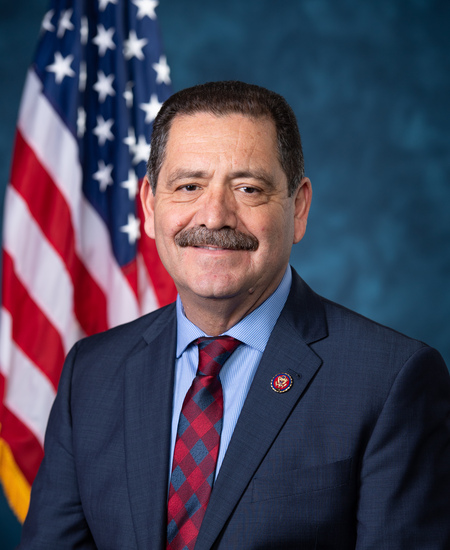
Rep. Jesús G. "Chuy" García
Sponsored bills
Maddy summaryThis bill makes significant changes to US corporate tax rules to prevent tax avoidance through foreign operations. It requires corporations to calculate foreign income tax liabilities country-by-country, limits interest deductions for large international financial reporting groups, and modifies rules for "inverted corporations" (where US companies move tax residence abroad). The bill also creates new rules treating foreign corporations managed primarily in the US as domestic corporations for tax purposes. These changes aim to close tax loopholes related to outsourcing and foreign tax planning.
Maddy summaryHR 969 (GAAME Act of 2023) requires public schools receiving federal funding under the Elementary and Secondary Education Act to provide structured, standards-aligned arts and music education. It mandates that schools offer sequential arts education (defined as dance, media arts, theater, and visual arts) taught by state-certified arts educators, and sequential music education taught by state-certified music educators. The bill also directs targeted funding for schools to support certified educators, professional development, supplies, instruments, and other resources needed for these programs. This directly affects all public elementary and secondary schools participating in federal education programs, aiming to ensure consistent access to arts and music instruction.
Maddy summaryHR 932 repeals two key congressional authorizations for military force in Iraq: the 1991 resolution (Public Law 102-1) and the 2002 resolution (Public Law 107-243). This bill removes the legal foundation that has permitted U.S. military operations in Iraq for over two decades. It directly affects the executive branch’s authority to conduct military actions under these specific resolutions, requiring future operations to seek new congressional approval. The repeal is a procedural change that would end the statutory basis for ongoing military engagement in Iraq without altering other laws or policies.
This resolution condemns the attack against Brazil's government institutions on January 8, 2023. The resolution opposes any attempt to overturn Brazil's 2022 election results and calls for the U.S. government to cooperate with requests for assistance from Brazilian authorities investigating the attack.
Giving Disadvantaged Businesses Opportunities for Success Act This bill revises the Department of Transportation (DOT) Disadvantaged Business (DBE) program and Airport Concession Disadvantaged Business Enterprise (ACDBE) program. Specifically, the bill requires the DOT to increase the maximum personal net worth allowable for participation in both programs to account for any inflation that has occurred since the most recent increase to $1.32 million. The bill further aligns the size limits for small businesses eligible for the programs with the Small Business Administration's size standards. It also excludes certain assets such as the equity applicants have in their primary residence from the calculation of an applicant's net worth under the programs. The bill also reauthorizes through FY2028 the DOT Minority Resource Center, which supports minority enterprises in obtaining business opportunities. Large participants in the DBE or ACDBE programs (e.g., state departments of transportation, hub airports) must have mentor-protégé programs that include certain outcome measures. States also must recognize another state's certification of a business under either program. Additionally, the bill establishes an awards program to recognize program participants that meet specified criteria for excellence. The bill establishes reporting requirements and standards related to waiving or exempting certain requirements of the programs, and it establishes an advisory committee to make policy recommendations for the programs.
Maddy summaryThis joint resolution expresses congressional support for designating February 6-10, 2023, as "National School Counseling Week." It honors school counselors' roles in supporting students' academic, social-emotional, and career development, while encouraging public awareness of their contributions. The bill does not create new policies or funding but symbolically recognizes counselors' work in schools. It directly affects school counselors and the broader school community by promoting recognition of their vital role.
Maddy summaryThis bill creates a federal grant program to fund additional school counselors in secondary schools with low graduation rates. It targets schools where fewer than 60% of students earn a regular diploma within four years, providing 4-year grants to hire counselors focused on at-risk students (aiming for a 1:250 student-to-counselor ratio). Grants cover counselor salaries, professional development, and related services like individual graduation plans, while requiring schools to demonstrate at least a 10% improvement in graduation rates to renew funding. The program is limited to 10 schools initially, with $5 million authorized annually for 2023-2026.
Restoring Communities Left Behind Act This bill directs the Department of Housing and Urban Development to establish a competitive grant program for local partnerships to carry out neighborhood revitalization support activities in economically distressed areas. Eligible activities include weatherization and energy efficiency improvements; housing accessibility improvements for seniors and persons with disabilities; purchasing delinquent mortgages; pre-purchase counseling and down payment assistance for prospective homebuyers; purchasing and developing vacant or distressed properties to create affordable rental housing and for other purposes; and improving parks, sidewalks, and street lighting.
Protecting Dogs Subjected to Experiments Act This bill prohibits the National Institutes of Health from funding biological, medical, or behavioral research that involves testing dogs.