

American Families United Act This bill authorizes the Department of Homeland Security (DHS) or the Department of Justice (DOJ) to exercise discretion in certain immigration cases. Under this bill, DOJ or DHS may, on a case-by-case basis, exercise discretion by declining to remove a non-U.S. national ( alien under federal law) or bar an alien from entering the United States to prevent hardship for the alien's U.S. citizen spouse, parent, or child. This discretion may also be exercised if the alien is the spouse or child of a deceased U.S. citizen. For the purposes of this bill, it shall be presumed that family separation constitutes hardship. However, DOJ or DHS may not exercise this discretion if the alien is removable or inadmissible due to certain grounds, including specified crime- and security-related grounds. This exercise of discretion may be applied to an alien who was ordered removed or denied entry prior to this bill's enactment if the alien files a motion to reopen or reconsider within two years of this bill's enactment.
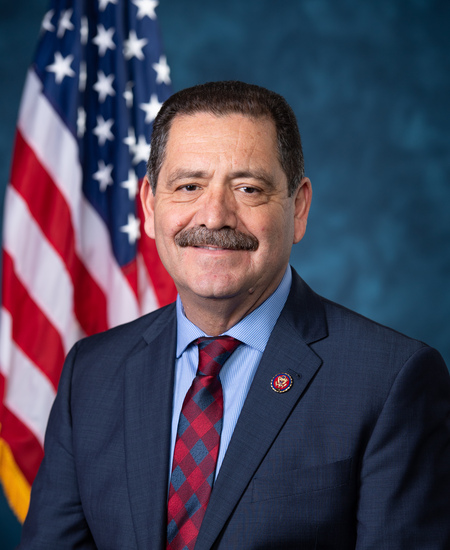
Rep. Jesús G. "Chuy" García
Sponsored bills
Maddy summaryHR 1723, the Abortion is Health Care Everywhere Act of 2023, amends the Foreign Assistance Act to remove restrictions on using U.S. foreign aid funds for abortion services. It explicitly allows U.S. foreign assistance programs to fund comprehensive reproductive health care, including abortion services, training, and equipment. This change directly affects U.S. international health programs and recipient countries, enabling them to integrate safe abortion care into broader reproductive health services. The bill aims to align U.S. policy with global health guidelines by making abortion services a standard part of reproductive health care funded through foreign assistance.
Maddy summaryThe Food Deserts Act creates a federal grant program to help establish grocery stores in underserved communities by funding state revolving funds. States receive capitalization grants (up to $150 million for FY2022) to provide low-interest loans to grocery stores that meet specific criteria, such as selling unprocessed, affordable healthy foods and matching 20% of the loan with non-federal funds. Priority is given to stores hiring local workers, offering nutrition education, sourcing from local farms, and having established supply chains. The program directly supports grocery store operators in areas with limited access to fresh food, aiming to improve community health outcomes through increased access to nutritious options.
Bipartisan Ban on Congressional Stock Ownership Act of 2023 This bill prohibits Members of Congress and their spouses from owning or trading stocks, bonds, commodities, futures, or any other form of security. Each current Member must divest within 180 days after the bill is enacted and each new Member must divest within 180 days after becoming a Member. However, Members and their spouses have 5 years to divest from specified complex investment vehicles. The bill does not apply to certain investments, such as investments in widely held investment funds that are diversified and do not present a conflict of interest and investments held in government employee retirement plans. A Member or spouse who violates the bill may be subject to a fine of up to $50,000 for each violation. The bill permits a Member or spouse who is required to divest property under the bill to avoid recognizing gain for income tax purposes from the sale of that property to the extent that the Member or spouse purchases permitted bonds or diversified investment funds within 60 days of the divestiture.
Correcting Guam's History in the PACT Act This bill expands eligibility for a presumption of service-connection for specified diseases associated with exposure to certain herbicide agents. Under a presumption of service-connection, specific conditions diagnosed in certain veterans are presumed to have been caused by the circumstances of their military service. Health care benefits and disability compensation may then be awarded. Under the bill, service performed in Guam or its territorial waters between August 15, 1958, and July 31, 1980, provides a veteran who has a specified disease that is associated with exposure to certain herbicide agents with eligibility for a presumption of service-connection. (Under current law, the eligible time frame for service in Guam is between January 9, 1962, and July 31, 1980.)
Maddy summaryThe TRACK Act of 2023 requires federal agencies (including HHS, NIH, Defense, and Veterans Affairs) to create a public database tracking all government funding for biomedical research and development. It compiles specific details about contracts, grants, licensing agreements, and tax benefits related to drug, device, and therapy development - including funding amounts, recipient organizations, product names/prices, and patent information. The database must be searchable by the public within one month of the bill’s enactment and updated every two weeks. This directly affects federal agencies managing biomedical funding and the private companies, institutions, and researchers receiving that support. The goal is to increase transparency about how taxpayer dollars fund medical product development.
Maddy summaryHCONRES 23 is a non-binding resolution expressing Congress's support for recognizing March 10, 2023, as "Abortion Provider Appreciation Day." It honors abortion providers and clinic staff for delivering essential reproductive healthcare amid increased restrictions following the Supreme Court's Dobbs decision, which overturned Roe v. Wade. The resolution condemns the Dobbs ruling, affirms Congress's commitment to protecting providers' safety, and emphasizes ensuring access to abortion care. As a symbolic gesture, it does not create new laws or change existing policies.
Maddy summaryThe New Deal for New Americans Act of 2023 establishes a National Office of New Americans within the Executive Office of the President to coordinate federal efforts supporting immigrant and refugee integration. It creates several grant programs to provide legal assistance, English language training, and workforce development for immigrants, with specific provisions to reduce financial barriers to citizenship through fee waivers and modifications to English language requirements for seniors. The bill also establishes a "Proud to Be a United States Citizen Program" to promote naturalization and creates automatic voter registration for newly naturalized citizens. These provisions directly affect immigrants and refugees seeking citizenship and integration support, as well as federal agencies responsible for immigration services. The bill aims to improve access to citizenship, enhance integration into American society, and support refugees through comprehensive federal coordination.
Maddy summaryThis symbolic resolution (HRES 226) recognizes March 2023 as National Middle Level Education Month. It honors middle school educators (serving students in grades 5-9, ages 10-15) and encourages the public to engage with schools supporting this critical developmental stage, but does not create new policies, funding, or affect any specific group. The resolution serves purely as a statement of support for middle-level education's role in student development.
Maddy summaryThe Success in the Middle Act of 2023 provides federal funding to improve middle grades education (grades 5-8) by requiring states to develop evidence-based improvement plans focused on student engagement, academic achievement, and transitions to high school. It targets schools serving high percentages of at-risk students, including those with chronic absenteeism, failing grades, or disabilities, by establishing early warning systems to identify students needing support. The bill authorizes $500 million to $650 million annually for 2024-2028 to support professional development for teachers, curriculum alignment, student support services, and data-driven interventions. It requires states to track metrics like chronic absenteeism, on-time promotion rates, and course failure rates to measure progress toward closing achievement gaps. The law aims to improve students' readiness for high school and postsecondary success by addressing challenges unique to the middle grades period.