

Maddy summaryThe No Toxic Chemicals in Food Packaging Act of 2026 prohibits the use of specific chemicals, including PFAS, certain phthalates, and bisphenols, in materials that come into contact with food. This law directly affects manufacturers and distributors of food packaging by requiring the FDA to consider potential health risks to vulnerable populations, such as children and pregnant women, when evaluating alternative substances. While the federal restrictions do not take effect for two years after enactment, the bill explicitly preserves the right of states and local governments to pass stricter regulations on food additives.
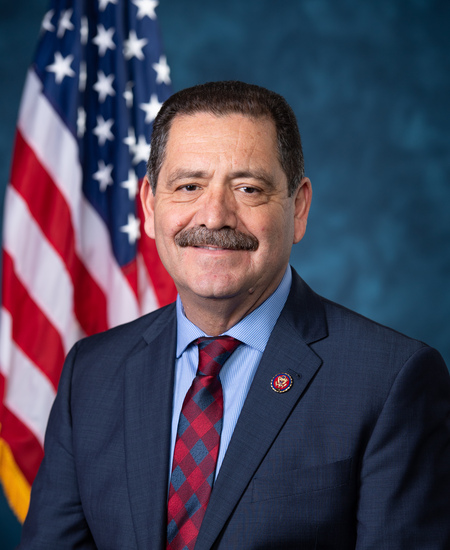
Rep. Jesús G. "Chuy" García
Sponsored bills
Maddy summaryThis bill, known as the Double the Wage for Overtime Act of 2026, aims to change how overtime pay is calculated for employees covered by the Fair Labor Standards Act. It directly affects workers who currently earn less than $23,660 annually, as it would require employers to pay them two times their regular hourly rate instead of one and a half times for hours worked beyond 40 in a week. The law takes effect 180 days after it is signed, ensuring a transition period before the new pay requirements begin. By raising the overtime multiplier, the legislation seeks to increase earnings for hourly workers who work extra hours.
Maddy summaryThe Fostering TRUST Act of 2026 requires the Department of Veterans Affairs to notify Congress and local representatives whenever a veteran commits or attempts suicide within a VA facility or an associated care provider. This notification must occur within seven days of the incident and include the facility location, along with detailed personal data such as the veteran's demographics, service history, medical insurance status, and housing situation within 60 days. The bill also mandates that these reports include guidance on suicide warning signs, available support resources, and best practices for securing lethal means while ensuring the privacy and dignity of the veteran and their family.
Maddy summaryThis resolution expresses support for designating June 5, 2026, as National Gun Violence Awareness Day and June 2026 as National Gun Violence Awareness Month. The bill calls on the public to wear orange on the designated day to honor victims and promote awareness of gun safety. It highlights statistics on gun-related deaths and injuries to underscore the need for community discussions on making neighborhoods safer.
Maddy summaryThis concurrent resolution directs the President to withdraw all United States Armed Forces from Lebanon within seven days of the bill's adoption. It operates under section 5(c) of the War Powers Resolution, which allows Congress to mandate the removal of troops from foreign locations. The measure directly affects the executive branch by requiring immediate compliance with the specified timeline for troop withdrawal.
Maddy summaryThe Know Your Rights Act directs the Attorney General to create a new Office of Legal Access Programs within the immigration review system to educate detained noncitizens about their legal rights and immigration procedures. This office would develop orientation programs that provide information in English and the five most common languages spoken by detainees, aiming to help individuals make informed decisions while reducing costs and delays in immigration proceedings. The law requires these educational services to be offered within five days of a person entering custody and mandates that the government consider vulnerable groups, such as unaccompanied children and those with serious mental disabilities, for special attention. Importantly, the bill explicitly states that providing this information does not create any new legal rights or benefits that can be enforced in court.
Maddy summaryThe Advancing Menopause Care and Mid-Life Women's Health Act directs the National Institutes of Health and the Department of Health and Human Services to expand research, education, and clinical care for women experiencing perimenopause and menopause. Key provisions include funding grants for biomedical studies on specific health conditions, creating new research categories for menopausal symptoms, and establishing Centers of Excellence to improve professional training for healthcare providers. The bill also mandates a national public awareness program, the development of online educational resources, and the creation of a data dashboard to track health outcomes and address disparities among rural and underserved populations. These efforts are supported by authorized funding of $25 million for research and $10 million for public health promotion and training programs for each fiscal year from 2027 through 2031.
Maddy summaryThe American High-Speed Rail Act expands federal funding and streamlines regulations to support the development of high-speed and higher-speed rail projects across the United States. It authorizes billions of dollars in grants for corridor planning, technology improvements, and construction, while allowing the federal government to cover up to 100% of project costs under specific conditions. The bill also introduces new provisions to facilitate land acquisition, prioritize border projects, and extend labor protections to workers involved in federally funded rail infrastructure. Additionally, the legislation defines higher-speed rail as trains traveling between 110 and 186 miles per hour and includes tax incentives for rail carriers that sell or lease property to support these projects.
Maddy summaryThe RESTORE Third Spaces Act of 2026 establishes a three-year federal pilot program to provide grants for renovating and developing community gathering places known as "third spaces," which are public areas distinct from home and work. Administered by the Department of Commerce, the program offers up to $200 million to local governments, nonprofits, and other eligible entities to support projects that strengthen local economies and reduce social isolation. A key requirement of the bill is that at least 60% of the funding must go to low-income and underserved communities, and the resulting spaces must remain free or low-cost for the public. To ensure accountability, recipients must engage the community in the design process and report on attendance, economic impact, and social benefits, with a final report submitted to Congress after the pilot period concludes.
Maddy summaryThis bill directs the Secretary of Defense to study whether the military justice system needs a specific law against hazing. The Department must examine how to add a new section to the Uniform Code of Military Justice and create a clear definition for what counts as hazing. Within 180 days of passing, the Secretary must submit a report with their findings and recommendations to Congress. This action directly impacts the Department of Defense and the legislative committees overseeing military affairs.