

Let Immigrants Kickstart Employment Act of 2021 or the LIKE Act This bill establishes a new class of nonimmigrant visa (W visa) for qualifying start-up owners and essential employees (and the accompanying spouse or child of such aliens) and addresses related issues. Under this bill, a start-up is a U.S. entity that has lawfully conducted business and was formed in the five years preceding an application for a start-up owner visa. To be eligible for an initial visa as a start-up owner, an individual must (1) possess at least a 10% interest in the start-up; (2) play a central and active role in the start-up's management or operations; (3) possess knowledge, skills, or experience to substantially assist in the start-up's growth and success; and (4) provide evidence that the start-up has received certain investments, created jobs, or generated revenue. The holder of a nonimmigrant start-up owner visa may receive lawful permanent resident status upon meeting certain requirements, including by establishing that the start-up has created a certain number of jobs and has met certain revenue targets. To be eligible for a visa as an essential employee of a start-up, an individual must (1) have an offer of employment in an executive or managerial capacity at a start-up; and (2) possess knowledge, skills, or experience to substantially assist in the start-up's growth and success. The bill limits the number of employees on essential employee visas that a start-up may have.
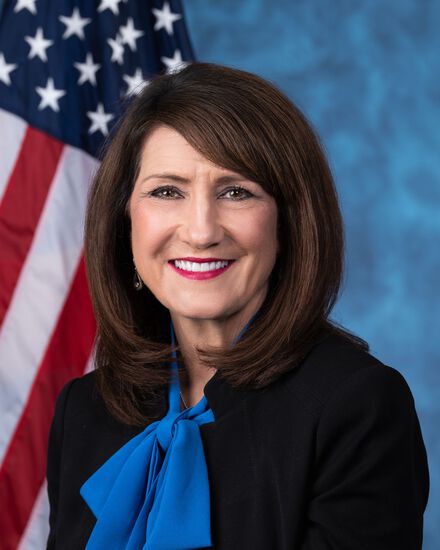
Rep. Marie Newman
Sponsored bills
Daniel Anderl Judicial Security and Privacy Act of 2021 This bill generally prohibits federal agencies and private businesses from publicly posting the personally identifiable information (e.g., home addresses) of federal judges and their immediate family members. It also (1) requires information to be removed upon written request from the federal judge concerned, (2) prohibits data brokers from purchasing or selling such information, and (3) establishes programs to protect such information at the state and local level and to enhance security for judges.
Housing is Infrastructure Act of 2021 This bill generally addresses housing affordability and infrastructure. The bill authorizes the Department of Housing and Urban Development (HUD) to provide grants, programs, and other support related to public housing, affordable housing preservation and construction, and mortgage access. The bill also establishes and funds the National Investment Authority (NIA) which must design, finance, and implement a strategy of long-term national economic growth and development. The NIA must select projects that coordinate investment of public and private capital in equitable, inclusive, and sustainable growth of the economy. Furthermore, the bill establishes the National Infrastructure Bank (NIB) to implement the strategy by engaging in credit market activities that support public and private investment in critical public infrastructure projects. The bill gives the NIA bond issuing authority and authorizes the Board of Governors of the Federal Reserve System to purchase these bonds. The Federal Reserve must lend funds on a short-term basis upon the request of the NIB and other subsidiaries. Additionally, the Department of the Treasury must provide for a line of credit not to exceed 100% of the NIA's total assets. Finally, the bill (1) authorizes HUD to provide support for fair housing organizations, and (2) requires consultation with a fair housing enforcement organization as part of an application for certain housing grants or funds.
Even Playing Field Act This bill addresses pay equity for amateur athletes and other personnel. It allows recognition, or continued recognition, of a national governing body of an amateur sports organization only if it provides equal investment, promotional support, working conditions (including staff support and facilities and equipment for training and competition), and wages and other compensation to all amateur athletes, without discrimination based on sex. National governing bodies must report periodically to Congress regarding pay equity. Each report shall include (1) the median compensation for amateur athletes, coaches, trainers, managers, administrators, and officials, disaggregated by race, gender, and employment category; and (2) the minimum and maximum compensation paid to such personnel, disaggregated by race, gender, and employment category.
Veterans Visa and Protection Act of 2021 This bill provides permanent resident status and citizenship eligibility to certain noncitizen veterans and addresses related issues. The Department of Homeland Security (DHS) must establish a program that allows (1) eligible noncitizen veterans outside of the United States to be admitted as permanent residents, and (2) eligible noncitizen veterans in the United States to obtain permanent resident status. Generally, an eligible noncitizen veteran under this bill is one who was not removed from the United States for certain crimes related to violence or national security. DHS may waive these eligibility requirements for humanitarian, family unity, public interest, or exceptional military service reasons. A noncitizen veteran who obtains permanent resident status under this bill shall be eligible for (1) naturalization through service in the Armed Forces, and (2) military and veterans benefits as if they had not been removed (or ordered removed) from the United States. For a noncitizen veteran in removal proceedings or subject to a final removal order, the Department of Justice (DOJ) must determine whether the veteran is eligible for permanent resident status under this bill. If the veteran is eligible, DOJ must adjust the veteran's status. The bill also protects noncitizen veterans or service members from being removed from the United States unless the veteran has been convicted of a crime of violence.
Greater Leadership Overseas for the Benefit of Equality Act of 2021 or the GLOBE Act of 2021 This bill contains provisions related to (1) the protection of LGBTQI individuals globally; and (2) immigration protections for vulnerable individuals. The bill establishes (1) an interagency group to respond to urgent threats to LGBTQI people in foreign countries, and (2) a permanent Special Envoy for the Human Rights of LGBTQI Peoples in the Department of State. The President shall impose visa-blocking sanctions on foreign persons responsible for violating the human rights of individuals based on sexual orientation, gender identity, or sex characteristics. The State Department shall establish the Global Equality Fund to provide assistance to nongovernmental organizations working to advance and protect human rights. The U.S. Agency for International Development shall establish the LGBTQI Global Development Partnership to work with the private sector and nongovernmental organizations to support LGBTQI rights. The bill removes prohibitions against providing foreign assistance to nongovernmental organizations that offer certain medical services (e.g., abortion-related services) using non-U.S. government funds. The bill contains several immigration-related provisions, such as those establishing that persecution based on sexual orientation or gender identity may form the basis of an asylum request, allowing certain applicants to file asylum claims more than a year after their arrival in the United States, including a permanent partnership between two partners as a marriage for immigration law purposes, providing for free counsel in certain immigration proceedings, and granting U.S. citizenship to a child born abroad through assistive reproductive technology from a U.S. citizen who is the child's nonbiological parent.
Neighbors Not Enemies Act of 2021 This bill repeals provisions authorizing the President to apprehend and remove from the United States the citizens of a particular nation, if the United States has declared war against that nation or that nation has threatened an invasion against the United States.
Menstrual Equity For All Act of 2021 This bill expands access to free sanitary napkins and tampons (i.e., menstrual products) in certain locations and for particular groups. It also requires Medicaid to cover menstrual products, as well as liners, cups, and similar items used by individuals with respect to menstruation. Specifically, the bill imposes requirements to make free menstrual products available in federal and state correctional facilities (including facilities that house aliens detained by the Department of Homeland Security) and restrooms in federal buildings that are open to the public. It also establishes a demonstration grant program to support the provision of free menstrual products on campuses of institutions of higher education and permits elementary and secondary schools to use certain grants to provide menstrual products to students. Furthermore, the bill requires employers with at least 100 employees to provide free menstrual products for employees. It also permits the use of certain grants for emergency food and shelter to provide menstrual products to homeless individuals.
Taiwan Diplomatic Review Act This bill addresses issues concerning diplomatic relations with Taiwan. The bill directs the Department of State to seek to enter into negotiations with the Taipei Economic and Cultural Representative Office (TECRO) in the United States to rename its office in the District of Columbia as the Taiwan Representative Office in the United States. (The U.S.-Taiwan relationship is unofficial, and TECRO is Taiwan's principal representative in the United States.) In addition, the bill establishes a W nonimmigrant visa for aliens affiliated with Taiwan's diplomatic operations, including (1) an ambassador, public minister, or career diplomatic or consular officer accredited by Taiwan and accepted by the United States; (2) a designated principal representative of Taiwan to an international organization; and (3) the immediate family members of such individuals. Specified holders of a W visa shall be entitled to certain immunities afforded to holders of diplomatic visas. The bill also requires the President to appoint the Director of the American Institute in Taiwan with the advice and consent of the Senate. (After the U.S.-Taiwan relationship became unofficial, the United States conducted relations with Taiwan through the American Institute in Taiwan. The institute's office in Taipei performs many of the same functions as an embassy.)
Extreme Risk Protection Order Act of 2021 This bill establishes grants to support the implementation of extreme risk protection order laws at the state and local levels, extends federal firearms restrictions to individuals who are subject to extreme risk protection orders, and expands related data collection. Extreme risk protection order laws, or red flag laws, generally allow certain individuals (e.g., law enforcement officers or family members) to petition a court for a temporary order that prohibits an at-risk individual from purchasing and possessing firearms. Among its provisions, the bill directs the Office of Community Oriented Policing Services within the Department of Justice to establish a grant program to help states, local governments, Indian tribes, and other entities implement extreme risk protection order laws; extends federal restrictions on the receipt, possession, shipment, and transportation of firearms and ammunition to individuals who are subject to extreme risk protection orders; and requires the Federal Bureau of Investigation to compile (and later destroy) records from federal, tribal, and state courts and other agencies that identify individuals who are subject to extreme risk protection orders.