

Research Investment to Spark the Economy Act of 2021 or the RISE Act of 2021 This bill authorizes the Departments of Agriculture, Commerce, Defense, Education, Energy, the Interior, Health and Human Services, and Transportation, National Aeronautics and Space Administration (NASA), National Science Foundation, and Environmental Protection Agency to provide support for research regarding COVID-19 (i.e., coronavirus disease 2019) or research disrupted by the COVID-19 pandemic. Support may be used to provide supplemental funding to extend the duration of a grant to a research institution, national laboratory, or individual that was awarded prior to the enactment of this bill, or to expand the purposes of such a grant as specified; issue awards to research the effects of the current pandemic and potential future pandemics; and provide flexibility on awards to account for facility closures or other limitations during the COVID-19 public health emergency. Agencies must provide the support as rapidly as possible. Provided funds shall remain available through FY2021.
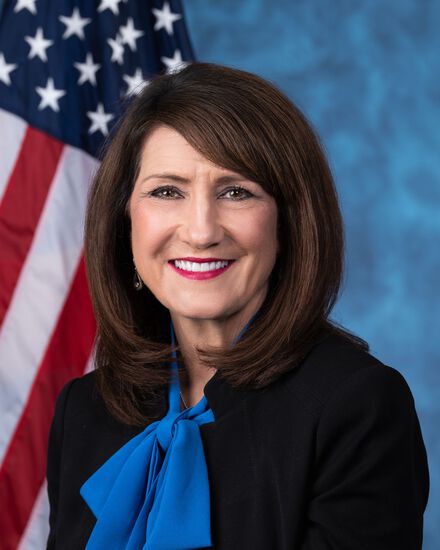
Rep. Marie Newman
Sponsored bills
Alzheimer's Caregiver Support Act This bill authorizes grants to expand training and support services for families and caregivers of individuals living with Alzheimer's disease or a related dementia. The Department of Health and Human Services may award these grants to community organizations and health care and social service providers.
Arctic Refuge Protection Act This bill repeals the Arctic National Wildlife Refuge oil and gas program. The bill designates approximately 1,559,538 acres of land within Alaska in the Arctic National Wildlife Refuge as a component of the National Wilderness Preservation System.
Federal Death Penalty Abolition Act of 2021 This bill prohibits the imposition of a death penalty sentence for a violation of federal law. It eliminates statutory authority for the death penalty as a sentencing option for federal offenses. It also requires a person who was sentenced to death before enactment of this bill to be resentenced.
This bill provides for the presentation of a Congressional Gold Medal to the Freedom Riders, in recognition of their contribution to civil rights by fighting for equality in interstate travel.
Juneteenth National Independence Day Act This bill establishes Juneteenth Independence Day as a federal holiday.
Hospitality and Commerce Job Recovery Act of 2021 This bill extends existing and establishes new tax credits that assist the hospitality and restaurant industry. Specifically, it allows a conventionand trade show restart tax credit; extends the employee retention tax credit through 2021; suspends for taxable years 2021 through 2022, the limitation on entertainment expenses related to a trade or business, allows a restaurant and dining restart credit for businesses closed or forced to reduce services due to COVID-19 (i.e., coronavirus disease 2019); allows a 50% tax credit for travel expenditures; and allows a tax credit for unmerchantable inventory for the period between December 31, 2019, and before April 1, 2021.
Living Donor Protection Act of 2021 This bill prohibits certain insurance carriers from discriminating against, and provides other protections for, living organ donors. Specifically, carriers may not deny, cancel, or otherwise impose conditions on policies for life insurance, disability insurance, or long-term care insurance based on an individual's status as a living organ donor. The bill also expressly specifies that recovery from organ-donation surgery constitutes a serious health condition that entitles eligible employees to job-protected medical leave. In addition, the Department of Health and Human Services must update educational materials on live organ donation to include information about the benefits of live organ donation and about access to insurance for living organ donors.
Next Generation Entrepreneurship Corps Act This bill establishes the Next Generation Entrepreneurship Corps Program to promote entrepreneurship in the most distressed regions of the United States, including those regions affected by COVID-19 (i.e., coronavirus disease 2019), by awarding participating fellows a two-year stipend to start and grow a new small business. Fellows will receive (1) a $120,000, two-year stipend for living and basic startup expenses; (2) health care; and (3) interest-free federal student loan deferral for two years. Further, fellows shall receive mentorship from the Service Corps of Retired Executives and be matched with a full range of lenders, investors, and insurers. The bill also establishes a fund in the Department of the Treasury from which the SBA may provide loans for qualified investors to support a small business owned and operated under the program by a fellow.
Full-Service Community School Expansion Act of 2021 This bill reauthorizes through FY2025 and expands the Full-Service Community Schools program. The program provides support for full-service community schools that serve children and their families, particularly for children who attend high-poverty elementary and secondary schools. Specifically, the bill directs the Department of Education (ED) to award grants to eligible entities to plan, implement, expand, and support full-service community schools. An eligible entity is a consortium of (1) one or more local educational agencies or the Bureau of Indian Education; and (2) one or more community-based organizations, nonprofit organizations, Indian tribes, tribal organizations, or other entities. A community school refers to a public elementary or secondary school that incorporates the four pillars of community schools. These four pillars are defined by the bill as (1) integrated student supports that address out-of-school barriers to learning (e.g., medical care and assistance with housing, transportation, or nutrition); (2) expanded and enriched learning time and opportunities (e.g., before- and after-school programs); (3) family and community engagement (e.g., adult education); and (4) collaborative leadership and practices, which must include a school-based leadership team, a community school coordinator, and a community-wide leadership team. Further, the bill directs ED to award grants to states to plan, implement, and expand community schools. A state educational agency that receives a grant must meet certain requirements, such as providing subgrants to local educational agencies, establishing a state-level steering committee, and establishing goals for the implementation and expansion of community schools throughout the state.