

Safe Schools Improvement Act of 2021 This bill requires states to direct their local educational agencies (LEAs) to establish policies that prevent and prohibit bullying and harassment of elementary and secondary school students. In particular, these policies must prohibit bullying and harassment based on race, color, national origin, sex, sexual orientation, gender identity, disability, or religion. Further, LEAs must provide (1) students, parents, and educational professionals with annual notice of the conduct prohibited in their disciplinary policies; (2) students and parents with grievance procedures that target such conduct; and (3) the public with annual data on the incidence and frequency of that conduct at the school and LEA level. The Department of Education must conduct and report on an independent biennial evaluation of programs and policies to combat bullying and harassment in elementary and secondary schools. The National Center for Education Statistics must collect state data to determine the incidence and frequency of the conduct prohibited by LEA disciplinary policies.
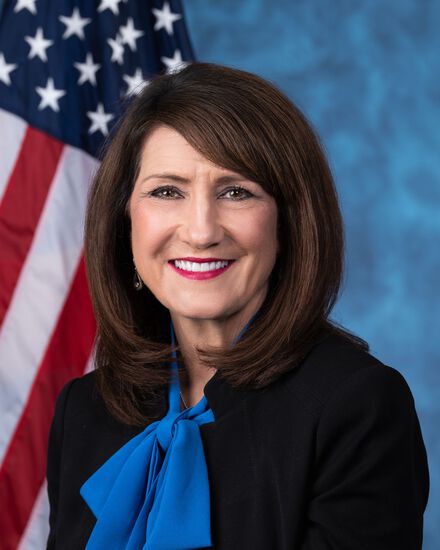
Rep. Marie Newman
Sponsored bills
Better Opportunity and Outcomes for Socially Disadvantaged Talent Act of 2021 or the BOOST Act of 2021 This bill allows an exclusion from gross income, for income tax purposes, of 50% of any gain from the sale or exchange of a certified equity interest held for more than 3 years for corporations and partnerships in which a socially disadvantaged individual who is a U.S. citizen has an ownership interest.
America's Red Rock Wilderness Act This bill designates specified lands in the following areas of Utah as components of the National Wilderness Preservation System: (1) Great Basin, (2) Grand Staircase-Escalante, (3) Moab-La Sal Canyons, (4) Henry Mountains, (5) Glen Canyon, (6) San Juan-Anasazi, (7) Canyonlands Basin, (8) San Rafael Swell, and (9) Book Cliffs and Uinta Basin. The bill sets forth administrative requirements for (1) the exchange of state-owned lands within such areas, (2) federal reservation of water rights, (3) measurement of setbacks for roads with adjacent wilderness, (4) authorized livestock grazing, and (5) withdrawal of such lands from disposition under certain public land laws.
Medicare Dental, Vision, and Hearing Benefit Act of 2021 This bill provides for Medicare coverage of dental, vision, and hearing care. Coverage includes (1) routine dental cleanings and exams, basic and major dental services, emergency dental care, and dentures; (2) routine eye exams, eyeglasses, and contact lenses; and (3) routine hearing exams, hearing aids, and exams for hearing aids. With respect to such care, the bill establishes special payment rules, limitations, and coinsurance requirements.
This resolution congratulates and honors Argonne National Laboratory on the 75th anniversary of the laboratory and wishes the laboratory continued success in helping the people of the United States unlock new scientific and technological frontiers that secure their energy future.
Safe Schools Improvement Act of 2021 This bill requires states to direct their local educational agencies (LEAs) to establish policies that prevent and prohibit bullying and harassment of elementary and secondary school students. In particular, these policies must prohibit bullying and harassment based on race, color, national origin, sex, sexual orientation, gender identity, disability, or religion. Further, LEAs must provide (1) students, parents, and educational professionals with annual notice of the conduct prohibited in their disciplinary policies; (2) students and parents with grievance procedures that target such conduct; and (3) the public with annual data on the incidence and frequency of that conduct at the school and LEA level. The Department of Education must conduct and report on an independent biennial evaluation of programs and policies to combat bullying and harassment in elementary and secondary schools. The National Center for Education Statistics must collect state data to determine the incidence and frequency of the conduct prohibited by LEA disciplinary policies.
Federal Retirement Fairness Act This bill modifies the federal civilian service that is creditable service under the Federal Employees Retirement System (FERS). Specifically, it expands the nondeduction service that may be creditable under FERS. Nondeduction service is federal service where an employee's pay is not subject to retirement deductions (e.g., service under a temporary appointment). Currently, nondeduction service performed before January 1, 1989, is creditable under FERS so long as a deposit is made into the retirement fund to cover the period of nondeduction service. This bill allows nondeduction service performed on or after January 1, 1989, to be creditable under FERS so long as a deposit is made into the retirement fund.
Supporting America's Young Entrepreneurs Act of 2021 This bill provides deferment and cancellation of federal student loans for certain founders and employees of small business start-ups. The bill also establishes a young entrepreneurs business center. First, the bill allows a founder of a small business start-up to defer student loan payments for up to three years. Next, the bill directs the Department of Education (ED) to cancel up to $20,000 in federal student loan debt for a borrower who (1) has made 24 monthly payments on the loan while employed as a founder of a small business start-up in a distressed area, (2) is approved for loan cancellation by the young entrepreneurs business center established by the bill, and (3) is not currently in default on the loan. Further, ED must cancel up to $3,000 in federal student loan debt for a borrower who (1) has made 12 monthly payments on the loan while employed full-time by a small business start-up, and (2) is not currently in default on the loan. The bill also excludes from an individual's gross income, for income tax purposes, the amount of such canceled student loan debt. Finally, the bill establishes a young entrepreneurs business center within the Small Business Administration to certify small business start-ups, identify distressed areas, and approve loan cancellations. To be certified by the center, a start-up must have a founder who is a recent graduate of an institution of higher education.
Screening With Dignity Act This bill directs the Transportation Security Administration (TSA) to develop procedures to appropriately and respectfully screen self-identified transgender air passengers and passengers traveling with religious headwear or other articles of faith and begin training of all TSA Officers on such procedures. The TSA must implement protections for such passengers, including (1) prohibiting human viewing of passenger images and conducting pat downs by an officer of the gender requested by the passenger; and (2) ensuring secondary screening measures are no more intrusive than necessary to resolve an alarm or other concern raised by primary screening, including consideration of the sensitivity of the groin, chest, and other body areas and the sensitivity of religious articles of faith such as religious headwear. The TSA shall separately study and report on (1) the cost and feasibility of retrofitting advanced image technology screening equipment to distinguish between foreign objects and human body parts (including hair) in a manner that is gender neutral; and (2) the impact of imaging technology on transgender passengers, passengers whose religious faith requires them to travel with articles of faith, and passengers traveling with assistive devices. Additionally, the TSA must identify any policy, procedure, or training changes and complete any testing, certification, and assessment for qualifying additional technology to ensure that any advanced imaging utilized for passenger screening meets certain requirements, including not generating alarms based only on passengers' body parts (including hair), undergarments, or religious headwear.
Tax-Free Pell Grant Act This bill excludes from gross income, for income tax purposes, any amount received as a federal Pell Grant. It also expands the definition of qualified tuition and related expenses under the American Opportunity and Lifetime Learning tax credit to include computer or peripheral equipment (up to a maximum of $1,000), child and dependent care expenses, and course materials.