

Lonnie Kilpatrick Central Pacific Relief Act This bill provides a presumption of service-connection for diseases associated with exposure to certain herbicide agents to veterans who served on (1) Guam or American Samoa, or in the territorial waters thereof, between January 9, 1962, and July 31, 1980; or (2) Johnston Atoll or a ship that went to Johnston Atoll between January 1, 1972, and September 30, 1977. Under a presumption of service-connection, specific diseases diagnosed in certain veterans are presumed to have been caused by the circumstances of their military service. Health care benefits and disability compensation may then be awarded. Additionally, the bill expands eligibility for hospital care, medical services, and nursing home care to veterans with a disability associated with exposure to certain herbicides during specified times of military service on Guam, American Samoa, or Johnston Atoll.
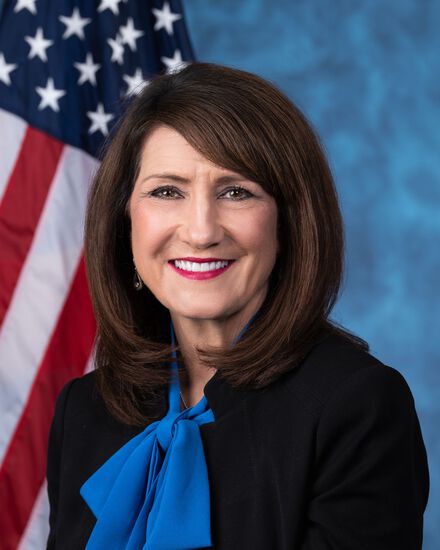
Rep. Marie Newman
Sponsored bills
Genuine Progress Indicator Act of 2021 or the GPI Act of 2021 This bill requires the Department of Commerce to establish the genuine progress indicator as a metric to measure the economic well-being of households. The indicator shall be calculated through adjustments to gross domestic product that account for positive and negative economic, environmental, and social factors that contribute to economic activity. It shall also include the total annual economic value and cost of such factors. The head of each federal agency, the President, the Federal Reserve, and Congress must use both the indicator and gross domestic product for budgetary reporting and economic forecasting that measures the net benefits of economic activity.
Medical Device Nonvisual Accessibility Act of 2021 This bill requires certain medical devices with a digital interface to meet nonvisual accessibility standards established by the Food and Drug Administration (FDA). Specifically, the FDA must establish regulations to require a Class II or Class III medical device with a digital interface to provide a blind or low-vision user access to the same services and information, and generally the same ease of use, as provided to a user who is not low-vision or blind. (The FDA classifies medical devices in three classes. Class I devices are low-risk, Class II devices are moderate-risk, and Class III devices are high-risk.) A Class II or Class III medical device that does not meet the nonvisual accessibility standards established under this bill may not be sold.
Safe School Drinking Water Act This bill requires the Environmental Protection Agency to establish a program to award grants to assist local educational agencies in installing and maintaining filtration stations (e.g., drinking fountains) at schools and child care programs.
Domestic Workers Bill of Rights Act This bill provides rights and protections for domestic workers (e.g., housekeepers, nannies, caretakers, personal assistants, and chauffeurs), including pay and leave rights, and health and safety protections. Specifically, the bill repeals the exemption of domestic live-in employees from certain minimum wage and maximum hour requirements. Employers must provide written notice of termination and provide at least 30 days of lodging and two weeks of severance pay to terminated live-in employees. Live-in employees also must be provided with reasonable access to telephone and internet service during their employment. The bill requires employers to provide domestic workers with a written agreement covering wages, sick leave, benefits, and other matters. Further, domestic workers may request and be granted changes to work schedules due to personal events. The bill also provides domestic workers with certain privacy rights, extends to domestic workers protections against discrimination in employment, and increases the federal medical assistance percentage (FMAP) for certain Medicaid-funded medical services provided by domestic workers. The Department of Labor must (1) award grants for a domestic worker national hotline for reporting emergencies, training on hazards facing domestic workers, and workforce investment activities for domestic workers; and (2) establish a Domestic Worker Wage and Standards Board to investigate standards in the domestic workers industry. Labor must publish online a document that describes the rights and protections for domestic workers under this bill.
504 Program Level Flexibility Act This bill authorizes the Small Business Administration (SBA), upon a determination that the amount of its commitments to guarantee 504 loans could exceed the authorized limit, to guarantee up to 115% of that limit. Such loans, made through SBA community partners and certified by the SBA, provide long-term, fixed rate financing for major fixed assets that promote business growth and job creation.
Assisting School Mental Health Professionals Through Work Study Act of 2021 This bill adds assisting school-based mental health professionals to the list of community services in which undergraduate, graduate, and professional students may participate under the Federal Work-Study Program. Specifically, the bill revises the definition of community services to include activities in which the student assists a mental health professional with appropriate tasks (e.g., administrative assistance) so long as the professional is (1) a school-based mental health services provider, or (2) an overseer of a school-based mental health services provider.
Creating Opportunities to Advance Shoreline Treatments Act or the COAST Act This bill authorizes the U.S. Army Corps of Engineers to expand the use of allotted resources for flood control on stream banks and shorelines to include erosion control. Additionally, these resources may be used to prevent damage to areas such as nonhighway roadways, public recreational assets, public lands, and parks.
Captive Primate Safety Act This bill limits the trade and possession of nonhuman primates. For example, the bill prohibits most individuals from owning a nonhuman primate as a pet.
This resolution (1) commits to advancing policies that will end roadway fatalities by 2050, and (2) calls on Congress and the Department of Transportation to commit to working together to achieve zero roadway fatalities by the year 2050.