Ejiao Act This bill prohibits the knowing sale or transport of ejiao (or products containing ejiao) in interstate or foreign commerce. (Ejiao is a gelatin made with donkey skin and used in traditional Chinese medicine and beauty products.)
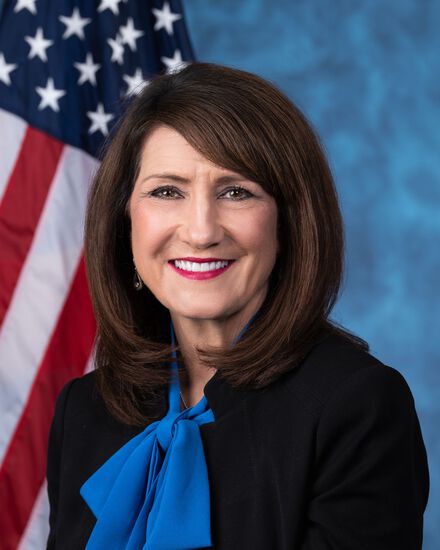
Rep. Marie Newman
Sponsored bills
Student Mental Health Helpline Act of 2021 This bill authorizes grants to support student mental health and safety helplines (i.e., a free, confidential service that is accessible via telephone and other communication platforms that assists students facing challenges with abuse, bullying, depression, self-harm, and related issues). The Substance Abuse and Mental Health Services Administration (SAMHSA) may award the grants to agencies or other subdivisions of a state, Indian tribe, or local government that are primarily responsible for health, public health, or education. Among other purposes, recipients must use funds to establish or maintain a helpline that provides information to school officials (to the extent permitted by federal privacy standards for health information) about student mental health and safety concerns. The bill also requires SAMHSA to report on the feasibility of setting up a nationally available student mental health and safety helpline.
This resolution expresses the sense of the House of Representatives that the United States shall recognize kind actions in our country, encourage kindness, spread love, and foster a culture of being kind to one another.
This resolution celebrates the contributions of small businesses in every U.S. community and supports the designation of National Small Business Week. Further, it supports efforts to provide small businesses with aid and assistance through certain programs and initiatives.
Panama Canal Zone Veterans Act of 2021 This bill establishes a presumption of service-connection for specified conditions associated with active duty service in or near the Panama Canal Zone (zone) from January 1, 1958, through the latter of December 31, 1999, or the date on which the last service member departed from duty in the zone. Under a presumption of service-connection, specific conditions diagnosed in certain veterans are presumed to have been caused by the circumstances of their military service. Health care benefits and disability compensation may then be awarded. The presumption of service-connection applies to illnesses listed in the bill (e.g., Hodgkin's disease) or those that (1) have a positive association with exposure to an herbicide agent that is known or presumed to be associated with service in the zone during the specified time period, and (2) become manifest in a veteran who served in the zone during the specified time period and was exposed to an herbicide agent during such service. The Department of Veterans Affairs must prescribe regulations providing for a presumption of service-connection whenever there is a determination that a positive association exists between the exposure to an herbicide agent known or presumed to be associated with service in or near the zone and the occurrence of an illness in humans.
Medicare Negotiation and Competitive Licensing Act of 2021 This bill establishes several requirements relating to the prices of prescription drugs. Specifically, the bill requires the Centers for Medicare & Medicaid Services (CMS) to negotiate with pharmaceutical companies regarding prices for drugs covered under Medicare. (Current law prohibits the CMS from doing so.) If the CMS is unable to negotiate the price of a drug, such drug is subject to competitive licensing in order to further its sale under health insurance programs, notwithstanding existing government-granted exclusivities. The negotiated prices also apply to other federal health care programs, private health insurance, and the uninsured; pharmacies that charge more than the negotiated price for uninsured individuals are subject to civil penalties. Manufacturers must also comply with specified reporting requirements relating to prices and licensing, subject to civil penalties. The bill also institutes an excise tax on drugs for which the price spikes beyond a certain limit, subject to specified exemptions, as well as on drugs for which the price exceeds the negotiated price.
Fair COLA for Seniors Act This bill bases cost-of-living adjustments for certain benefits available through federal and military retirement programs, Social Security, and specified programs for veterans on a price index that tracks the spending patterns of older consumers. The Bureau of Labor Statistics of the Department of Labor must publish that price index on a monthly basis.
Improving Medicare Coverage Act This bill temporarily expands eligibility for Medicare. It also temporarily establishes a premium and cost-sharing assistance program for low-income beneficiaries. Specifically, the bill lowers the age of eligibility for Medicare from 65 to 60. The Centers for Medicare & Medicaid Services must establish procedures to provide for automatic enrollment of qualifying individuals. Enrollment must be completed within 11 months of the bill's enactment. The bill also establishes a program under Medicare to assist low-income Medicare beneficiaries with premiums, coinsurance, deductibles, and other costs. Currently, such assistance is provided through Medicare Savings Programs, which are administered by state Medicaid programs. The bill also establishes a related special enrollment period under Medicare, expands eligibility for assistance to beneficiaries with income up to 200% of the federal poverty line, and provides for joint eligibility determinations with respect to the bill's program and the low-income subsidy program under the Medicare prescription drug benefit. The bill's provisions generally take effect six months after the bill's enactment and terminate five years later.

Prohibition of Medicaid Funding for Conversion Therapy Act This bill prohibits state Medicaid programs from covering conversion therapy. The bill defines conversion therapy as any practice or treatment that seeks to change a person's sexual orientation or gender identity in exchange for monetary compensation.
Harlem Hellfighters Congressional Gold Medal Act This bill provides for the award of a Congressional Gold Medal to the 369th Infantry Regiment, commonly known as the Harlem Hellfighters, in recognition of their bravery and outstanding service during World War I.