

Maddy summaryThis non-binding resolution (HRES 737) expresses the House's recognition of the link between firearm violence and intimate partner violence, highlighting that firearms are used in nearly 66% of intimate partner homicides and disproportionately impact Black, American Indian/Alaska Native, and Hispanic women. It commends domestic violence advocates and pledges to fund research on this intersection, while calling for specific policy actions like strengthening background checks (NICS), restricting firearm access for those under domestic violence restraining orders, and supporting survivor programs. The resolution also urges Congress to prioritize pending bills such as H.R. 905 and H.R. 715 to address this issue.
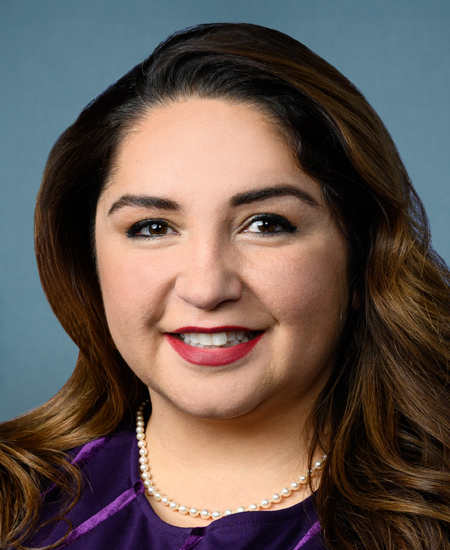
Rep. Delia C. Ramirez
Sponsored bills
Maddy summaryHR 5817, the PASSPORT Act, aims to improve U.S. passport processing by requiring the State Department to expand a pilot program notifying passport holders 6 months before expiration (instead of the current limited system) and codify this process. It mandates airlines to provide passport validity requirements and application information during flight bookings, and establishes better tracking for citizenship documents with return shipping options and reimbursement for lost documents. The bill also directs a GAO study on passport operations, including lockbox facilities and demand planning, and requires the State Department to address staffing needs for passport processing staff. These changes directly affect all U.S. passport applicants and travelers by reducing delays and improving transparency in the application process.
Maddy summaryThis bill replaces "Columbus Day" with "Indigenous Peoples’ Day" as the official federal holiday observed on the second Monday in October. It directly affects federal government operations and all federal documents, rules, or laws that previously referenced "Columbus Day" by automatically updating those references to "Indigenous Peoples’ Day" upon enactment. The key mechanism is a simple amendment to federal law (5 U.S.C. § 6103(a)) to change the holiday name and a provision ensuring all existing federal references to Columbus Day are legally treated as referring to Indigenous Peoples’ Day instead. This is a procedural change to federal holidays and references, not a new policy or program.
Maddy summaryHR 5797, the Protecting Immigrants From Legal Exploitation Act of 2023, targets fraud in immigration services by imposing criminal penalties on individuals who falsely claim legal authority or defraud immigrants. It makes it a federal offense to execute schemes involving false promises about immigration services (up to 10 years in prison) or falsely represent oneself as an attorney (up to 15 years), requiring full reimbursement to victims. The bill mandates that immigration service providers (non-lawyers charging fees) identify themselves and disclose fees when assisting applicants, and allows immigrants to withdraw fraudulent applications without penalty. It also requires government agencies to create outreach programs educating immigrants on legitimate legal services and establish procedures for corrected filings.
Maddy summaryHR 5784 would provide federal grants to public schools (including Bureau of Indian Education schools) to make them more environmentally sustainable and equitable. It prioritizes schools in the most vulnerable communities (based on CDC Social Vulnerability Index) for full funding to become "healthy zero-carbon schools" through energy-efficient retrofits and new construction, while offering reduced funding for less vulnerable schools. The grants require community engagement in planning, mandate hiring from local communities with specific diversity goals, fund social services and mental health support, and include strict energy efficiency standards for all projects. The bill also includes funding for educational equity planning and climate resiliency programs to help schools serve as community centers during disasters.
Maddy summaryThis bill requires the Federal Emergency Management Agency (FEMA) to implement concrete measures to ensure equitable disaster response and assistance. It mandates FEMA to modify data collection systems, develop equity criteria for all programs, appoint an equity advisor, and establish a steering group with diverse representation - all to address barriers faced by underserved communities (including racial minorities, rural areas, low-income populations, and those with disabilities). FEMA must also submit annual reports to Congress on progress and metrics measuring equity impacts, while the GAO will review FEMA’s decision-making factors for disaster declarations. These changes directly affect how FEMA delivers federal disaster aid, aiming to reduce disparities in access and outcomes for communities historically underserved in emergency management.
This resolution requests the Department of State to transmit to Congress a statement on human rights practices in Azerbaijan, including the steps the United States has taken to promote human rights in the region and an assessment of whether circumstances exist that necessitate a continuation of security assistance for Azerbaijan.
Maddy summaryThe WIC for Kids Act expands eligibility for the Special Supplemental Nutrition Program for Women, Infants, and Children (WIC) by adding new qualifying pathways. It allows children to qualify if they live in households where someone receives Head Start, Indian reservation food assistance, or Puerto Rico/Northern Mariana Islands nutrition block grants, and streamlines documentation by permitting states to use existing records. The bill extends certification periods for children from one to two years and automatically enrolls infants born to current WIC participants. This directly affects low-income families with children who qualify for related assistance programs but previously faced barriers to WIC access.
Maddy summaryHRES 702 is a symbolic House resolution (not a binding law) expressing the House's "sense" that the federal government should develop a "restaurant workers' bill of rights." It does not create new policies but calls for future legislation to address systemic issues affecting restaurant workers, including low wages, lack of healthcare access, discrimination, unsafe conditions, and inadequate leave. The resolution outlines five key areas for such future legislation: ensuring fair pay and economic security, paid leave and predictable schedules, safe workplaces, healthcare access (including reproductive care), and protections for organizing and voting. It specifically references existing bills (like the LIFT the BAR Act and EACH Act) as potential models for this future framework. The resolution directly affects the 12.5 million U.S. restaurant workers, who face disproportionate poverty, discrimination, and workplace hazards.
Maddy summaryThis bill amends the Higher Education Act to require all U.S. colleges and universities receiving federal financial aid to create detailed anti-harassment policies covering physical, online, and institution-sponsored settings. It mandates policies prohibiting harassment based on race, sex (including sexual orientation and gender identity), disability, religion, and other protected characteristics, including harassment via institutional email, computers, or electronic messaging. The bill also establishes a $50 million annual grant program to fund colleges developing prevention programs, victim support services, and training for students and staff on recognizing and addressing harassment. These policies and grants must comply with existing civil rights laws like Title IX but add specific requirements for reporting and prevention.