

Maddy summaryThis bill amends federal health law to include Middle Eastern and North African (MENA) populations - such as Lebanese, Iranian, Egyptian, and Palestinian communities - as a recognized racial and ethnic minority group for the first time. It updates definitions in the Public Health Service Act to ensure MENA individuals can access health programs designed for marginalized communities, which they were previously excluded from due to being grouped with non-Hispanic White populations in federal data. The bill also requires the Department of Health and Human Services to conduct a comprehensive health study of MENA communities, disaggregating data by subgroups to analyze specific health conditions, access barriers, and outcomes. Results will be published in a public online portal and reported to Congress within two years. This change directly affects MENA individuals by enabling targeted health initiatives and data collection previously unavailable to them.
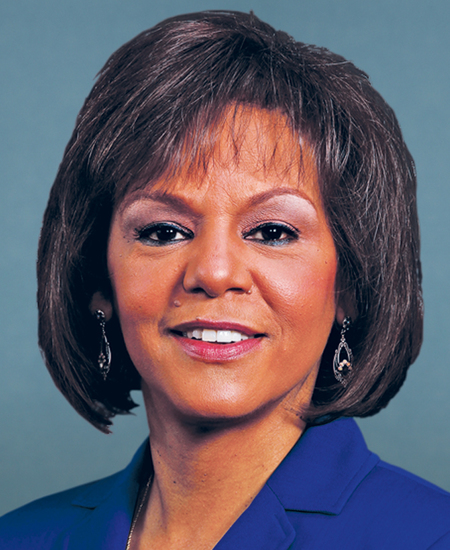
Rep. Robin L. Kelly
Sponsored bills
Maddy summaryThe Puppy Protection Act of 2023 sets new standards for businesses that sell dogs (dealers), directly affecting pet stores and breeders operating under the Animal Welfare Act. It requires specific housing with space allowances based on dog size (e.g., 12-30 square feet per dog), temperature control (45-85°F), clean food twice daily, and daily exercise or socialization with humans/dogs for at least 30 minutes. The bill also mandates annual veterinary exams including dental care, strict breeding limits (e.g., age restrictions, maximum 2 litters in 18 months), and efforts to place retired breeding dogs in homes instead of selling them to other breeders. Regulations must be finalized within 18 months of enactment.
Maddy summaryHR 2413, the Dental Care for Veterans Act, reclassifies dental care as standard medical services under the VA's existing benefits structure, eliminating prior restrictions that treated dental care separately. It modifies how dental appliances are procured and establishes a phased eligibility timeline: veterans already eligible for dental benefits gain immediate access, while others qualify over 1-4 years based on their current benefit status. The bill affects all veterans currently covered under VA dental programs, changing their access to care without creating new funding. Key provisions streamline dental service delivery under Title 38, aligning it with other medical benefits.
Maddy summaryHR 2630, the Safe Step Act, requires group health plans and health insurance issuers to establish a clear, transparent process for patients or their doctors to request exceptions to medication step therapy protocols. These protocols typically force patients to try cheaper drugs first before covering more expensive alternatives. The bill mandates that plans must approve exceptions when prior treatments failed, delay would cause serious harm, a treatment is unsafe, or a patient is stable on a previously approved drug, with strict 72-hour (or 24-hour in emergencies) decision timelines. It also requires plans to publish the exception process online and limit documentation requests to only necessary medical information. This law directly affects health insurers, employers offering health plans, and patients using step therapy for prescription drugs.
Maddy summaryHR 2439, the Ally’s Act, requires most private health insurance plans to cover hearing-related services and devices for qualifying individuals. It mandates coverage for cochlear implants, bone conduction devices, maintenance, upgrades every five years, hearing assessments, surgery, and rehabilitation, without separate cost-sharing or medical necessity reviews. This directly affects people with hearing loss who need implantable devices, as defined by a physician or audiologist. The law applies to group health plans under the Public Health Service Act, ERISA, and Internal Revenue Code, taking effect for plan years beginning January 1, 2025.
Maddy summaryHR 2434, the Next Generation Fuels Act of 2023, requires automobile manufacturers to design vehicles for model years 2028 and later to operate with gasoline containing up to 25% ethanol (2028-2032) or 30% ethanol (2033+) and to be compatible with gasoline having a research octane number of 95 or higher (2028-2032) or 98 or higher (2033+). Fuel retailers must install equipment to ensure compatibility with these high-octane, high-ethanol fuels, while refiners must meet specific requirements for gasoline aromatics content and low-carbon fuel standards. The bill mandates labeling requirements to inform consumers about fuel compatibility and potential consequences of using lower-octane fuels. EPA must determine nationwide availability of 98 octane gasoline by 2031 before the full requirements take effect in 2033, affecting automobile manufacturers, fuel retailers, and refiners through changes in vehicle design, fuel composition, and consumer information standards.
Maddy summaryThis bill authorizes $50 million annually from 2024 through 2029 for the Centers for Disease Control and Prevention (CDC) to conduct or support research on firearms safety and gun violence prevention. The funding is specifically for studies under the Public Health Service Act, adding to existing research budgets rather than replacing them. It directly affects CDC researchers and public health agencies by providing dedicated resources to study gun violence causes and prevention strategies. The bill creates no new regulations or requirements, only enabling research to inform future policy decisions.
Resident Physician Shortage Reduction Act of 2023 This bill increases the number of residency positions eligible for graduate medical education payments under Medicare for qualifying hospitals, including hospitals in rural areas and health professional shortage areas. Current law provides for an increase of up to 200 positions per fiscal year beginning in FY2023, with a total increase of 1,000 positions; each hospital may receive up to 25 additional positions. Current law also provides for an additional increase of up to 200 positions for FY2026, with at least 100 of these positions for psychiatry or related specialties; each hospital may receive up to 10 additional positions. The bill provides for an additional increase of 2,000 positions per fiscal year from FY2025-FY2031; during this period, each hospital may receive up to 75 additional positions in total under the bill and current law. Additionally, one-third of the positions that are made available under the bill must be allocated to hospitals that are already operating above applicable resident limits. The bill also requires the Government Accountability Office to report on strategies to increase the diversity of the health professional workforce, including with respect to representation from rural, low-income, and minority communities.
Maddy summaryHR 1839, the Combating Illicit Xylazine Act, makes the illicit use and distribution of xylazine a federal crime by adding it to the Controlled Substances Act. The bill broadly defines xylazine to cover numerous chemical variants and prohibits human use or non-licit distribution, while preserving legitimate veterinary and pharmaceutical uses. It requires tracking xylazine in drug supply chains and mandates two reports to Congress within 1 and 4 years on its prevalence, sources, and whether it should be rescheduled. The bill directly affects individuals distributing or using xylazine illicitly, including as an additive to drugs like fentanyl, and aims to address its public health risks. Congress declared illicit xylazine an "emerging drug threat" under existing law.
Maddy summaryThe Women's Health Protection Act of 2023 would protect access to abortion services by prohibiting states from imposing restrictions that are more burdensome than those for comparable medical procedures. The bill would ensure people can obtain abortion services before fetal viability without unnecessary limitations like mandatory waiting periods or biased counseling, and after viability when necessary to protect the patient's life or health. It would preempt state laws that conflict with these protections and allow for civil enforcement actions to challenge restrictive state laws. This bill directly affects people seeking abortion services (including transgender and nonbinary individuals who can become pregnant), health care providers, and states that have implemented abortion restrictions.