

Maddy summaryThis non-binding resolution (HRES 737) expresses the House's recognition of the link between firearm violence and intimate partner violence, highlighting that firearms are used in nearly 66% of intimate partner homicides and disproportionately impact Black, American Indian/Alaska Native, and Hispanic women. It commends domestic violence advocates and pledges to fund research on this intersection, while calling for specific policy actions like strengthening background checks (NICS), restricting firearm access for those under domestic violence restraining orders, and supporting survivor programs. The resolution also urges Congress to prioritize pending bills such as H.R. 905 and H.R. 715 to address this issue.
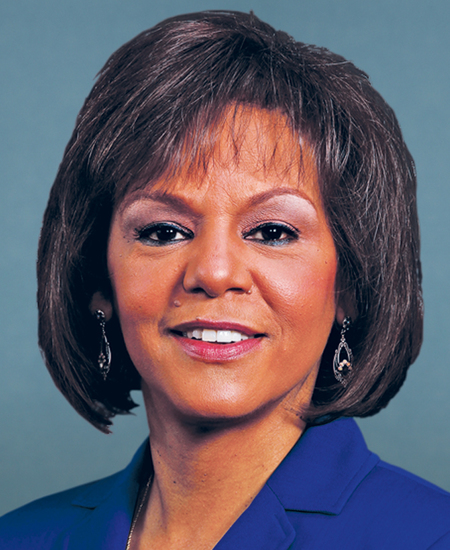
Rep. Robin L. Kelly
Sponsored bills
Maddy summaryThis bill amends the Higher Education Act to require all U.S. colleges and universities receiving federal financial aid to create detailed anti-harassment policies covering physical, online, and institution-sponsored settings. It mandates policies prohibiting harassment based on race, sex (including sexual orientation and gender identity), disability, religion, and other protected characteristics, including harassment via institutional email, computers, or electronic messaging. The bill also establishes a $50 million annual grant program to fund colleges developing prevention programs, victim support services, and training for students and staff on recognizing and addressing harassment. These policies and grants must comply with existing civil rights laws like Title IX but add specific requirements for reporting and prevention.
Maddy summaryThe Algorithmic Accountability Act of 2023 requires companies with over $50 million in annual revenue or that handle data for more than 1 million consumers to assess how their automated decision systems might negatively impact people before and after deployment. These companies must document potential biases related to protected characteristics like race, gender, and age, and submit annual summary reports to the Federal Trade Commission. The FTC will create a public repository with anonymized information about these systems to help consumers understand how automated decisions affect critical areas like housing, employment, and healthcare. The law aims to increase transparency around automated decision-making while requiring companies to implement measures for consumers to contest or appeal decisions.
Maddy summaryThis bill amends the Public Health Service Act to improve how the Organ Procurement and Transplantation Network (OPTN) is operated. It changes the contracting process by allowing the Secretary to award grants, contracts, or cooperative agreements to public or private entities for the OPTN, with specific provisions to ensure distinct operations for the network and its governing board. The bill also includes technical corrections to existing law and requires a GAO review of the OPTN's historical financing within two years of enactment. This legislation directly affects the organizations and processes managing organ donation and transplantation in the United States.
Maddy summaryThis bill establishes a new Office within the Department of Justice to address racial disparities in missing and murdered Black women and girls cases. The Office will collect data on case resolution times, coordinate with law enforcement, and create a public dashboard tracking these cases. It also creates grants for community organizations to provide culturally appropriate services, prevention programs, and training for law enforcement targeting violence against Black women and girls. The bill directly affects Black women and girls who are victims of violence and their communities, focusing on improving data collection and support systems rather than changing criminal laws.
Maddy summaryThe Better CARE for Animals Act of 2023 amends the Animal Welfare Act to strengthen enforcement of animal welfare standards. It gives the Attorney General authority to bring civil cases for violations, including seeking penalties up to $10,000 per day per violation and injunctions to remove or relocate animals. The bill also requires the Secretary of Agriculture and Attorney General to coordinate through a new Memorandum of Understanding, focusing on repeat violators. These changes directly affect dealers, exhibitors, and enforcement agencies by expanding civil enforcement tools and clarifying jurisdiction over rule violations.
Maddy summaryThe John R. Lewis Voting Rights Advancement Act of 2023 would strengthen the Voting Rights Act of 1965 by updating the criteria for which states and localities must obtain federal preclearance before changing voting practices. It would establish new standards for proving vote dilution and vote denial by requiring courts to consider historical discrimination, racial polarization in voting, and whether voting practices disproportionately burden minority voters. The bill would also require states and localities to provide public notice of voting changes and share demographic data about polling locations. These changes would primarily affect jurisdictions with a history of voting rights violations, aiming to prevent discriminatory voting practices before they take effect.
Maddy summaryThe Humane Cosmetics Act of 2023 bans cosmetic animal testing in the United States, prohibiting companies from conducting or contracting such testing after its enactment (effective 1 year later). It also bans selling or transporting cosmetics developed using animal testing conducted after that date within U.S. interstate commerce. The law directly affects cosmetic manufacturers, retailers, and suppliers operating in the U.S. market, requiring them to use non-animal testing methods for safety evaluations. Exceptions exist for foreign regulatory requirements or when no alternative testing methods are available for specific ingredients.
Maddy summaryHR 5433, the Child Care Stabilization Act, provides $16 billion annually from 2024 to 2028 to stabilize the child care sector through grants administered by the Health and Human Services Secretary. It directly affects licensed child care providers by offering stable funding to cover operating costs, while supporting higher wages for early educators without raising family fees. Key provisions include expanding access to high-quality, affordable care - especially for infants/toddlers, rural communities, and children with disabilities - and addressing shortages in underserved areas. The funding builds on existing American Rescue Plan resources, aiming to strengthen the child care workforce and increase available options for working families.
Voters on the Move Registration Act of 2023 This bill requires the Consumer Financial Protection Bureau to develop, and specified agencies to distribute, a statement providing individuals with information on how to register to vote and their voting rights. This information must be provided to individuals upon their participation in certain rental assistance programs or application for certain residential mortgages.