

Maddy summaryHRES 173 is a symbolic resolution, not a bill, calling for federal recognition and support of historically Black Freedmen's Settlements. It honors communities like Sand Branch, Texas (facing water contamination and poverty), Africatown, Alabama (surrounded by pollution), and Mossville, Louisiana (enduring industrial pollution), which were established by formerly enslaved people after emancipation. The resolution urges federal coordination to preserve these communities through documentation, historic preservation, and leveraging existing programs like EPA’s Environmental Justice initiatives and Justice40 funding - without creating new mandates or direct funding. It emphasizes collaboration between federal agencies, states, and nonprofits to address legacy inequities in infrastructure, environmental health, and economic opportunity. The resolution focuses on acknowledgment and strategic support, not new legislation or financial commitments.
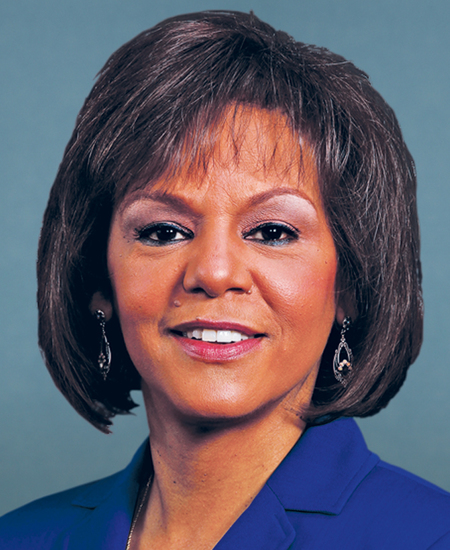
Rep. Robin L. Kelly
Sponsored bills
Maddy summaryThe RESTORE Act establishes a National Freedom Settlements Preservation Program to identify, document, and support communities established by formerly enslaved African Americans after the Civil War, commonly known as Freedmen's Settlements, Freedom Colonies, or Black Towns. The program authorizes $3 million annually for fiscal years 2026-2031 to provide grants for preservation, research, cultural documentation, and educational programming related to these settlements, with projects requiring consent from private property owners. It creates a registry of identified settlements, including examples like Nicodemus, Kansas; Africatown, Alabama; and Freedmen's Town in Houston, and establishes an Advisory Committee composed of community members, descendants, and experts in African-American history. The program requires consultation with local communities, descendants, and experts before providing funding for preservation efforts. This legislation aims to recognize these historically significant communities and provide resources to preserve their history and support their development.
Maddy summaryHR 1715, the Public Health Funding Restoration Act, restores annual funding for the Prevention and Public Health Fund to $2 billion starting in fiscal year 2026. This bill directly affects federal public health programs, including the CDC’s immunization initiatives and state/local health departments, by reversing prior funding cuts. It amends the Affordable Care Act to set the annual funding level at $2 billion, enabling continued support for evidence-based prevention programs like childhood lead poisoning prevention, tobacco cessation, and immunizations. The restored funding aims to maintain existing programs proven to reduce healthcare costs and improve community health outcomes. This change specifically targets the Prevention and Public Health Fund (Section 4002 of the ACA) without creating new programs.
Maddy summaryHR 1694, the AI Accountability Act, directs the Commerce Department's Assistant Secretary for Communications and Information to study accountability measures for AI systems used in communications networks (like social media and telecom) and spectrum sharing. The study will examine how these measures can help close the digital divide, reduce cybersecurity risks, and clarify terms like "trustworthy" AI, while consulting with industry, academia, and consumers. It requires two reports within 18 months: one detailing the study findings and stakeholder feedback, and another recommending how to make AI system information accessible to the public. The bill does not impose new regulations but focuses on gathering data to inform future policy.
Maddy summaryThe Keep Americans Safe Act (HR 1674) restricts the sale, transfer, and possession of large capacity ammunition feeding devices (LCFDs) - defined as magazines or similar devices holding more than 15 rounds of ammunition - for most individuals. Exceptions allow law enforcement officers (including campus law enforcement), retired officers, and nuclear security personnel to possess LCFDs under specific conditions. The bill requires new LCFDs to have serial numbers and manufacturing dates, permits federal seizure of violative devices, and authorizes federal grant programs to fund buy-back initiatives for LCFDs. It directly affects gun owners and manufacturers while preserving access for covered law enforcement and security personnel.
Maddy summaryHR 1657, the Humane Cosmetics Act of 2025, prohibits cosmetic companies from conducting or contracting animal testing for products sold in the U.S. beginning one year after the law takes effect. It also bans the sale or transport of cosmetics developed using such testing after that date, with limited exemptions (e.g., for foreign regulatory requirements or when no non-animal safety alternatives exist). The bill directly affects cosmetic manufacturers, retailers, and distributors by requiring them to shift to non-animal testing methods. The Food and Drug Administration (FDA) will enforce the law, including reviewing records and imposing civil penalties for violations.
Maddy summaryThe PAST Act of 2025 amends the Horse Protection Act to ban harmful practices known as "soring," which deliberately cause pain to horses to exaggerate their gait for shows. It specifically prohibits devices like action devices (e.g., boots causing friction) and weighted shoes on Tennessee Walking Horses, Racking Horses, and Spotted Saddle Horses at events. The bill increases penalties, including escalating disqualifications for repeat offenses (180 days → 1 year → 3 years) and raises fines for violations to $5,000 per offense. It also requires stricter licensing for inspectors and mandates public posting of violation records to help event organizers enforce rules.
Maddy summaryThe American Dream and Promise Act of 2025 would create pathways to permanent residency for certain immigrant youth who entered the U.S. as children (Dream Act component) and for individuals from countries with Temporary Protected Status or Deferred Enforced Departure (American Promise Act component). To qualify, applicants must meet continuous physical presence requirements (since January 1, 2021 for Dream Act applicants, and for 3+ years for American Promise applicants), pass background checks, and satisfy educational or employment criteria. Conditional permanent resident status would be granted initially, with the option to convert to full permanent residency after meeting additional requirements like earning a degree, serving in the military for two years, or demonstrating three years of earned income. The bill includes fee exemptions for low-income applicants, establishes a grant program to assist applicants with legal help, and creates specific procedures for background checks and appeals.
Maddy summaryHRES 166 is a non-binding House resolution expressing U.S. support for the Iranian people's desire for a democratic, secular, and nonnuclear republic. It condemns the Iranian regime's terrorism, regional proxy wars, internal suppression of ethnic and religious minorities, and human rights abuses - including executions and repression of women-led protests. The resolution calls for holding the regime accountable through sanctions, supports the Ten-Point Plan for Iran’s democratic transition, and urges protection for Iranian political refugees in Albania. It does not create new laws but affirms U.S. policy alignment with Iranian protesters' demands.
Maddy summaryThis bill awards a Congressional Gold Medal to the 761st Tank Battalion (known as the "Black Panthers"), the first predominantly Black armored unit in World War II's European Theater. It recognizes their combat service from 1944-1946, including key roles in the Battle of the Bulge and breaking the Siegfried Line, despite facing racial prejudice during and after the war. The medal will be displayed at the National Museum of African American History and Culture, with bronze duplicates available for sale to cover costs. The bill commemorates the battalion's 130,000 enemy casualties inflicted, 50% casualty rate, and their 1978 Presidential Unit Citation. It does not create new laws or affect current policies.