

Maddy summaryThis bill would expand Medicare to cover dental, vision, and hearing services for beneficiaries 65 and older (and some younger people with disabilities), effective January 1, 2026. It would provide 100% coverage for preventative dental services in 2026, with basic and major dental services gradually increasing to 80% coverage by 2029. Vision benefits would include 80% coverage for annual eye exams and specific limits on eyeglasses, frames, and contact lenses ($100 per year for lenses, $100 every two years for frames, $200 every two years for contacts). Hearing services would include 80% coverage for hearing exams and hearing aids, with a limit of one hearing aid per ear every 48 months. The bill also adds oral health professionals to the United States Preventive Services Task Force to help guide coverage decisions.
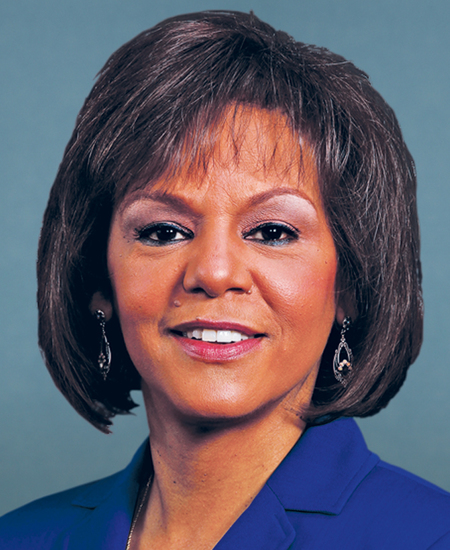
Rep. Robin L. Kelly
Sponsored bills
Maddy summaryHR 2046 requires federal agencies and the President to obtain congressional approval before selling, transferring, or disposing of any U.S. property listed on the National Register of Historic Places. Specifically, officials must first notify Congress and then secure a joint resolution approving the action. This applies to all historically significant properties, including land, buildings, monuments, and sites owned by the federal government. The bill directly affects federal agencies and the executive branch by adding a legislative review step for all such transactions.
Maddy summaryHR 2033, the Military Spouse Hiring Act, expands the Work Opportunity Tax Credit to include spouses of active-duty military personnel. It adds "qualified military spouse" as an eligible category for the tax credit, meaning employers who hire such spouses can claim the credit. A "qualified military spouse" is defined as someone certified by a local agency as married to an active-duty service member at the time of hire. The credit applies to hires occurring after the bill's enactment date. This directly affects military spouses seeking employment and employers hiring them, providing a tax incentive to encourage their hiring.
Maddy summaryHRES 210 is a symbolic resolution recognizing National Women and Girls HIV/AIDS Awareness Day on March 10. It highlights that women, especially women of color (including Black and Latina women), are disproportionately affected by HIV in the U.S. and globally, with data showing they account for significant shares of new diagnoses and deaths. The resolution calls for greater focus on HIV vulnerabilities among women and girls, improved access to prevention tools like PrEP, and stronger investment in care, treatment, and research to reduce health disparities. It urges support for evidence-based programs addressing gender-based violence, discrimination, and barriers to sexual health services.
American Teacher Act This bill establishes grants to increase the minimum salary of public elementary and secondary school teachers. It also authorizes a national campaign regarding the value of the teaching profession. First, the bill directs the Department of Education (ED) to award four-year grants to state educational agencies (SEAs) and, through them, subgrants to local educational agencies to establish a minimum annual salary of $60,000 (to be adjusted annually for inflation) for these teachers. Second, the bill directs ED to award grants to eligible SEAs to provide cost-of-living adjustments to the annual base salary of teachers. Finally, the bill authorizes ED to carry out a national campaign to (1) increase awareness about the importance of teachers and the value of the teaching profession, (2) encourage secondary school and college students to consider teaching as a professional career, and (3) diversify the pool of individuals who enter the teaching profession.
Maddy summaryThis bill mandates that all new $20 U.S. currency printed after December 31, 2028, must prominently feature Harriet Tubman's portrait on the front. It requires the Treasury Secretary to release a preliminary design for this updated $20 bill by December 31, 2026. The bill directly affects the U.S. Treasury Department, codifying a 2016 announcement to feature Tubman on the $20 note (replacing Andrew Jackson) and ending a historical pattern where no woman had appeared on U.S. paper money.
Maddy summaryHR 1909 reauthorizes federal funding and updates programs to reduce maternal deaths. It requires maternal mortality review committees to include obstetricians/gynecologists and improves death certificate reporting by coordinating with death certifiers. The bill mandates the CDC to share annual best practices for preventing maternal mortality with hospitals, state health groups, and perinatal programs. It also increases annual funding from $58 million to $100 million for these initiatives, covering fiscal years 2025 through 2029. The law directly affects hospitals, state health agencies, and maternal health programs receiving these federal funds.
Maddy summaryHR 1954, the "Do No Harm Act," amends the Religious Freedom Restoration Act (RFRA) to clarify that RFRA does not override specific federal laws protecting against harm. It explicitly exempts provisions related to anti-discrimination (like the Civil Rights Act), workplace protections (wages, leave, collective activity), child safety, and healthcare access from RFRA's requirements. The bill ensures RFRA cannot be used to challenge government programs or contracts that provide these essential protections. It also clarifies that RFRA applies only to disputes involving government as a party, not private disputes between individuals. This change preserves existing legal safeguards while modifying RFRA's scope.
Congressional Trade Authority Act of 2025 This bill requires congressional approval for a presidential import adjustment due to a national security threat from an import and limits the adjustments to certain goods that are essential to national security. Specifically, the bill limits the President's authority for such import adjustments to goods related to the development, maintenance, or protection of military equipment, energy resources, or critical infrastructure essential to national security. The bill specifies that the term national security (1) means the protection of the United States from foreign aggression, and (2) does not otherwise include the protection of the general welfare of the United States. The bill requires the President to submit a proposal to Congress to adjust imports. Congress must then approve the proposal with a joint resolution before an import adjustment takes effect. Under current law, the President determines whether any adjustment of an import is necessary and must submit to Congress the reasons for any action taken or not taken. Currently, there is a congressional disapproval mechanism to override presidential actions related to petroleum imports. The bill also requires the Department of Defense (currently, the Department of Commerce) to investigate the effect of these imports on national security and submit a report before the President determines whether an adjustment to an import is necessary, establishes requirements for a process to grant requests to exclude certain goods from import adjustments, and applies retroactively to any proposed action taken up to six years before the enactment of this bill.
Protecting Americans’ Social Security Data Act This bill prohibits political appointees and special government employees from accessing Social Security data systems that contain personally identifiable information about Social Security beneficiaries. Specifically, political appointees and special government employees may not access systems maintained by the Social Security Administration (SSA) that issue or record Social Security account numbers, that are used to determine eligibility for or to pay Social Security benefits, or that otherwise contain personally identifiable information about individuals receiving or applying for benefits. The bill also establishes a civil right of action for an individual whose information was negligently accessed or disclosed in violation of these provisions. The individual may bring suit against the United States if the violator was a U.S. employee or officer, or against the violator if they were not a U.S. employee or officer. Such a claim must be brought within two years of the affected individual’s discovery of the violation. Upon a finding of liability, defendants are liable for specified monetary damages. If an individual is criminally charged or subject to proposed disciplinary or adverse action by a federal or state agency for having accessed or disclosed information in violation of these provisions, SSA must notify the individual whose information was accessed or disclosed of the violation as soon as practicable. Finally, the bill requires the SSA Office of the Inspector General to investigate and report to Congress on any unauthorized access to or disclosure of information in a beneficiary data system.