

Maddy summaryThis resolution (HRES 677) is a formal statement by the House of Representatives affirming the Federal Reserve's independence from political influence. It specifically supports Chairman Jerome Powell and the Board of Governors in making monetary policy decisions based on economic data, not political pressure. The resolution urges the President and executive branch to respect the Fed's statutory independence and avoid actions or rhetoric that could undermine its credibility. It emphasizes that maintaining this independence is critical for economic stability, price control, and global confidence in U.S. financial markets.
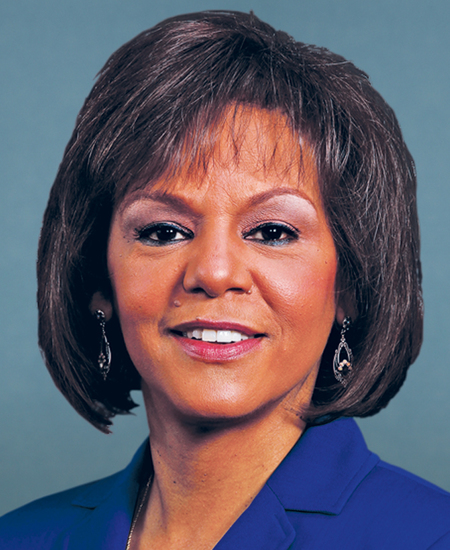
Rep. Robin L. Kelly
Sponsored bills
Maddy summaryThis bill requires most health insurance plans to cover HIV prevention services - including PrEP and PEP drugs, related lab tests, counseling, and monitoring - without cost-sharing (like copays or deductibles) or prior approval. It applies to private insurance, Medicare, Medicaid/CHIP, and federal employee health plans, directly affecting people who use HIV prevention medications. Key provisions mandate 100% coverage for FDA-approved HIV prevention drugs, eliminate cost-sharing for these services, and prohibit insurers from requiring preauthorization for them. The bill defines covered services to include all necessary components of HIV prevention care as outlined in current public health guidelines.
Maddy summaryThis bill prohibits Members of Congress, their spouses, and dependent children from owning or trading certain investments, including stocks, commodities, and derivatives (referred to as "covered investments"). It requires affected individuals to divest these investments within 90-180 days, with specific exemptions for Treasury bonds, diversified mutual funds, small business interests, and family trusts meeting strict conditions. Violations incur penalties of 10% of the investment's value plus disgorgement of profits, paid directly to the U.S. Treasury. The law applies to all covered individuals during federal service, with exceptions for investments acquired through inheritance or occupational trading (e.g., a spouse’s finance job).
Maddy summaryThis bill prohibits federal courts from excluding potential jurors based on disability or age. It amends jury selection laws to require reasonable accommodations (like sign language interpreters or accessible seating) so people with disabilities can serve if otherwise qualified. The law removes automatic disqualification for "infirmity" and ensures individuals aren't barred from jury service solely due to disability when accommodations could enable participation. It directly affects millions of Americans with disabilities and older adults who may have been previously excluded from federal jury duty. The changes apply specifically to jury service in U.S. district courts.
Maddy summaryThe SUN Act (HR 4998) requires the President to submit a detailed report to Congress within 15 days whenever National Guard members are deployed domestically for non-disaster purposes under specific laws. The report must include the legal basis for the deployment, evidence of reduced violence, input from local law enforcement, total costs, and a certification that the deployment won’t interfere with disaster response capabilities. It applies to all domestic uses of the National Guard except for responses to natural disasters under the Stafford Act. The bill aims to enhance congressional oversight of military deployments on U.S. soil.
Maddy summaryThis bill (HJRES 115) terminates a presidential emergency declaration made on August 11, 2025, which claimed a "crime emergency" in Washington, D.C. It directly affects the District of Columbia by ending federal restrictions that prevented D.C. from using $1 billion in locally-raised funds for public safety, law enforcement, fire services, and schools. The resolution cites that the emergency declaration was legally flawed - section 740 of the DC Home Rule Act does not permit federalizing the Metropolitan Police Department - and notes that D.C. violent crime has reached a 30-year low. The bill formally ends the emergency under the DC Home Rule Act, restoring D.C.'s authority over its own budget and public safety resources.
Maddy summaryHRES 655 is a symbolic House resolution supporting the designation of August 17, 2025, as "Marcus Garvey Recognition Day." It cites Marcus Garvey's role as founder of the Universal Negro Improvement Association, his focus on Black economic independence through initiatives like the Black Star Line, and his 2025 posthumous presidential pardon. The resolution asks the President to issue a proclamation encouraging the public to observe the day with ceremonies. This is a commemorative gesture with no binding legal effect, intended to honor Garvey's historical contributions.
Maddy summaryThis resolution (HRES 654) is a symbolic statement expressing the House's recognition of Marcus Garvey's historical contributions and calling for his exoneration. It states the House believes Garvey was innocent of his 1920s mail fraud conviction (which the resolution deems politically motivated), affirms his global leadership in human rights and economic self-sufficiency movements, and urges the President to clear his name. The resolution does not create new laws or policies; it is purely a statement of congressional sentiment regarding Garvey's legacy. It directly affects how Garvey is formally recognized in U.S. history but has no legal effect on his historical record or current policy.
Maddy summaryThis bill amends the Food and Nutrition Act to clarify that Social Security benefits (income under Title II of the Social Security Act) are not counted when determining eligibility for SNAP (Supplemental Nutrition Assistance Program) benefits. It directly affects seniors receiving Social Security who rely on SNAP for food assistance, ensuring their Social Security payments do not reduce their SNAP benefits. The key change adds Social Security income to the list of non-countable resources under SNAP rules. The amendment takes effect 90 days after the bill is enacted.
Maddy summaryHR 4917, the Expanding the VOTE Act, amends the Voting Rights Act to increase language access for voters. It expands the definition of "voting materials" to include digital formats and requires states to provide language assistance (both written and oral) for minority language groups, with special provisions for American Indian and Alaska Native languages when written translations aren't feasible. The bill creates grants to help jurisdictions provide voting materials in languages that don't currently trigger Section 203 coverage, and mandates a study on lowering population thresholds for language assistance requirements. This directly affects states, local election jurisdictions, and voters who speak minority languages, including those in communities not currently covered by existing language access rules.