

Stronger Communities through Better Transit Act This bill requires the Department of Transportation (DOT) to establish a grant program to support operating projects for public transportation and related service improvements, particularly in underserved communities and areas of persistent poverty. Specifically, the bill requires DOT to allocate funding under the program for urbanized areas, states, and Indian tribes that are recipients of funds under either the Federal Transit Administration's (FTA's) Urbanized Area Formula Funding program or Formula Grants for Rural Areas program. Eligible recipients may use funding for operating costs associated with projects that improve public transportation service for transit-dependent populations and support increased transit ridership (e.g., service expansion, information technology enhancements, and workforce development). DOT must apportion the funding so that recipients receive funds that are proportional to their share of operating costs. The bill also provides for an increased federal cost share for operating assistance for projects or programs carried out in areas of persistent poverty or underserved communities. DOT must set up a multimodal access measurement interface for public agencies to aid transit agencies in determining and reporting on access to jobs and essential services. A grant recipient must (1) report specific information to the FTA for inclusion in the National Transit Database, and (2) survey transit riders and non-riding residents regarding transit service improvements. Further, the bill expands the purposes of the public transportation programs to include supporting public transportation's role in combating climate change through growing/retaining transit ridership.
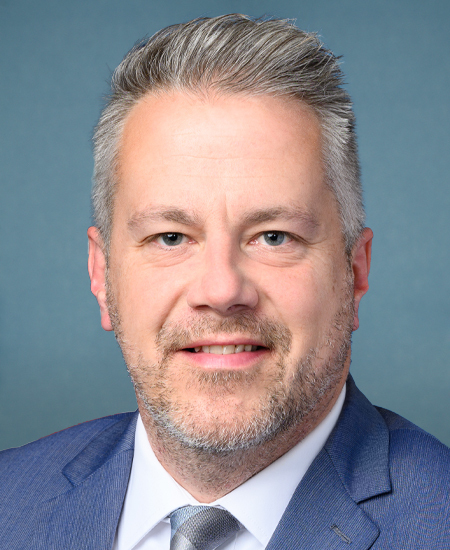
Rep. Eric Sorensen
Sponsored bills
Maddy summaryHR 3418, the Historic Preservation Fund Reauthorization Act, extends the federal Historic Preservation Fund through 2035 and increases its annual funding from $150 million to $250 million. This bill directly affects historic preservation programs nationwide, including state and local grants for protecting historic sites and buildings. The key provision updates the funding levels and duration in existing law (54 U.S. Code § 303102), ensuring continued support for preservation efforts. The change maintains current program operations without creating new requirements or altering eligibility.
Maddy summaryHR 3367, the "Improving Training for School Food Service Workers Act of 2025," requires school food service workers in public schools to receive mandatory training during paid working hours. The bill mandates that training must be offered in-person when appropriate, include hands-on practice, and cost workers nothing. If training occurs outside regular hours, workers must be paid at their regular rate (including overtime), consulted about scheduling, and protected from penalties for not attending. This law amends the Child Nutrition Act of 1966 and does not override existing state or local labor laws governing employer-employee relationships.
Maddy summaryThis bill requires the Department of Veterans Affairs (VA) to establish clear standards for evaluating all VA suicide prevention and mental health grant or pilot programs. It mandates that these programs set measurable goals, develop detailed evaluation plans (including data collection methods and analysis), and share results with relevant stakeholders before, during, and after implementation. The VA must also conduct post-program evaluations to assess effectiveness and share "best practices" across programs. These standards apply to all existing and future VA programs focused on veteran mental health, ensuring consistent evaluation and transparency. The bill directly affects how the VA administers suicide prevention initiatives for veterans.
Maddy summaryHR 3243, the Therapeutic Fraud Prevention Act of 2025, bans the provision of paid conversion therapy aimed at changing a person's sexual orientation or gender identity, and prohibits advertising such therapy as effective, safe, or without risk. It directly affects LGBTQ+ individuals and their families who might be targeted by these practices, as professionals have determined conversion therapy is ineffective and harmful. The law treats violations as deceptive acts under consumer protection laws, empowering the Federal Trade Commission and state attorneys general to enforce it through civil actions. It explicitly excludes legitimate gender transition support and non-discriminatory counseling from the ban.
Maddy summaryThis resolution (HRES 394) expresses congressional support for designating July 16, 2025, as "Glioblastoma Awareness Day." It aims to raise public awareness about glioblastoma, a highly aggressive and deadly brain cancer with a 6.9% 5-year survival rate. The resolution encourages greater attention to the disease's urgent unmet medical needs and supports research efforts, including the Glioblastoma Therapeutics Network. It directly affects patients, caregivers, and researchers by promoting recognition of the disease and urging collaborative efforts to improve treatments.
Maddy summaryHR 3184, the PFAS Alternatives Act, funds research to develop turnout gear (firefighter safety clothing) without harmful PFAS chemicals, directly affecting firefighters who wear this gear. It authorizes $25 million annually (2025-2029) for grants to eligible organizations to research and test PFAS-free gear, requiring partnerships with firefighting groups to translate findings into practice. The bill also allocates $2 million yearly (2027-2031) for training programs on safe gear use and decontamination. Its goal is to reduce firefighters' exposure to chemicals linked to occupational illnesses during operations.
Community Services Block Grant Improvement Act of 2025 This bill reauthorizes the Community Services Block Grant (CSBG) program through FY2032 and makes certain changes to the program and associated eligibility requirements. The CSBG program supports various antipoverty activities, primarily through formula-based allotments to states, tribes, and territories, the majority of which must be made available in grants to eligible local entities. Specifically, the bill permanently sets the measure of eligibility for services, assistance, or resources provided directly to individuals or families under the program at 200% of the poverty line. (Under current law, the eligibility measure is temporarily set at 200% of the poverty line, an increase from the previous measure of 125% of the poverty line.) The bill also makes certain changes to the permitted uses of funding, including by allowing CSBG funds to be used to facilitate low-income individuals’ and communities’ access to high-speed broadband, digital literacy training, technical support, and other services. States may also use certain funds allocated for training and technical assistance to assist eligible entities in responding to statewide and regional conditions that create economic insecurity, including emergency conditions. The bill also expands requirements for the plans that states must submit to the Department of Health and Human Services in order to receive CSBG funds (e.g., transparency assurances), and sets deadlines by which states must make funds available to eligible entities. Finally, the bill repeals a provision that allowed states to use CSBG funds to offset revenue losses associated with state charity tax credits.
Maddy summaryThis bill expands OSHA safety protections to cover public employees, including teachers, police, and sanitation workers, who were previously excluded from federal workplace safety regulations. It directly affects state and local government workers by amending the Occupational Safety and Health Act to explicitly include "the United States, a State, or a political subdivision of a State" under OSHA coverage. The key mechanism is a technical amendment to the law’s definition of covered employees, ensuring public service workers fall under the same safety standards as private-sector employees. The bill takes effect 90 days after enactment for most workplaces, with a 36-month delay for state/local governments without existing OSHA plans.
Maddy summary# Summary of the SHIPS for America Act This comprehensive legislation focuses on strengthening the U.S. maritime industry, shipbuilding capacity, and maritime workforce to enhance national security and economic competitiveness. ## Key Areas of Focus 1. **Shipbuilding & Maritime Infrastructure** - Establishes a United States Center for Maritime Innovation to accelerate adoption of commercial technologies - Creates a National Shipbuilding Research Program - Requires an annual survey of anticipated commercial vessel construction - Includes provisions for streamlined environmental reviews of maritime infrastructure 2. **Workforce Development** - Establishes the United States Merchant Marine Career Retention Program to maintain mariner qualifications - Creates Centers of Excellence for Domestic Maritime Workforce Training and Education - Implements military-to-maritime transition programs - Establishes a Maritime Career and Technical Education Advisory Committee 3. **Education & Training** - Expands educational assistance for merchant mariners - Creates eligibility for Naval Postgraduate School for merchant mariners - Establishes maritime education programs from K-12 through higher education - Provides for international exchanges for mariners and naval architects 4. **National Security & Strategic Readiness** - Requires reports on National Defense Reserve Fleet utilization - Includes measures to de-risk the maritime sector from Chinese influence - Enhances shipbuilding capacity for national security needs - Establishes programs to ensure sufficient mariner workforce for national defense 5. **Funding Mechanisms** - Authorizes appropriations from the Maritime Security Trust Fund - Includes funding for workforce programs, education, and shipbuilding initiatives - Establishes specific funding levels for various programs over multiple fiscal years The legislation aims to create a sustainable domestic maritime industrial base that supports both commercial shipping and national defense requirements, with a particular emphasis on developing and retaining a skilled U.S. maritime workforce.