

PPP Extension Act of 2021 This bill extends the Paycheck Protection Program, established to support small businesses in response to COVID-19 (i.e., coronavirus disease 2019), through June 30, 2021. Currently, the program is set to expire on March 31, 2021. For the final 30 days of the program (i.e., from June 1 until June 30), the Small Business Administration may only process applications submitted prior to June 1, and it may not accept any new loan applications. The bill excludes the budgetary effects of this bill from PAYGO scorecards under the Statutory Pay-As-You-Go Act of 2010 and from Senate PAYGO scorecards.
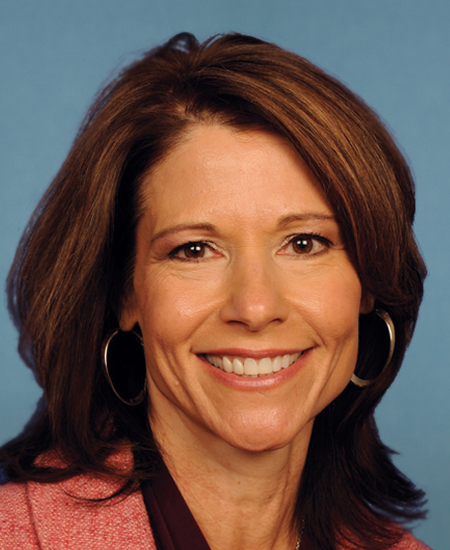
Rep. Cheri Bustos
Sponsored bills
Willie O'Ree Congressional Gold Medal Act This bill provides for the award of a Congressional Gold Medal to Willie O'Ree or, if unavailable, to a member of his family, in recognition of his contributions and commitment to hockey, inclusion, and recreational opportunity.
Emmett Till and Mamie Till-Mobley Congressional Gold Medal Act of 2021 This bill provides for the posthumous presentation of a Congressional Gold Medal in commemoration of Emmett Till and Mamie Till-Mobley. After the award the medal shall be given to the National Museum of African American History and Culture.
Rural America Health Corps Act This bill establishes a student loan repayment demonstration program for eligible providers who agree to work for five years in a rural area with a shortage of primary, dental, or mental health care providers. For each year of this service, the Department of Health and Human Services must pay one-fifth of the principal and interest on a provider's qualifying loans, up to a maximum of $200,000.
Children and Media Research Advancement Act or the CAMRA Act This bill requires the National Institutes of Health to fund research regarding the effects of media on infants, children, and adolescents. Such research must examine the impact of media (e.g., social media, television, video games) on cognitive, physical, and social-emotional development.
This resolution recognizes the disparity between wages paid to men and women, and its impact on women, families, and the nation and reaffirms Congress' commitment to supporting equal pay and to narrowing the gender wage gap.
This joint resolution eliminates the deadline for the ratification of the Equal Rights Amendment, which prohibits discrimination based on sex. The amendment was proposed to the states in House Joint Resolution 208 of the 92nd Congress, as agreed to in the Senate on March 22, 1972. The amendment shall be part of the Constitution whenever ratified by the legislatures of three-fourths of the states.
Neighborhood Homes Investment Act This bill establishes a new business-related tax credit to finance home building and rehabilitation in neighborhoods that meet certain eligibility criteria relating to poverty rates, income, and home values. The credit is limited to 35% of the lesser of the qualified development cost (i.e., the cost of construction, substantial rehabilitation, demolition, and environmental remediation of residential properties) or 80% of the national median sale price for new homes. The credit applies to single family homes containing four or fewer residential units, condominiums, or houses or apartments owned by cooperative housing corporations.
Improving Child Care for Working Families Act of 2021 This bill increases the limitation on the exclusion from employee gross income for employer-paid dependent care assistance from $5,000 to $10,500.
Success for Rural Students and Communities Act of 2021 This bill establishes a grant program through which the Department of Education may award funds to eligible partnerships to support rural postsecondary education and economic growth and development in rural communities. A grant recipient must be a partnership whose members represent at least three designated types of organizations, specifically (1) a local educational agency or educational service agency serving a rural area, (2) an institution of higher education (IHE), (3) a regional economic development entity, or (4) a rural community-serving organization with demonstrated success supporting rural students in accessing higher education and attaining degrees. A grant recipient must use awarded funds to carry out no fewer than two specified activities, namely (1) improving postsecondary enrollment rates for rural secondary school students, (2) increasing enrollment and completion rates of rural nontraditional students in degree programs at IHEs, (3) creating or strengthening academic programs at rural-serving IHEs to prepare graduates to enter into high-need occupations in the regional and local economies, or (4) generating local and regional economic development that creates employment opportunities for rural students with postsecondary degrees.