Everyday Philanthropist Act This bill allows employers to offer certain employees a tax-advantaged flexible giving account as a fringe benefit. Flexible giving accounts allow employees to set aside up to $2,700 of their annual pretax earnings to make tax-deductible charitable contributions without having to itemize tax deductions.
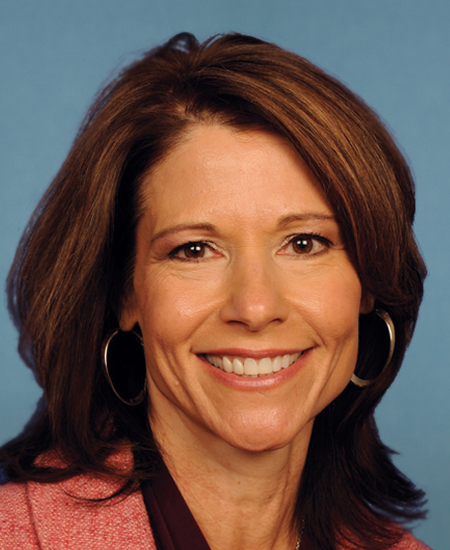
Rep. Cheri Bustos
Sponsored bills
Social Determinants Accelerator Act of 2021 This bill establishes the Social Determinants Accelerator Interagency Council to increase coordination among health and social service programs and provide technical assistance to increase the impact of such programs. The council must also assist the Centers for Medicare & Medicaid Services to award up to 25 grants to state, local, or tribal health or human services agencies for social determinants accelerator plans. These plans must address at least one health and one social outcome for a specified target population.
Year-Round Fuel Choice Act of 2021 This bill amends the Clean Air Act to address the limitations on Reid vapor pressure (a measure of gasoline's volatility) that are placed on gasoline during the summer ozone season. The bill applies the Reid vapor pressure requirements that are applicable to gasoline blended with 10% ethanol (E10) to gasoline blended with more than 10% ethanol. Thus, the waiver given to E10 gasoline, which allows an increase in the Reid Vapor Pressure volatility, is extended to gasoline blended with more than 10% ethanol.
Technical Reset to Advance the Instruction of Nurses Act or the TRAIN Act This bill modifies the methodology and application of Medicare Advantage nursing and allied health education payments for hospitals. Specifically, for 2010-2019, the bill eliminates the annual cap on total payments and excludes any resulting increase from factoring into calculations for graduate medical education payments for such hospitals. (The Centers for Medicare & Medicaid Services recently issued guidance providing for the recalculation and correction of certain payments to account for the annual payment cap.)
Lincoln Home National Historic Site Boundary Modification Act This bill modifies the boundary of the Lincoln Home National Historic Site in Illinois as generally depicted on the map titled Proposed Boundary Expansion of the Lincoln Home National Historic Site and dated February 26, 2021. To improve accessibility, the Department of the Interior shall modify the following areas located within the boundary of the historic site to provide universal design and accessibility by raising the height of the street to match the height of the sidewalk with no sloped surfaces: the intersection at 8th Street and Jackson Street, and the area in front of the home of Abraham Lincoln.
Veterans Burn Pits Exposure Recognition Act of 2021 This bill requires the Department of Veterans Affairs (VA) to concede, for the purposes of health care benefits and wartime disability compensation, that a veteran was exposed to certain toxic substances, chemicals, and hazards from burn pits if such veteran served on active duty in a covered location during a specified time frame (unless there is affirmative evidence to establish that the veteran was not exposed during such service). A burn pit is an area used for burning solid waste in open air without equipment. Specifically, the bill covers the following locations and corresponding time periods: Iraq between August 2, 1990, and February 28, 1991, as well as from March 19, 2003, until burn pits are no longer used in this location; Somalia and Southwest Asia (including Kuwait, Saudi Arabia, Oman, and Qatar) from August 2, 1990, until burn pits are no longer used in these locations; and Afghanistan, Syria, Jordan, Egypt, Lebanon, Yemen, Uzbekistan, the Philippines, and Djibouti from September 11, 2001, until burn pits are no longer used in these locations. Under the bill, if an exposed veteran submits insufficient evidence to establish a service-connection for purposes of disability compensation, the VA shall provide a medical examination and request a medical opinion regarding a causal link between the disability and a toxin, chemical, or hazard.

Safe Schools Improvement Act of 2021 This bill requires states to direct their local educational agencies (LEAs) to establish policies that prevent and prohibit bullying and harassment of elementary and secondary school students. In particular, these policies must prohibit bullying and harassment based on race, color, national origin, sex, sexual orientation, gender identity, disability, or religion. Further, LEAs must provide (1) students, parents, and educational professionals with annual notice of the conduct prohibited in their disciplinary policies; (2) students and parents with grievance procedures that target such conduct; and (3) the public with annual data on the incidence and frequency of that conduct at the school and LEA level. The Department of Education must conduct and report on an independent biennial evaluation of programs and policies to combat bullying and harassment in elementary and secondary schools. The National Center for Education Statistics must collect state data to determine the incidence and frequency of the conduct prohibited by LEA disciplinary policies.
Crisis Care Enhancement Act This bill requires states to support evidence-based crisis care services, such as crisis call centers, through the Community Mental Health Services Block Grant (MHBG). In addition, for each year in which the appropriations for that grant exceed a specified amount, states must expend a certain percentage of their MHBG allotment on crisis care services. Additionally, the Substance Abuse and Mental Health Services Administration may permit states and territories to use MHBG funding on crisis care services for individuals who are not part of the grant's target population. Currently, the MHBG targets adults with serious mental illnesses and children with serious emotional disturbances.
This resolution honors the suppliers of the National Aeronautics and Space Administration (NASA) for the work they are doing on the Artemis missions.
Low Carbon Biofuel Act This bill allows certain taxpayers (defined by this bill as an oxygenate blender and a retailer ) a new business-related income tax credit for the sale or blending of E15 gasoline (more than 13 and not more than 15 volume percent ethanol) and other fuels containing more than 15 volume percent ethanol.