Hadiya Pendleton and Nyasia Pryear-Yard Gun Trafficking and Crime Prevention Act of 2021 This bill makes trafficking in firearms a stand-alone criminal offense. A person who commits or conspires to commit a gun trafficking offense is subject to criminal penalties—a prison term of up to 20 years (or up to 25 years, if the person also acted as an organizer), a fine, or both.
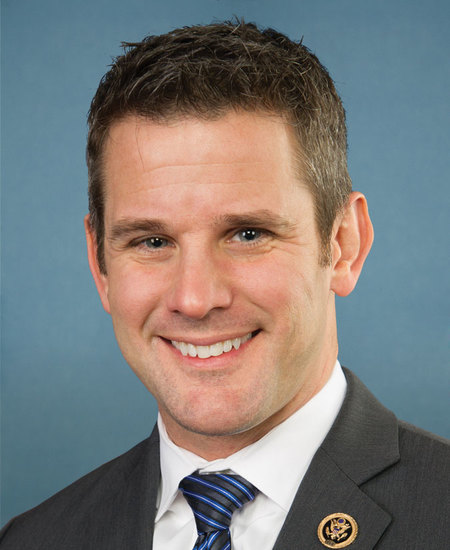
Rep. Adam Kinzinger
Sponsored bills
No Taxpayer Funding for Abortion and Abortion Insurance Full Disclosure Act of 2021 This bill modifies provisions relating to federal funding for, and health insurance coverage of, abortions. Specifically, the bill prohibits the use of federal funds for abortions or for health coverage that includes abortions. Such restrictions extend to the use of funds in the budget of the District of Columbia. Additionally, abortions may not be provided in a federal health care facility or by a federal employee. Historically, language has been included in annual appropriations bills for the Department of Health and Human Services (HHS) that prohibits the use of federal funds for abortions—such language is commonly referred to as the Hyde Amendment. Similar language is also frequently included in appropriations bills for other federal agencies and the District of Columbia. The bill makes these restrictions permanent and extends the restrictions to all federal funds (rather than specific agencies). The bill's restrictions regarding the use of federal funds do not apply in cases of rape, incest, or where a physical disorder, injury, or illness endangers a woman's life unless an abortion is performed. The Hyde Amendment provides the same exceptions. The bill also prohibits qualified health plans from including coverage for abortions. Currently, qualified health plans may cover abortion, but the portion of the premium attributable to abortion coverage is not eligible for subsidies.
Cyber Diplomacy Act of 2021 This bill establishes requirements related to diplomatic engagement with foreign countries on matters of U.S. cyberspace policy. Specifically, the bill establishes the Bureau of International Cyberspace Policy within the Department of State to advise the State Department on cyberspace issues and lead diplomatic efforts on issues related to international cybersecurity, internet access and freedom, and international cyber threats. The bureau must undertake specified duties and responsibilities to implement the stated U.S. policy of working internationally to promote an open, interoperable, and secure internet governed by a multi-stakeholder model that (1) promotes human rights, democracy, and rule of law; and (2) respects privacy and guards against deception, fraud, and theft. The President must devise a strategy for U.S. engagement with foreign governments on international norms related to responsible state behavior in cyberspace. Further, the President is encouraged to enter into executive arrangements with foreign governments that support U.S. cyberspace policy. In addition, annual country reports on human rights practices must include assessments of freedom of expression in each country with respect to electronic information, and the Government Accountability Office must report on U.S. diplomatic processes and other efforts with foreign countries to advance U.S. interests in cyberspace.

Countering Russian and Other Overseas Kleptocracy Act or the CROOK Act This bill requires various actions designed to combat public corruption in foreign countries. The bill establishes within the Department of the Treasury the Anti-Corruption Action Fund to help foreign states fight public corruption and develop rule-of-law-based governance structures. For certain fines and penalties imposed under the Foreign Corrupt Practices Act, an additional fine shall be imposed and deposited into the fund. The Department of State must (1) manage U.S. government efforts to fight foreign public corruption, and (2) establish an interagency task force to assist in coordinating such efforts. Each U.S. embassy must have a point of contact responsible for coordinating the embassy's anti-corruption efforts. The State Department must report to Congress on its anti-corruption activities and make various reports publicly available online.
This resolution states that the August 9, 2020, election in Belarus was neither free nor fair and, as such, the House of Representatives does not recognize Alyaksandr Lukashenka as the country's legitimate president. The resolution also states that the people of Belarus have the right to determine the country's future without unwelcome intervention from outside actors and condemns the human rights violations committed by Belarusian authorities.
This resolution condemns the actions taken by the governments of China and Hong Kong to put in place national security legislation that violates the freedoms and rights guaranteed to the people of Hong Kong. (Hong Kong is a part of China but, by agreement, has operated a legal and economic system largely separate from China's.)
National Committee on Fiscal Responsibility and Reform Act of 2021 This bill establishes the National Committee on Fiscal Responsibility and Reform to make recommendations to reduce the budget deficit by at least $3.25 trillion over FY2021-FY2031. The committee must be established as a joint select committee of Congress and consist of 12 Members of Congress appointed by specified members of the congressional leadership. The specific functions of the committee are to investigate policies to improve the fiscal situation in the medium term; achieve fiscal sustainability over the long run; propose legislation designed to balance the budget, excluding interest payments on the debt, by 2031; and issue a final report to Congress. Congress must use specified expedited legislative procedures to consider legislation that is approved by at least eight members of the committee.
Affordable Housing Credit Improvement Act of 2021 This bill revises provisions of the low-income housing tax credit and renames it as the affordable housing credit . The bill increases the per capita dollar amount of the credit and its minimum ceiling amount beginning in 2021 and extends the inflation adjustment for such amounts. The bill modifies tenant income eligibility requirements and the average income formula for determining such income. It also revises rules for student occupancy of rental units and tenant voucher payments, and prohibits any refusal to rent to victims of domestic abuse. The bill further modifies the credit to increase state allocations of the credit; repeal the qualified census tract population cap; prohibit local approval and contribution requirements; increase the credit for certain projects designated to serve extremely low-income households; increase the credit for certain bond-financed projects designated by state agencies; eliminate the basis reduction for properties that receive certain energy-related tax benefits; and increase the population cap for difficult development areas (i.e., areas with high construction, land, and utility costs relative to area median gross income). The bill also includes Indian and rural areas as difficult development areas and modifies other requirements relating to casualty losses, acquisition credits, and foreclosures.
Accelerate Long-term Investment Growth Now Act or the ALIGN Act This bill makes permanent the expensing of certain new business equipment. Expensing allows the deduction of the full amount of an expense item in the same taxable year.
Wage Equity Act of 2021 This bill addresses workplace wage discrimination based on sex. Specifically, it limits the acceptable reasons for wage disparities based on sex to legitimate business-related factors unrelated to sex. Italso protects from liability for such discrimination those employers who conduct a job and wage analysis audit to identify wage disparities and take reasonable steps to remedy any such disparities. Further, the bill prohibits employers from relying on, or requesting, the wage history of a prospective employee for hiring and wage determination purposes unless it is voluntarily provided by the prospective employee. Employers generally may not prohibit employees from inquiring about, or discussing, wage information concerning another employee or from requesting information from an employer about wage differentials. Finally, the bill permits the Department of Labor to establish a grant program for negotiation skills education for women and girls. It also requires the Government Accountability Office to study and report on the causes and effects of sex-based wage disparities.