No Rate Regulation of Broadband Internet Access Act This bill prohibits the Federal Communications Commission from regulating the amounts charged by providers for broadband internet access service.
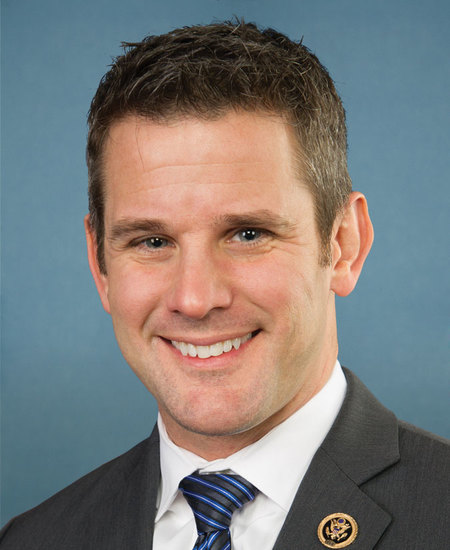
Rep. Adam Kinzinger
Sponsored bills
Contact Lens Prescription Verification Modernization Act This bill revises the requirements for the verification of prescriptions related to the purchase of contact lenses. Specifically, online sellers of prescription contact lenses must provide consumers with a method to transmit a digital copy of their prescriptions to such sellers. Online sellers also must encrypt protected health information they send by email. Additionally, the bill prohibits any seller of prescription contact lenses from using telephone calls with an artificial or prerecorded voice (i.e., robocalls) to verify a consumer's prescription.
Concentrating on High-value Alzheimer's Needs to Get to an End Act of 2021 or the CHANGE Act of 2021 This bill modifies the requirements under Medicare for diagnosing and treating Alzheimer's disease and other cognitive impairments in older adults. Specifically, the bill expands the cognitive impairment detection benefit during annual wellness visits to require the use of validated detection tools and documentation of the results in the patient's medical record. Further, when a cognitive impairment is detected, the patient must be referred to an appropriate diagnostic service provider and other specified supports. Additionally, the Centers for Medicare & Medicaid Services must implement Medicare policies that increase the identification and response to patients' Alzheimer's disease risk factors and incentivize providers to utilize high-quality cognitive impairment diagnosis practices. The Government Accountability Office also must conduct a study of policies that may accelerate progress in Alzheimer's disease research and enhance the quality of care for individuals diagnosed with Alzheimer's disease.
This resolution reaffirms the importance to U.S. national interests of combating corruption, strengthening democratic institutions, and supporting judicial independence in El Salvador. Further, it urges El Salvador to respect its democratic institutions, including by strengthening government transparency, and to uphold human rights.
Manufacturing Abilities Determine Economies in The Americas Act or the MADE in The Americas Act This bill establishes certain manufacturing incentives to increase trade between the United States and other countries in the Western Hemisphere. Specifically, the bill requires the President to develop a strategy to reduce reliance on concentrated supply chains for covered articles (including those essential to U.S. critical infrastructure) and protect against any threats from countries of concern relating to supply chains for these articles. Additionally, the bill establishes within the Executive Office of the President the Manufacturing Security and Resilience Council. The functions of the council include (1) implementing the President's strategy, (2) establishing and maintaining a database of information on manufacturing companies that manufacture a covered article or maintain facilities that may be converted to manufacture covered articles during an emergency, and (3) establishing and carrying out a manufacturing resilience grant program. An eligible manufacturing company may use grant funds to relocate manufacturing facilities and operations out of a country of concern into the United States or another country in the Western Hemisphere. The bill authorizes the President to provide duty-free treatment to any eligible article from any beneficiary Western Hemisphere country. This treatment shall apply to any article (1) that is the growth, product, or manufacture of a beneficiary Western Hemisphere country; and (2) that is needed to support the critical infrastructure of the United States. The bill also includes certain tax incentives, including by establishing an American security product tax credit.

Energy Resource Governance Initiative Act of 2021 This bill establishes the Energy Resource Governance Initiative within the Department of State to promote responsible and sustainable mining practices through international collaboration. The initiative must seek to foster integrated and resilient supply chains, responsible critical mineral sourcing, and mineral-sector good governance. It must also seek to minimize potential adverse impacts of increasing renewable energy demand on mineral-rich countries.
Crimea Annexation Non-Recognition Ac t This bill prohibits any federal agency from taking any action or extending any assistance that recognizes or implies recognition of Russia's sovereignty over Crimea, its airspace, or its territorial waters.
Recognizing the Protection of Motorsports Act of 2019 or the RPM Act of 2019 [ sic ] This bill authorizes the modification of a vehicle's air emission controls for vehicles that are not legal for operation on a street or highway and are used solely for competition.
Federal Initiative To Guarantee Health by Targeting Fentanyl Act This bill places fentanyl-related substances as a class into schedule I of the Controlled Substances Act. A schedule I controlled substance is a drug, substance, or chemical that has a high potential for abuse; has no currently accepted medical value; and is subject to regulatory controls and administrative, civil, and criminal penalties under the Controlled Substances Act.
Iran Sanctions Relief Review Act of 2021 This bill restricts the President's authority to unilaterally undertake certain actions with respect to Iran and increases congressional oversight of those actions. Specifically, the President must report to Congress before terminating or waiving sanctions related to Iran or taking a licensing action that significantly alters U.S. foreign policy with respect to Iran. Each report must (1) describe the proposed action and its rationale, and (2) indicate whether or not the action is intended to significantly alter foreign policy concerning Iran. If the intention is to alter that policy, the report must provide additional information about the policy objectives and anticipated effects of the action. After the President submits a report, the bill provides Congress with a 30-day period to review it; this period is extended to 60 days for reports submitted between July 10 and September 7. During this period, Congress may enact a joint resolution approving or disapproving the action. During the review period, the President may not take the action unless Congress passes a joint resolution of approval; if Congress enacts a joint resolution of disapproval, the bill prohibits the President from taking the action. The bill also outlines procedures for the introduction and consideration of these types of joint resolutions.