

Maddy summaryThis bill prohibits public colleges receiving federal funds under the Higher Education Act from denying religious student groups equal access to campus facilities and official recognition that is available to other student organizations. It directly affects public institutions of higher education that receive federal funding, requiring them to treat religious groups the same as secular groups regarding access to spaces and official status. The key provision states that schools cannot withhold these rights based on a group's religious beliefs, practices, speech, leadership standards, or conduct. The law aims to ensure religious student organizations have the same opportunities as non-religious groups on campus.
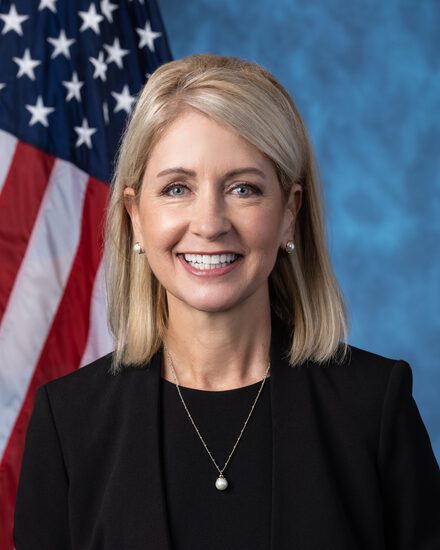
Rep. Mary E. Miller
Sponsored bills
Maddy summaryHR 5, the Parents Bill of Rights Act, would require public schools receiving federal funding to provide parents with greater access to educational information. The bill mandates that schools post curricula online or widely distribute it to parents, include school budgets in report cards, and provide specific information about school activities including violent incidents and plans to eliminate gifted programs. It also guarantees parents the right to meet with teachers twice a year, review library materials, and address school boards. These requirements would apply to all local educational agencies and schools covered by the Elementary and Secondary Education Act. The bill amends existing education laws to strengthen parental transparency and involvement in their children's education.
Maddy summaryHR 1789 increases the minimum civil penalty for violating the Agricultural Foreign Investment Disclosure Act (AFIDA) from 25% to 50% of the amount involved in the violation. This change directly affects foreign entities or individuals investing in U.S. agricultural land or businesses who fail to disclose such investments. The bill amends Section 3(b) of AFIDA to require penalties to be "at least 50 percent" rather than capping them at 25 percent. This policy adjustment raises the baseline financial consequence for noncompliance with disclosure requirements.
Stop Funding Our Adversaries Act of 2023 This bill prohibits federal agencies from conducting or supporting, either directly or indirectly, research that will be conducted by China's government, the Chinese Communist Party, or any agent, instrumentality, or entity belonging to or controlled by either entity.
Let Experienced Pilots Fly Act of 2023 This bill raises the mandatory retirement age for pilots engaged in commercial aviation operations from 65 to 67 years of age, unless the operation takes place in (1) the territorial airspace of a foreign county where such operations are prohibited by the foreign country, or (2) international airspace where such operations are not in compliance with the Annexes to the Convention on International Civil Aviation. The Federal Aviation Administration must also submit a report to Congress on further increasing the age limitation for pilots engaged in commercial aviation operations.
Maddy summaryH.J. Res. 30 seeks to block a Department of Labor rule that would have required retirement plan managers (like those handling 401(k)s) to follow strict "prudence and loyalty" standards when selecting investments and voting on company matters. The rule, published in December 2022, aimed to protect retirement savings by ensuring fiduciaries prioritize participants' interests. This resolution, if passed, would prevent the rule from taking effect, avoiding new compliance requirements for retirement plan managers and sponsors. It directly affects retirement plan administrators and the millions of participants in these plans.
This resolution supports the preservation of the stepped-up basis tax rule that allows recipients of inherited assets such as land, equipment, or buildings to adjust the cost basis of the assets to reflect their fair market value. The resolution opposes any efforts to impose new taxes on family farms or small businesses and recognizes the importance of generational transfers of farm and family-owned businesses.
Maddy summaryThis bill requires the Consumer Financial Protection Bureau (CFPB) to explicitly consider the impact of proposed rules on small businesses during rulemaking. It amends the Dodd-Frank Act to mandate that the CFPB evaluate small business effects and adds a requirement for the agency to provide detailed justifications if it decides not to consider small business needs in a rule. These changes apply specifically to the CFPB's regulatory process and directly affect small businesses by requiring the agency to address their unique challenges in rule development. The bill focuses on procedural changes to existing regulatory flexibility analysis requirements under Title 5 of the U.S. Code.
Maddy summaryHR 1703, the SECURE Flights Act, prohibits the use of specific immigration forms (like I-94 arrival records or I-200 warrants) as valid ID at airport security checkpoints. If such a document is presented, TSA must notify U.S. immigration and law enforcement agencies, and the individual may be barred from entering secure airport areas unless traveling for deportation or presenting a valid "covered ID" (e.g., passport, Global Entry card, or driver’s license). The bill also requires TSA to collect biometric data (like fingerprints or facial scans) from travelers who cannot verify U.S. citizenship and lack a covered ID, submitting this to the Homeland Security IDENT system. It directly affects travelers using non-standard immigration documents at airports, aiming to enhance security coordination between TSA and immigration authorities.
Maddy summaryHR 1725, the "End Zuckerbucks Act," amends the Internal Revenue Code to prohibit 501(c)(3) organizations (like charities and nonprofits) from providing direct or indirect funding - including subsidies, scholarships, or below-cost services - to official election organizations, including state or local government election entities. This restriction applies to all funding provided in taxable years beginning after December 31, 2023. The bill directly affects tax-exempt nonprofits that previously could support election-related activities through financial assistance. It does not change existing rules for other types of organizations or public funding.