

Maddy summaryHR 2161 prohibits the creation, transfer, or transport of specific human-animal biological hybrids (called "prohibited human-animal chimeras") as defined in the bill. It directly affects researchers and institutions conducting experiments that would create these hybrids, such as mixing human and nonhuman cells in embryos or engineering animals with human brains or facial features. Key provisions ban activities like transferring human embryos into nonhuman wombs or nonhuman embryos into human wombs, with penalties including up to 10 years in prison or $1 million civil fines for commercial violations. The bill explicitly excludes standard research involving transgenic animals with human genes or human organ transplants into animals, focusing only on the most extreme hybrid configurations.
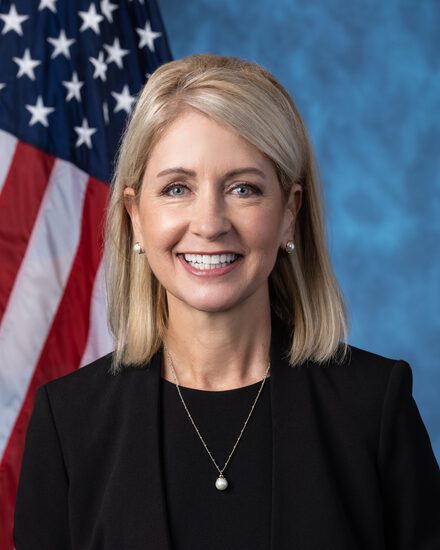
Rep. Mary E. Miller
Sponsored bills
Maddy summaryHR 2062 would allow taxpayers to deduct membership fees and medical expenses paid through health care sharing ministries (HCSMs) as medical expenses on their federal tax returns, similar to other health costs. It specifically adds HCSM membership to the list of deductible medical expenses under Internal Revenue Code Section 213(d)(1) and clarifies that HCSMs are not treated as health insurance under Section 7702C. This change directly affects individuals enrolled in HCSMs, which are faith-based or community-based cost-sharing groups operating outside traditional insurance. The bill would take effect for tax years beginning after December 31, 2025.
Maddy summaryThis bill prohibits federal funding, support, or approval for research using human fetal tissue obtained from induced abortions. It allows research on tissue from miscarriages (under 20 weeks) or stillbirths (20+ weeks) under existing Public Health Service Act rules, and permits development of new cell lines for vaccines or genetic vectors if not derived from abortion tissue. The bill amends the Public Health Service Act to restrict federal research to tissue from miscarriages or stillbirths and clarifies definitions for terms like "miscarriage" and "stillbirth." It directly affects federal agencies like the NIH and researchers relying on federal grants for biomedical studies.
Maddy summaryThis is a non-binding resolution (HRES 206), not a legislative bill. It expresses the House's support for preserving the "stepped-up basis" tax provision (Section 1014 of the Internal Revenue Code), which allows heirs to reset the tax cost basis of inherited assets like farmland or business equipment to their current market value. The resolution cites that 98% of farms and 19% of businesses are family-owned, noting that eliminating this provision could increase taxes for 66% of midsized farms. It specifically urges opposition to new taxes on family farms and small businesses but does not change any tax law or policy.
Maddy summaryThis resolution (HRES 204) removes Representative Al Green of Texas from the House Committee on Financial Services. It directly affects Rep. Green due to his conduct during the March 4, 2025, State of the Union address, where he repeatedly interrupted the President despite warnings from House staff and the Speaker. The resolution cites House Rule XXIII, which requires Members to behave in a manner reflecting creditably on the House, and notes Green's unrepentant attitude after being censured for his actions. The resolution is a disciplinary measure, not a policy change, and specifies his removal from the Financial Services Committee.
Maddy summaryHR 2006, the DOGE Act, makes Executive Order 14210 a permanent law. This order directs the executive branch to implement the President's "Department of Government Efficiency workforce optimization initiative." The bill directly affects federal government operations by legally binding the executive branch to follow this specific workforce optimization plan. It does not create new programs but elevates an existing executive order to statutory force.
Farm Credit Administration Independent Authority Act This bill specifies that the Farm Credit Administration (FCA) is the sole regulator of the Farm Credit System (FCS) and establishes reporting requirements for FCS institutions (i.e., lenders). Specifically, the bill states that the FCA is the sole and independent regulator of the FCS and exempts entities that are supervised by the FCA from the Equal Credit Opportunity Act (ECOA). As background, the bill addresses a rule issued by the Consumer Financial Protection Bureau (CFPB) that implements provisions of the ECOA by requiring covered financial institutions, including FCS institutions, to collect and report to the CFPB data on credit applications for small businesses, including the principal owner's race, sex, and ethnicity. This 2023 rule has been challenged in court. The bill also requires FCS institutions to (1) request that loan applicants and borrowers that are small farmers disclose information identifying their race, sex, and ethnicity; and (2) annually report the collected information to the FCA. The FCA must make the collected information available to the public on annual basis. If an FCS institution customer does not voluntarily report the requested information, the FCA may not require the institution to use other means to deduce the information. In addition, the bill specifies that FCS institutions shall not be required to comply with the bill's requirements if financial institutions are not required to comply with the CFPB rule due to a court invalidating the rule or a repeal of the rule.
Maddy summaryHR 1940, the Tanning Tax Repeal Act of 2025, removes a federal excise tax on indoor tanning services. It directly affects tanning salons and businesses providing these services by eliminating the tax they previously paid. The bill repeals Chapter 49 of the Internal Revenue Code, which imposed the tax, and the change takes effect for services provided after the bill becomes law. This is a straightforward tax repeal with no new requirements or funding mechanisms.
Maddy summaryThe Stop the Cartels Act (HR 1915) aims to combat drug trafficking and human smuggling by enhancing U.S. intelligence efforts focused on Mexico and Central American countries. It requires regular reports on drug trafficking organizations, designates specific cartels (including the Sinaloa Cartel and Jalisco New Generation Cartel) as "Special Transnational Criminal Organizations," and withholds federal grants from jurisdictions that violate immigration laws. The bill also establishes refugee application centers in Mexico and Central America, increases immigration judge staffing by 500 positions, and reforms asylum processing to address fraud while ending family separation policies. It repurposes federal drug program funding by increasing substance abuse prevention and treatment grants while repealing several existing programs. The legislation directly affects U.S. immigration enforcement, federal funding allocation to state and local governments, and the processing of asylum claims and refugee applications.
Maddy summaryThis resolution formally censures Representative Al Green (D-TX) for disrupting President Trump's address during a joint session of Congress on March 4, 2025. It requires him to appear in the House chamber for the public reading of the censure resolution, which states his actions violated decorum rules and brought disrepute to Congress. As a procedural resolution, it does not enact policy changes but serves as a formal reprimand for conduct during a congressional session.