

Defending Students' Civil Rights Act of 2021 This bill prohibits the use of critical race theory or critical race pedagogy in any federally funded program or activity. Specifically, the bill includes the use of critical race theory or critical race pedagogy as a violation of Title VI of the Civil Rights Act of 1964, which prohibits discrimination based on race, color, or national origin in federally funded programs or activities. The bill defines critical race pedagogy as the separation of students or teachers, or the assignment of characteristics or assumptions, based on race, color, or national origin. The bill defines critical race theory as a curriculum that establishes specified principles relating to race or sex, including that (1) one race or sex is inherently superior to another, (2) the United States is fundamentally racist or sexist, and (3) an individual bears responsibility for the past actions of others of the same race or sex.
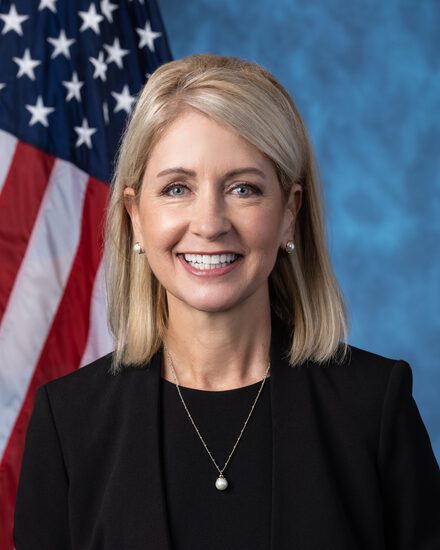
Rep. Mary E. Miller
Sponsored bills
Make the Migrant Protection Protocols Mandatory Act of 2021 This bill requires the Department of Justice (DOJ) to remove certain aliens from the United States while such an alien's application for admission is pending. Specifically, if an alien arrived by land from a foreign country bordering the United States and the alien is not clearly and beyond a doubt entitled to admission into the United States, DOJ must return that alien to that bordering foreign country while the alien's application for admission is pending. (Currently, DOJ may choose to detain such an alien or return the alien to the bordering foreign country while the application for admission is pending.)
Teleabortion Prevention Act of 2021 This bill restricts the use of telehealth for chemical abortions (also known as medication abortions). Specifically, it requires a provider who dispenses or prescribes medication for a chemical abortion to physically examine the patient, be physically present at the location of the chemical abortion, and schedule a follow-up visit. The bill provides an exception for a chemical abortion that is necessary to save the life of a mother whose life is endangered by a physical disorder, illness, injury, or condition. The bill establishes criminal penalties—a fine, a prison term of up to two years, or both—for a provider who does not comply with the requirements. A patient who undergoes a chemical abortion may not be prosecuted.
This bill sets out informed consent requirements for, and restricts the authority of the federal government to require, vaccinations. Specifically, the bill requires written, informed consent from any individual who receives a vaccine in the United States and imposes a criminal fine for violations of this requirement. In addition, the bill prohibits the federal government from requiring vaccinations of U.S. citizens or federal employees unless the citizen or employee is advised in writing of all known risks of, consults with a physician about, and provides voluntary informed consent for the required vaccine.
Americans not Aliens Act This bill prohibits an alien who has been ordered removed from receiving employment authorization. Currently, an individual who has been ordered removed may receive employment authorization if the Department of Justice finds that the individual's removal is impracticable or contrary to the public interest.
Criminal Alien Removal Clarification Act of 2021 This bill subjects to deportation an alien who at any time after admission has been convicted of a felony or two misdemeanors under state or federal law. Currently, an alien is subject to deportation for a single conviction for certain felonies (such as an aggravated felony), two or more convictions for crimes involving moral turpitude, or being a drug addict.
Ensuring Accountability in Agency Rulemaking Act This bill requires, subject to limited exception, that any agency rule promulgated under notice and comment procedures must be issued and signed by the head of the agency. The Office of Information and Regulatory Affairs must issue guidance for agencies to implement this requirement.
No Frivolous Application for Short-Barreled Shotguns Act or the NFA SBS Act This bill removes certain short-barreled shotguns from the definition of firearms for purposes of the National Firearms Act. It also eliminates the prohibition on the sale or transportation of such shotguns in interstate commerce and treats persons who acquire or possess a short-barreled shotgun as meeting the registration or licensing requirements for such shotguns where such requirements are determined by reference to the National Firearms Act. The bill preempts state or local laws that impose a tax or recordkeeping requirements on short-barreled shotguns. The Department of Justice must destroy records relating to the registration of shotguns described by this bill within one year after the enactment of this bill.
No Taxpayer Funding for the Central American Minors Program Act This bill prohibits using federal funds to carry out the Central American Minors program, a Department of Homeland Security and Department of State program that reunites qualified children from El Salvador, Guatemala, and Honduras with their parent who is lawfully present in the United States.
Nuclear Family Priority Act This bill imposes limits on various types of family-sponsored immigration visas. The alien parents of U.S. citizens shall not qualify for visas for immediate relatives , which are not subject to any direct numerical limits. Currently, the spouses, unmarried children under 21, and parents of citizens are considered immediate relatives. The bill also creates a nonimmigrant visa for such parents of citizens. Such aliens shall not be eligible for employment or any public benefits. The bill also reduces the baseline annual cap for family-sponsored visas from 480,000 to 88,000, and revises the methods for calculating the cap. Currently, the 480,000 cap may be adjusted depending on various factors but shall not be less than 226,000. Preference allocations (visa categories subject to various annual caps) for various family-sponsored visas shall be eliminated, including those for the siblings and married children of citizens. The bill provides for a preference allocation for the unmarried children under 21 and spouses of permanent residents, subject to the 88,000 annual cap.