

Maddy summaryThe International Human Rights Defense Act of 2023 creates a permanent Special Envoy at the State Department to coordinate U.S. efforts against discrimination and violence targeting LGBTQI+ people globally. The bill requires the development of an annual global strategy to address criminalization, discrimination, and violence based on sexual orientation, gender identity, or sex characteristics. It also mandates that U.S. country reports on human rights practices include detailed information about laws and practices affecting LGBTQI+ communities. The legislation authorizes U.S. foreign assistance programs to support LGBTQI+ rights through health services, legal protections, and community capacity building. This bill aims to strengthen U.S. diplomatic engagement on LGBTQI+ rights as part of broader human rights policy.
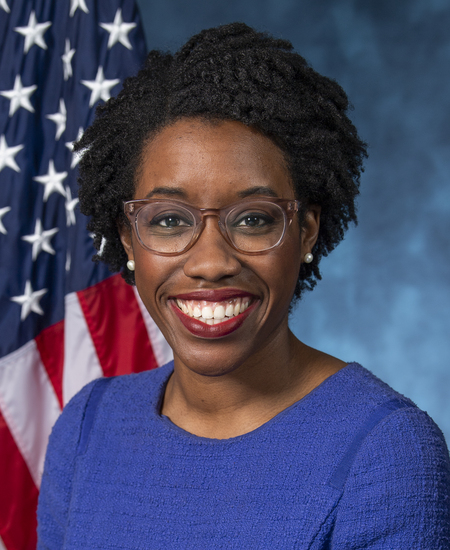
Rep. Lauren Underwood
Sponsored bills
Maddy summaryHR 1139, the GUARD VA Benefits Act, amends federal law to strengthen penalties for individuals or organizations charging veterans unauthorized fees when helping with VA benefit claims. It directly affects veterans seeking assistance with VA claims and the representatives (like advocates or attorneys) who might charge them fees. The bill adds a new provision making it a violation to solicit, charge, or receive any fee for preparing, presenting, or prosecuting VA claims, punishable by fines under Title 18. This change specifically targets unauthorized fee-charging while excluding fees covered under existing exceptions in sections 5904 or 1984 of the law.
Maddy summaryHR 1831 would award Billie Jean King a Congressional Gold Medal to honor her lifelong advocacy for equal rights in sports and society. The bill directs the Secretary of the Treasury to strike the medal and have it presented by congressional leaders, recognizing her pivotal role in advancing women's equality through tennis (including founding the Women’s Tennis Association and securing equal prize money) and her broader impact on society through initiatives like Title IX advocacy.
Maddy summaryThis bill changes how U.S. foreign aid is provided to international health organizations. It prevents U.S. agencies from denying aid to foreign non-governmental organizations (NGOs) solely because they offer health services (like counseling or referrals) using their own funds, as long as those services follow local laws. It also stops applying stricter rules about how foreign NGOs can use their own funds for advocacy compared to U.S. NGOs receiving similar aid. The bill directly affects foreign health-focused NGOs that rely on U.S. foreign assistance funding.
Maddy summaryHR 1716, the Global Aircraft Maintenance Safety Improvement Act, requires U.S. airlines to annually report detailed information about heavy maintenance work performed outside the U.S. on their aircraft, including locations, work descriptions, and any safety issues identified after maintenance. It prohibits U.S. airlines from entering new contracts for such maintenance with repair stations in countries classified by the FAA as "Category 2" due to safety deficiencies. The bill also mandates that mechanics and supervisors at foreign repair stations performing heavy maintenance on U.S. aircraft must hold appropriate FAA certifications. Additionally, it establishes a working group with international aviation authorities to review and recommend improvements for overseeing foreign repair stations.
Maddy summaryThe Office of Gun Violence Prevention Act of 2023 establishes a new office within the Department of Justice to coordinate federal efforts on gun violence prevention. The office, led by a Director appointed by the Attorney General, will evaluate existing programs, identify data gaps, and make evidence-based policy recommendations to Congress and the President. It will work with an advisory council including DOJ officials and external members like gun violence survivors, community service providers, and public health experts. The office must produce an annual report to Congress on gun violence trends and policy recommendations, and the bill authorizes funding to support these activities.
Maddy summaryHR 1723, the Abortion is Health Care Everywhere Act of 2023, amends the Foreign Assistance Act to remove restrictions on using U.S. foreign aid funds for abortion services. It explicitly allows U.S. foreign assistance programs to fund comprehensive reproductive health care, including abortion services, training, and equipment. This change directly affects U.S. international health programs and recipient countries, enabling them to integrate safe abortion care into broader reproductive health services. The bill aims to align U.S. policy with global health guidelines by making abortion services a standard part of reproductive health care funded through foreign assistance.
Maddy summaryThis bill authorizes a Congressional Gold Medal to honor the "Hello Girls" - female telephone operators who served in the Army Signal Corps during World War I. They provided critical battlefield communications in France (connecting 26 million calls), wore military uniforms, and faced combat risks, but were denied veteran benefits for 60 years due to being classified as civilian contractors. The medal recognizes their pioneering service, devotion, and the decades-long struggle to gain military recognition. The award follows similar recognition for other WWII women veterans and aims to correct the historical injustice they faced.
Maddy summaryThe PHIT Act of 2023 allows individuals and families to deduct certain fitness expenses as medical costs on their federal taxes. It covers gym memberships, fitness classes, and specific equipment used exclusively for exercise (like home workout gear), with a yearly limit of $1,000 ($2,000 for joint returns). Expenses for activities like golf, hunting, or non-exercise-focused facilities (e.g., private clubs) are excluded, and equipment must be used solely for physical activity. This directly affects taxpayers who pay for qualifying fitness programs, making these costs partially tax-deductible under revised IRS rules.
Maddy summaryThis bill removes federal restrictions that previously limited methadone prescribing for opioid use disorder, allowing certified addiction specialists and program employees to prescribe methadone through pharmacies for up to 30 days per electronic prescription. It directly affects patients with opioid use disorder who can now access treatment more flexibly outside traditional clinic settings, and healthcare providers who gain new prescribing authority. Key provisions include requiring electronic prescriptions, mandating patient informed consent about confidentiality differences, and permitting telehealth for counseling and ancillary services. The bill also requires annual reports to Congress tracking registered providers and patients served.