

Creating Opportunities Now for Necessary and Effective Care Technologies (CONNECT) for Health Act of 2021 or the CONNECT for Health Act of 2021 This bill expands coverage of telehealth services under Medicare. Among other provisions, the bill allows the Centers for Medicare & Medicaid Services (CMS) to waive certain restrictions, such as restrictions on the types of technology that may be used; permanently removes geographic restrictions on originating sites (i.e., the location of the beneficiary) and allows the home of the beneficiary to serve as the originating site for all services; permanently allows federally qualified health centers and rural health clinics to serve as the distant site (i.e., the location of the health care practitioner); and allows the CMS to generally waive coverage restrictions during any public health emergency. Additionally, the CMS must report on the effects of expanded telehealth services during the COVID-19 public health emergency, including with respect to the utilization, quality, and outcomes of services. The Center for Medicare and Medicaid Innovation may also test alternative payment models relating to expanded telehealth services.
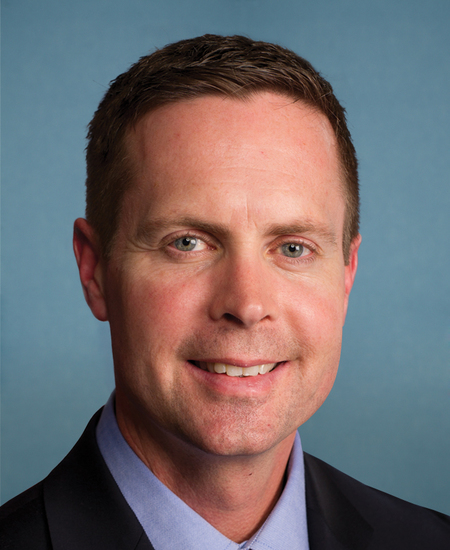
Rep. Rodney Davis
Sponsored bills
Mark Takai Atomic Veterans Healthcare Parity Act This bill includes veterans who participated in the cleanup of Enewetak Atoll in the Marshall Islands between January 1, 1977, and December 31, 1980, as radiation-exposed veterans for purposes of the Department of Veterans Affairs presumption of service-connection for specified cancers. Under a presumption of service-connection, specific conditions diagnosed in certain veterans are presumed to have been caused by the circumstances of their military service. Health care benefits and disability compensation may then be awarded.
Renewable Fuel Infrastructure Investment and Market Expansion Act of 2021 This bill establishes programs and requirements to expand access to renewable fuel. Specifically, the U.S. Department of Agriculture must establish a program to award grants for the deployment of renewable fuel infrastructure as specified by this bill. In addition, the Environmental Protection Agency (EPA) must finalize a 2021 proposed rule titled E 15 Fuel Dispenser Labeling and Compatibility With Underground Storage Tanks . When finalizing the rule, the EPA must eliminate the labeling requirements for fuel pumps that dispense E 15 fuel (i.e., gasoline that contains 15% ethanol).
Mainstreaming Addiction Treatment Act of 2021 This bill removes the requirement that a health care practitioner apply for a separate waiver through the Drug Enforcement Administration (DEA) to dispense certain narcotic drugs (e.g., buprenorphine) for maintenance or detoxification treatment (i.e., substance use disorder treatment). Further, a community health aide or community health practitioner may dispense certain narcotic drugs for maintenance or detoxification treatment without registering with the DEA if the drug is prescribed by a health care practitioner through telemedicine. It preempts state laws related to licensure for this activity. The bill also directs the Substance Abuse and Mental Health Services Administration to conduct a national campaign to educate health care practitioners and encourage them to integrate substance use disorder treatment into their practices.
Return Excessive Migrants and Asylees to International Neighbors in Mexico Act of 2021 or the REMAIN in Mexico Act of 2021 This bill requires the Department of Homeland Security (DHS) to implement the Migrant Protection Protocols as outlined in the January 25, 2019, memo titled Policy Guidance for Implementation of the Migrant Protection Protocols . (The protocols generally required aliens who are not clearly admissible, including those seeking asylum, arriving by land along the U.S.-Mexico border to be returned to Mexico while their immigration proceedings are pending, rather than remain in the United States. On January 21, 2021, DHS stopped applying the protocols to newly-arrived individuals.)
Pain-Capable Unborn Child Protection Act This bill establishes a new criminal offense for performing or attempting to perform an abortion if the probable post-fertilization age of the fetus is 20 weeks or more. A violator is subject to criminal penalties—a fine, a prison term of up to five years, or both. The bill provides exceptions for an abortion (1) that is necessary to save the life of the pregnant woman, or (2) when the pregnancy is the result of rape or incest. A physician who performs or attempts to perform an abortion under an exception must comply with specified requirements. A woman who undergoes a prohibited abortion may not be prosecuted for violating or conspiring to violate the provisions of this bill.
Student Athlete Level Playing Field Act This bill generally prohibits an institution of higher education or a covered athletic organization (e.g., an athletic association, a conference, or an organization with authority over intercollegiate athletics) from restricting the ability of a student athlete to enter into an endorsement or agency contract, with exceptions. It also provides for enforcement by the Federal Trade Commission, preempts state laws relating to endorsement or agency contracts, and establishes the Covered Athletic Organization Commission.
No Taxpayer Funding for Abortion and Abortion Insurance Full Disclosure Act of 2021 This bill modifies provisions relating to federal funding for, and health insurance coverage of, abortions. Specifically, the bill prohibits the use of federal funds for abortions or for health coverage that includes abortions. Such restrictions extend to the use of funds in the budget of the District of Columbia. Additionally, abortions may not be provided in a federal health care facility or by a federal employee. Historically, language has been included in annual appropriations bills for the Department of Health and Human Services (HHS) that prohibits the use of federal funds for abortions—such language is commonly referred to as the Hyde Amendment. Similar language is also frequently included in appropriations bills for other federal agencies and the District of Columbia. The bill makes these restrictions permanent and extends the restrictions to all federal funds (rather than specific agencies). The bill's restrictions regarding the use of federal funds do not apply in cases of rape, incest, or where a physical disorder, injury, or illness endangers a woman's life unless an abortion is performed. The Hyde Amendment provides the same exceptions. The bill also prohibits qualified health plans from including coverage for abortions. Currently, qualified health plans may cover abortion, but the portion of the premium attributable to abortion coverage is not eligible for subsidies.
Endless Frontier Act This bill establishes a Directorate for Technology and Innovation in the National Science Foundation (NSF) and establishes various programs and activities. The goals of the directorate shall be, among other things, the strengthening of U.S. leadership in critical technologies through basic research in key technology focus areas, such as artificial intelligence, high performance computing, and advanced manufacturing, and the commercialization of those technologies to businesses in the United States. The bill gives the NSF the authority to provide for the widest practicable and appropriate dissemination of information within the United States concerning the NSF’s activities and the results of those activities. The Office of Science and Technology Policy shall annually develop a strategy for the federal government to improve national competitiveness in science, research, and innovation to support the national security strategy. The Department of Commerce shall (1) establish a supply chain resiliency and crisis response program to address supply chain gaps and vulnerabilities in critical industries, (2) designate regional technology hubs to facilitate activities that support regional economic development that diffuses innovation around the United States, and (3) award grants to facilitate development and implementation of comprehensive regional technology strategies. The bill extends through FY2026 the Manufacturing USA Program and expands such program to support innovation and growth in domestic manufacturing.
This resolution sets forth the levels of payment for 117th Congress expenses (including staff salaries) for the following House Committees: (1) Agriculture; (2) Armed Services; (3) the Budget; (4) Select Committee on the Climate Crisis; (5) Education and Labor; (6) Energy and Commerce; (7) Ethics; (8) Financial Services; (9) Foreign Affairs; (10) Homeland Security; (11) House Administration; (12) Permanent Select Committee on Intelligence; (13) the Judiciary; (14) Select Committee on the Modernization of Congress; (15) Natural Resources; (16) Oversight and Reform; (17) Rules; (18) Science, Space, and Technology; (19) Small Business; (20) Transportation and Infrastructure; (21) Veterans' Affairs; and (22) Ways and Means. Among other things, this resolution (1) prescribes limitations to such expenses for the 1st and 2nd sessions of the 117th Congress, and (2) establishes a reserve fund for unanticipated committee expenses for the 117th Congress.