

Promotion and Expansion of Private Employee Ownership Act of 2021 This bill expands tax incentives and federal assistance for employee stock ownership plans (ESOPs) that are sponsored by S corporations. The bill provides additional tax incentives for ESOPs by (1) extending to all domestic corporations, including S corporations, provisions allowing deferral of tax on gain from the sale of employer securities to an ESOP; and (2) allowing a tax deduction for 50% of the interest received by a bank on loans to S corporation-sponsored ESOPs for the purchase of employer securities. The Department of the Treasury must establish the S Corporation Employee Ownership Assistance Office to foster increased employee ownership of S corporations. The bill defines an ESOP business concern for purposes of the Small Business Act as a business concern that was eligible for a loan, preference, or other program under such Act before more than 49% of the business concern was acquired by an ESOP.
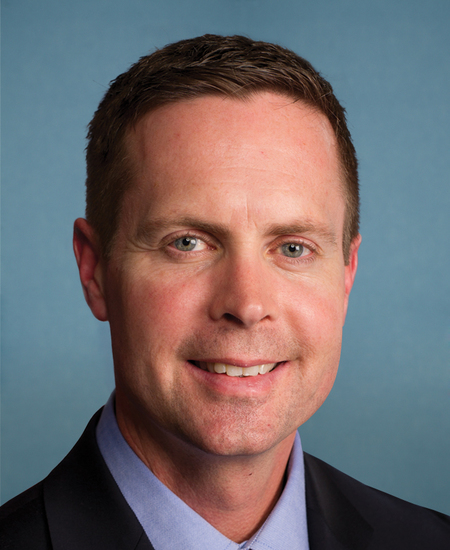
Rep. Rodney Davis
Sponsored bills
Resident Education Deferred Interest Act or the REDI Act This bill allows borrowers in medical or dental internships or residency programs to defer student loan payments until the completion of their programs.
Reducing Hereditary Cancer Act of 2021 This bill provides for Medicare coverage of germline mutation testing for individuals with a personal or family history of a hereditary cancer gene mutation or suspected history of hereditary cancer, as well as for associated coverage of risk-reducing surgeries and screenings.
Pandemic Effects on Home Safety and Tourism Act This bill requires studies and reports about the effects of COVID-19 (i.e., coronavirus disease 2019) with respect to tourism and consumer product safety. Specifically, the Consumer Product Safety Commission must report, and make available to the public, information about injuries and deaths from consumer products during the COVID-19 public health emergency. The report must be submitted every three months for the duration of the emergency. Additionally, the Department of Commerce, in consultation with appropriate stakeholders, must study and report about the effects of the pandemic on the travel and tourism industry. Commerce must consider metrics including changes in employment rate, sales, and business revenue, and it must provide the opportunity for public comment. An interim study and report must be submitted not later than three months after the enactment of this bill.
Protecting Older Workers Against Discrimination Act of 2021 This bill revises the evidentiary standard for age discrimination by establishing an unlawful employment practice when the complaining party demonstrates that age or participation in an investigation, proceeding, or litigation related to an age discrimination claim was a motivating factor for an adverse practice, even though other factors also motivated the practice (thereby allowing what are commonly known as mixed motive claims). The bill (1) permits the complaining party to rely on any type or form of admissible evidence, which need only be sufficient for a reasonable trier of fact to find that an unlawful practice occurred; and (2) declares that the complaining party shall not be required to demonstrate that age or retaliation was the sole cause of the employment practice (thereby rejecting the Supreme Court's decision in Gross v. FBL Financial Services, Inc. , which requires the complainant to prove that age was the but-for cause for the employer's decision). The bill applies this evidentiary standard to other employment discrimination and retaliation claims, including claims under the Civil Rights Act of 1964, the Americans With Disabilities Act of 1990, and the Rehabilitation Act of 1973. In a claim in which age discrimination is shown, but where the employer demonstrates that it would have taken the same action absent the motivating factor of age, the bill authorizes courts to grant declaratory and injunctive relief, but prohibits the court from awarding damages or issuing an order requiring any admission, reinstatement, hiring, promotion, or payment. This limitation also applies to claims of discrimination based on disability. The bill also includes reporting requirements for the Equal Employment Opportunity Commission and the Department of Labor.
Newborn Screening Saves Lives Reauthorization Act of 2021 This bill reauthorizes through FY2026 and revises several programs and activities relating to newborn screening for certain conditions and genetic, endocrine, and metabolic diseases. Among its changes, the bill reauthorizes and makes mandatory the Hunter Kelly Research Program at the National Institutes of Health, and national surveillance activities conducted by the Centers for Disease Control and Prevention. The bill also aligns statutory requirements for research on non-identified newborn blood spots with federal regulations governing research on human subjects. These blood spots are collected as part of newborn screening programs, and some states make them available for biomedical and public health research. Under current regulations, research on non-identified bio-specimens such as blood spots is not considered to be research on human subjects, to which additional protections apply.
Continuous Improvement and Accountability in Organic Standards Act This bill requires the Department of Agriculture (USDA) to undertake rulemaking and other activities to implement certain recommendations of the National Organic Standards Board (a federal advisory board that considers and makes recommendations concerning the production, handling, and processing of organic products). Specifically, USDA must issue within a specified time line final rules for implementing recommendations approved (1) by the board between December 31, 2000, and the date of the bill's enactment; and (2) with at least two-thirds of the votes cast at a meeting where a quorum was present. If USDA determines issuing rules for such recommendations is not practicable, it must identify and report to Congress about the specific constraints that preclude rulemaking. In addition, the bill sets out a process and time line for USDA to implement through rulemaking future recommendations of the board that are approved by at least two-thirds of the votes cast at a meeting where a quorum was present. The bill also requires state officials or entities that certify organic farms or handling operations to report annually concerning the implementation of and compliance with any new rule or guidance.
Traditional Cigar Manufacturing and Small Business Jobs Preservation Act of 2021 This bill exempts traditional large and premium cigars from Food and Drug Administration (FDA) regulation and FDA-assessed user fees.
Metropolitan Statistical Area Preservation Act This bill prohibits the Office of Management and Budget (OMB) from establishing, for purposes of designating areas as metropolitan statistical areas (MSAs), a minimum population for the urban area of such MSA that is more than 50,000. The OMB may, for statistical purposes only, establish other statistical area designations with higher minimum population requirements for such urban areas.
This resolution recognizes the historical significance to the nation of Juneteenth Independence Day (commemorating the end of slavery in the United States).