

Maddy summaryHRES 958 is a non-binding House resolution designating March 2022 as National Colorectal Cancer Awareness Month. It supports the goals of raising public awareness about colorectal cancer prevention and screening, encourages Americans to participate in educational activities during March, and aligns with the broader objective of reducing cancer deaths through the Cancer Moonshot initiative. The resolution highlights statistics on colorectal cancer incidence and mortality (e.g., 52,580 estimated deaths in 2022) and emphasizes the importance of early screening, but does not create new laws or alter existing policies. It directly affects the general public by promoting awareness, with no specific groups or entities mandated to take action.
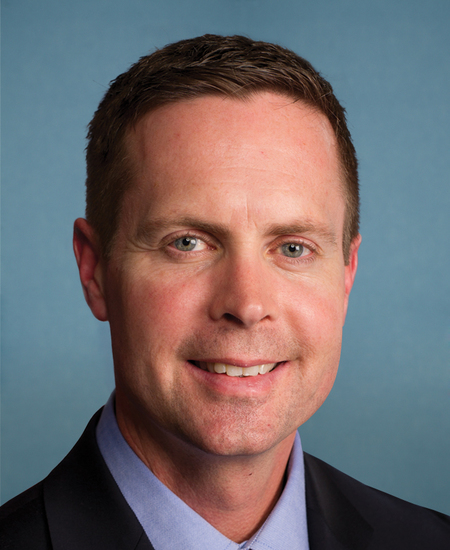
Rep. Rodney Davis
Sponsored bills
No Energy Revenues for Russian Hostilities Act of 2022 This bill prohibits, with some exceptions, the Department of the Treasury from authorizing certain energy-related transactions that would otherwise be blocked by an executive order barring transactions related to specified harmful foreign activities of the Russian government. The bill also revokes a license issued February 28, 2022, by the Office of Foreign Assets Control within Treasury that authorized certain transactions barred by the executive order. The bill allows a waiver from the limitation on an energy transaction if the transaction involves funds owed to a Russian person and the funds are to be used for the sale of agricultural commodities, food, medicine, or medical devices. The bill terminates on the earlier of five years after its enactment, or 30 days after the President reports to Congress that Russia has ceased activities destabilizing the sovereignty and territorial integrity of Ukraine.
This joint resolution nullifies the rule titled Medicare and Medicaid Programs; Omnibus COVID-19 Health Care Staff Vaccination , which was issued by the Centers for Medicare & Medicaid Services on November 5, 2021. The rule requires health care providers, as a condition of Medicare and Medicaid participation, to ensure that staff are fully vaccinated against COVID-19.
This resolution expresses that it is the sense of the House of Representatives that the energy independence of the United States is critical to national security and should include the production and use of all available energy sources, including coal, natural gas, oil, nuclear energy, and renewables, as well as strategic minerals critical to electric vehicles and other clean energy sources; and President Biden should take immediate action to restore the energy security of the United States and provide U.S. allies with an affordable and secure supply of energy.
No Profits for Taliban-Controlled Mines Act This bill directs the President to prohibit the use of rare earth minerals that originate from Taliban-controlled areas of Afghanistan in domestically sold or manufactured components.
No Pro-Abortion Task Force Act This bill prohibits federal funding of the Reproductive Healthcare Access Task Force. The Department of Health and Human Services launched the task force on January 21, 2022, to identify and coordinate departmental activities related to accessing sexual and reproductive health care.
This resolution supports the designation of a National FFA Week. It also (1) recognizes the important role of the National FFA Organization (Future Farmers of America) in developing the next generation of leaders who will change the world, and (2) celebrates 70 years of the National FFA Organization's membership magazine.
American Offshore Worker Fairness Act This bill further restricts foreign crew members from working on vessels, rigs, and other structures engaged in offshore energy activities on the Outer Continental Shelf.
Farmers Undertake Environmental Land Stewardship Act or the FUELS Act This bill increases thresholds for requiring a farm to have a plan to address oil spills. Currently, regulations require a farm to have an oil spill control and prevention plan that is certified by a professional engineer if the farm's aboveground oil storage capacity is above a certain threshold or if the farm has a reportable oil discharge history. A farm with lower aboveground storage capacity and no reportable history is either allowed to self-certify its plan or not required to have a plan at all, depending on the farm's storage capacity. Under the bill, the Environmental Protection Agency must require a farm to have a professionally certified plan if the farm has an aggregate aboveground oil storage capacity of 40,000 gallons or more, whereas the current threshold is 20,000 gallons. The bill also raises the aggregate capacity thresholds at which a farm with no reportable oil discharge history may self-certify its plan or is not required to have a plan. The bill also limits when a farm's aboveground oil storage containers on separate parcels shall count toward the farm's oil storage capacity for the purposes of these thresholds.
Upholding the 1995 Jerusalem Embassy Law Act of 2021 This bill prohibits using federal funds to establish any diplomatic facility in Jerusalem other than the U.S. Embassy to Israel.