

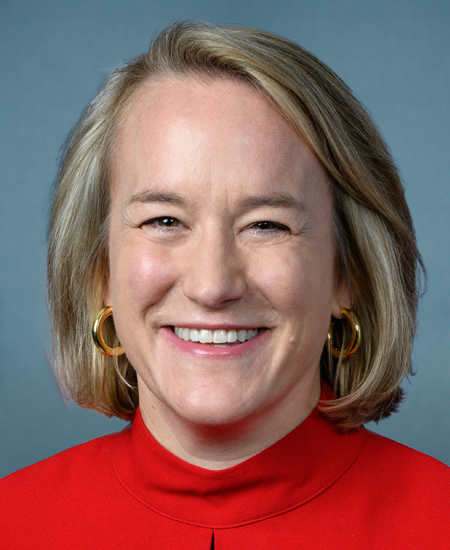
Photo of Nikki Budzinski
D United States House · District 13 · Illinois On the 2026 ballot

Rep. Nikki Budzinski

Compare
Total votes
1,879
all sessions
Attendance
100%
5 missed
Higher than 96% of chamber peers
With party
94%
of cast votes
Lower than 76% of chamber peers
Bipartisan score
3%
crosses aisle rarely
Higher than 75% of chamber peers
Sponsored
1,021
bills & resolutions
Higher than 84% of chamber peers
Committees
6
assignments
1,021 bills and resolutions

Sponsored bills

Total
1,021
Primary
34
Co-sponsor
987
This page
1,021
matching current filters
Co-sponsor HR 5995
In committee · United States House · Co-sponsor
Federal Retirement Fairness Act

Maddy summaryThis bill removes a previous exclusion that prevented temporary federal employees (including U.S. Postal Service staff and Members of Congress) from counting service after January 1, 1988, toward their retirement benefits. It allows these workers to have their post-1988 temporary service counted toward retirement eligibility if they pay a deposit to the retirement system. The change applies to anyone employed by the federal government on or after the bill's enactment date. The Office of Personnel Management must notify affected employees and create rules to implement this change.

In committee Oct 25, 2023 1 co-sponsor
Co-sponsor HR 5960
In committee · United States House · Co-sponsor
Opportunity to Compete Act

Maddy summaryHR 5960, the Opportunity to Compete Act, limits how employers use educational requirements in hiring. It requires employers using computerized hiring systems to disclose the median experience needed for a job (including military service or community college) and to accept equivalent work experience instead of a bachelor's degree. Employers seeking a waiver to require a bachelor's degree must prove the skill can't be gained without it and disclose this requirement to applicants, with the Labor Secretary processing waiver requests within 14 days. Small businesses with fewer than 500 employees are exempt from these rules. The law aims to expand hiring opportunities by reducing unnecessary degree barriers.

In committee Oct 25, 2023 1 co-sponsor
Co-sponsor HR 5871
In committee · United States House · Co-sponsor
Rail Worker and Community Safety Act

Maddy summaryThe Rail Worker and Community Safety Act establishes a minimum 2-person crew requirement for most freight trains (with exceptions for smaller carriers or specific low-risk operations), mandates new safety regulations for hazardous materials transportation including advance notification to emergency response agencies, and requires rail carriers to provide employees with earned paid sick time (1 hour for every 30 hours worked). The bill also sets a minimum requirement of 425 federal rail safety inspectors with specialized expertise across various safety domains, along with additional funding for hiring and compensation. These provisions directly affect rail carriers, rail workers, and communities near rail operations, aiming to enhance rail safety and worker protections through concrete policy changes.

In committee Oct 3, 2023 1 co-sponsor
Co-sponsor HR 5653
In committee · United States House · Co-sponsor
No Budget, No Pay Act

Maddy summaryHR 5653, the "No Budget, No Pay Act," requires Congress to pass a budget plan by April 15 and all annual funding bills by September 30 each year, or members lose pay for the period starting the day after each deadline until the bills are approved. It directly affects all voting Members of Congress (including delegates) during the specified penalty periods, excluding the Vice President. The bill imposes a financial consequence for missing these budget deadlines, aiming to incentivize timely fiscal planning by withholding compensation for the duration of the delay. This is a procedural mechanism focused on budget process deadlines, not on substantive policy changes.

In committee Oct 2, 2023 1 co-sponsor
Co-sponsor HRES 726
In committee · United States House · Co-sponsor
Supporting the designation of the week of September 25 through September 29, 2023, as "National Clean Energy Week".

Maddy summaryThis resolution designates the week of September 25-29, 2023, as "National Clean Energy Week" to recognize the growing role of clean energy in the U.S. economy. It expresses support for clean energy jobs and innovation, noting the sector employed about 8.1 million people in 2022. The resolution encourages federal, state, and local investment in affordable clean energy technologies and promotes "commonsense solutions" for energy needs. As a symbolic gesture, it has no legal force or funding implications - it simply urges recognition of clean energy's economic and environmental contributions.

In committee Sep 29, 2023 1 co-sponsor
Co-sponsor HR 5789
In committee · United States House · Co-sponsor
NEWBORN Act

Maddy summaryThe NEWBORN Act creates a federal grant program to reduce infant mortality in the 50 U.S. counties with the highest rates, using $10 million annually from 2023-2027. It funds local health departments (including tribal, county, or state agencies) to design pilot programs addressing causes like preterm birth, maternal complications, and infant injuries through community assessments, outreach to at-risk mothers, and coordinated services such as postpartum care and smoking cessation. Grantees must report annually on program outcomes and methods, with no more than 10% of funds used for evaluation. The bill directly affects communities in high-mortality areas by supporting targeted, evidence-based interventions.

In committee Sep 29, 2023 1 co-sponsor
Co-sponsor HR 5699
In committee · United States House · Co-sponsor
Charles Rochester Blood Clot Prevention and Treatment Act

Maddy summaryThis bill directs the CDC to launch public education campaigns about blood clot risks, symptoms, and prevention, with special focus on high-risk groups including Black Americans, cancer patients, seniors, and hospitalized individuals. It creates a new 18-month advisory committee to study DVT/PE data collection, develop prevention guidelines, and recommend improved care standards for at-risk patients. The bill also mandates a federal study on electronic health record systems for better DVT/PE surveillance and authorizes $20 million annually for these efforts through fiscal year 2029. These provisions aim to reduce preventable deaths and improve early diagnosis, directly affecting millions at risk of blood clots nationwide.

In committee Sep 29, 2023 1 co-sponsor
Co-sponsor HR 5667
In committee · United States House · Co-sponsor
Pay Our Military Act

Maddy summaryHR 5667, the Pay Our Military Act, ensures continued pay and allowances for active-duty military members, reservists, Department of Defense civilians, and qualifying contractors during any government funding gap in fiscal year 2024. It appropriates funds from the Treasury to cover these payments if regular appropriations bills aren't passed before the end of the fiscal year. The funding automatically terminates once regular appropriations are enacted or by January 1, 2025, whichever comes first.

In committee Sep 29, 2023 1 co-sponsor
Co-sponsor HR 5668
In committee · United States House · Co-sponsor
Feed Our Families Act of 2023

Maddy summaryThe Feed Our Families Act of 2023 ensures SNAP (Supplemental Nutrition Assistance Program) benefits continue for 90 days during the first government shutdown in any fiscal year after 2023. It appropriates emergency funds from the Treasury to cover SNAP operations without requiring new congressional approval during this period. The funds are held in reserve and used solely for SNAP program needs, such as food assistance payments. This directly affects low-income households relying on SNAP for food security during funding gaps.

In committee Sep 29, 2023 1 co-sponsor
Co-sponsor HR 5820
In committee · United States House · Co-sponsor
Technology for Energy Security Act

Maddy summaryHR 5820, the Technology for Energy Security Act, extends a federal tax credit for businesses installing qualified fuel cell technology. It amends the tax code to change the expiration date for this credit from January 1, 2025, to January 1, 2033. This extension provides businesses with a longer timeframe to claim the credit for eligible fuel cell property investments. The bill directly affects companies deploying fuel cell energy systems by making the tax incentive available for an additional decade.

In committee Sep 28, 2023 1 co-sponsor
Showing 721 to 730 of 1,021 bills
Previous 1 … 72 73 74 … 103 Next