

Maddy summaryThe American Dream and Promise Act of 2025 would create pathways to permanent residency for certain immigrant youth who entered the U.S. as children (Dream Act component) and for individuals from countries with Temporary Protected Status or Deferred Enforced Departure (American Promise Act component). To qualify, applicants must meet continuous physical presence requirements (since January 1, 2021 for Dream Act applicants, and for 3+ years for American Promise applicants), pass background checks, and satisfy educational or employment criteria. Conditional permanent resident status would be granted initially, with the option to convert to full permanent residency after meeting additional requirements like earning a degree, serving in the military for two years, or demonstrating three years of earned income. The bill includes fee exemptions for low-income applicants, establishes a grant program to assist applicants with legal help, and creates specific procedures for background checks and appeals.
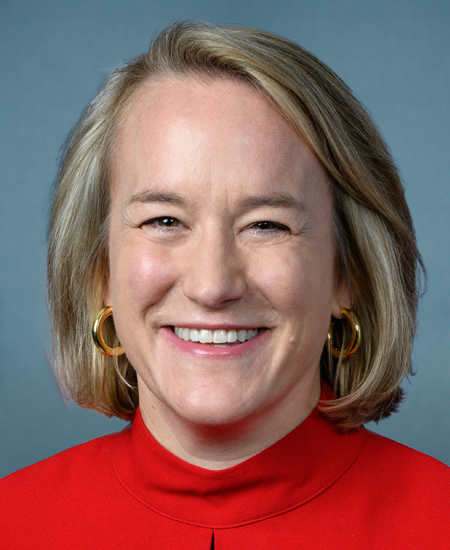
Rep. Nikki Budzinski
Sponsored bills
Maddy summaryThis bill awards a Congressional Gold Medal to the 761st Tank Battalion (known as the "Black Panthers"), the first predominantly Black armored unit in World War II's European Theater. It recognizes their combat service from 1944-1946, including key roles in the Battle of the Bulge and breaking the Siegfried Line, despite facing racial prejudice during and after the war. The medal will be displayed at the National Museum of African American History and Culture, with bronze duplicates available for sale to cover costs. The bill commemorates the battalion's 130,000 enemy casualties inflicted, 50% casualty rate, and their 1978 Presidential Unit Citation. It does not create new laws or affect current policies.
Maddy summaryHR 1637, the Protect Veteran Jobs Act, allows veterans who were involuntarily dismissed without cause from federal civil service positions between January 20, 2025, and the bill’s enactment date to seek reinstatement to their former role or a qualified position. It directly affects eligible veterans dismissed during this period and requires federal agencies to report quarterly on veteran removals, including the number and reasons for each dismissal. Agencies must submit these reports to specified congressional committees until January 20, 2029, when the reporting requirement ends. The bill aims to restore employment opportunities for affected veterans while increasing transparency around federal hiring and dismissal practices.
Maddy summaryThe RAISE Act of 2025 creates a new tax credit for teachers and early childhood educators, with a base of $1,000 plus additional amounts based on school poverty rates. Teachers working in schools where more than 39% of students live in poverty can receive up to $14,000 more in tax credits, calculated based on how much a school's poverty rate exceeds 39%. The bill also increases the deduction for teachers' classroom expenses from $250 to $500 and requires schools to maintain teacher pay levels to receive certain federal funds. This directly affects public school teachers, early childhood educators, and schools serving communities with high poverty rates.
Maddy summaryEthan's Law requires gun owners to store firearms securely in homes where minors live or where residents are legally prohibited from owning guns. It makes it unlawful to leave firearms unsecured if a minor or ineligible person could access them, with fines of $500 per violation and harsher penalties if injury or death occurs. The bill creates a federal grant program to help states implement similar secure storage laws and treats unsafe storage as negligence in legal cases. It directly affects households with children or residents who cannot legally possess firearms, aiming to reduce accidental shootings and unauthorized access.
Maddy summaryHRES 159 is a symbolic resolution expressing the U.S. House of Representatives' support for designating February 24-28, 2025, as "Public Schools Week." It does not create new laws or allocate funds but aims to highlight the importance of public schools in communities. The resolution cites reasons such as public schools serving 90% of U.S. students, fostering critical thinking, and requiring equitable funding - though these are context, not policy changes. It directly affects public schools and their communities by raising awareness of their role in education. As a non-binding resolution, it has no direct impact on school operations or funding.
Maddy summaryThis bill allows physical therapists to use temporary replacement staff (locum tenens) under Medicare, similar to how physicians currently can. It directly affects physical therapists providing outpatient services and Medicare beneficiaries relying on those services. The key change modifies Medicare rules to apply the same provisions for physical therapy services as are already used for physician services. This means physical therapists can more easily fill temporary staffing gaps without disrupting patient care. The amendment applies to services provided after the bill's enactment date.
Maddy summaryHR 1548, the "Leveling the Playing Field 2.0 Act," amends U.S. trade laws to strengthen enforcement of antidumping and countervailing duty regulations. The bill creates new rules for handling multiple investigations on the same merchandise (successive investigations), addresses market distortions in foreign countries that affect production costs, and improves mechanisms to prevent companies from circumventing existing duties. It also establishes procedures for investigating currency undervaluation as a form of subsidy and strengthens requirements for importers to certify compliance with trade laws. These changes primarily affect U.S. importers of foreign goods, foreign exporters, and the Department of Commerce, which administers these trade enforcement mechanisms.
Maddy summaryThis bill requires the Comptroller General to produce a report analyzing actions taken by the Department of Government Efficiency (created by an executive order). The report must evaluate how those actions - like reducing civil service staff, ending or pausing federal programs - affect the U.S.'s long-term financial, public health, and safety interests. It also must check if the department followed privacy laws (Privacy Act of 1974) and federal program rules. The report must be submitted to Congress by December 31, 2025. The bill directly affects the Department of Government Efficiency and Congress through this mandated oversight.
Dentist and Optometric Care Access Act of 2025 or the DOC Access Act of 20 25 This bill prohibits private health insurance plans from setting rates for items and services, except for dental cleanings, provided by a doctor of optometry, of dental surgery, or of dental medicine (or an employer of such a doctor) for which the plan does not pay a substantial amount. Additionally, an agreement between a plan and such a doctor for limited scope dental or vision benefits may last longer than two years only with the prior acceptance of the doctor for each term extension. Plans also may not restrict such a doctor's choice of laboratories or suppliers. Such doctors may elect to waive the application of the payment amount and choice of laboratories provisions of this bill. The bill does not supersede state laws regarding health insurers and dental or vision benefit plans.