

Maddy summaryHR 3046 designates "Workers’ Memorial Day" as a federal observance day. The bill amends the list of federal holidays in Title 5 of the U.S. Code to add this day after Washington’s Birthday. This change requires federal offices to close on Workers’ Memorial Day, observed annually on April 28th. The bill does not create new policies or affect workers’ rights or conditions; it solely adds a day to the federal holiday schedule.
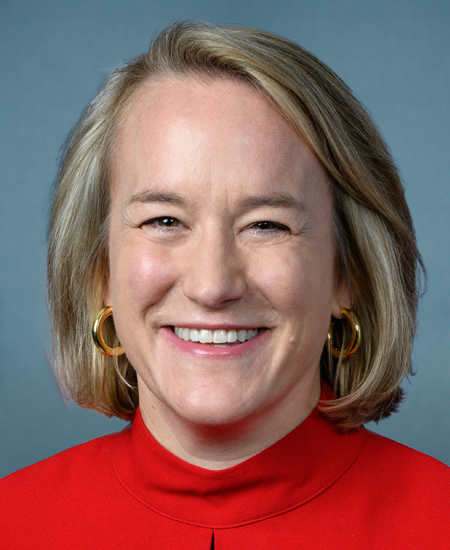
Rep. Nikki Budzinski
Sponsored bills
Maddy summaryHR 3045, the West Bank Violence Prevention Act of 2025, imposes U.S. sanctions on foreign individuals and entities responsible for violence, displacement, or property destruction in the West Bank. It targets those directly involved in attacks on civilians, forced displacement, or property seizures, including settler leaders or officials of groups engaged in such activities. Key provisions require freezing assets of sanctioned individuals within U.S. jurisdiction and blocking their entry into the United States via visa restrictions. The law applies to foreign nationals meeting specific criteria outlined in the bill, not U.S. citizens or entities.
Maddy summaryHRES 340 is a ceremonial resolution recognizing April 2025 as "Community College Month" to celebrate the role of over 1,000 U.S. community colleges. It highlights these institutions' work in providing affordable higher education, workforce training, and economic support - serving 10.2 million students annually and contributing significantly to national economic growth (e.g., generating $898 billion in alumni income in 2020). The resolution emphasizes community colleges' accessibility (average $3,990 tuition for in-district students, 10-mile average student commute) and their role in workforce development across sectors like healthcare and manufacturing. As a non-binding recognition, it does not create new laws or funding.
Maddy summaryHR 2536, the New Producer Economic Security Act, establishes a new program within the Farm Service Agency to help new and small-scale farmers, ranchers, and forest owners access land, capital, and markets. The program provides grants and capital support to eligible community organizations (like tribal governments, cooperatives, or local nonprofits) to directly assist "qualified beneficiaries" - defined as individuals new to farming, operating on rented land, with low income, or facing economic hardship. Key provisions include funding for land acquisition, down payment assistance, succession planning, technical support (including translation services), and conservation practices. The program aims to strengthen food system security by increasing land access and supporting long-term business viability for underserved agricultural producers.
Hot Foods Act of 2025 This bill expands the Supplemental Nutrition Assistance Program (SNAP) to permit the use of SNAP benefits to purchase hot foods or hot food products ready for immediate consumption.
Maddy summaryHR 2396, the Honor Farmer Contracts Act, requires the U.S. Department of Agriculture (USDA) to immediately unfreeze and implement all pre-enactment contracts with farmers and agricultural service entities. The bill mandates rapid payment of all past due amounts owed under these contracts, prohibits canceling signed agreements without a farmer's failure to comply, and requires 60 days' written notice to Congress before closing any local USDA offices like Farm Service Agency or Natural Resources Conservation Service locations. This directly affects farmers and agricultural service providers who have existing contracts with the USDA. The law focuses on ensuring USDA fulfills existing obligations and provides transparency for office closures.
Maddy summaryHR 2357, the Food Secure Strikers Act of 2025, removes a restriction that previously barred workers on strike from receiving Supplemental Nutrition Assistance Program (SNAP) benefits. The bill amends the Food and Nutrition Act of 2008 to eliminate language making workers ineligible for SNAP "as a result of being on strike," ensuring striking workers are not automatically denied food assistance during labor disputes. This change directly affects workers participating in strikes who would otherwise lose access to SNAP benefits. The key mechanism updates the eligibility rules to prevent SNAP ineligibility solely due to strike participation.
Maddy summaryHR 2937, the PROTECT 911 Act, creates federal resources and grants to support the mental health of 911 operators (public safety telecommunicators). It requires the Secretary to develop evidence-based best practices for preventing and treating PTSD and related disorders among these workers, and to create educational materials for mental health professionals about their unique workplace stressors. The bill also authorizes grants for states and local emergency communications centers to establish or enhance evidence-based wellness programs, including peer-support initiatives, to address job-related mental health challenges. These programs aim to improve support for 911 operators who handle emergency calls in 911 centers.
Maddy summaryThis bill increases the federal tax credit for rehabilitating historic buildings. It raises the standard credit rate from 20% to 30% for qualifying small projects (with a $3.75 million expenditure cap) and further increases the cap to $5 million for projects in rural areas. The bill also allows taxpayers to transfer all or part of this credit to another taxpayer, creating a new market for the credit. These changes apply to properties placed in service after the bill's enactment date. The bill directly affects developers and owners of historic properties seeking tax incentives for rehabilitation projects.
Maddy summaryThe DRIVE Act of 2025 requires the Department of Veterans Affairs (VA) to set mileage reimbursement rates for veterans at the federal government's current standard rate for employees using personal vehicles on official business, replacing the previous fixed rate of 41.5 cents per mile. It also mandates that the VA process and pay these reimbursements within 90 days of a veteran's valid request. This directly affects veterans who travel for VA medical appointments or services using their personal vehicles. The bill aligns veteran travel reimbursements with federal employee standards and ensures timely payments.