

Maddy summaryHR 150, the Protecting American Energy Production Act, gives states primary authority to regulate hydraulic fracturing (fracking) for oil and gas on state and private lands, directly affecting state governments and energy producers. The bill requires states to maintain this regulatory role and blocks the President from imposing a fracking moratorium without explicit congressional approval. Key provisions include a Congressional "sense" statement affirming state primacy and a direct prohibition on presidential moratoriums unless authorized by a new law. This bill focuses on shifting regulatory power to states and limiting federal executive action on fracking, without specifying financial impacts or environmental standards.
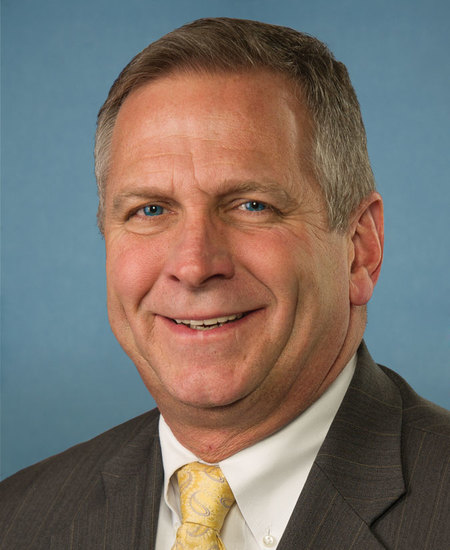
Rep. Mike Bost
Sponsored bills
Maddy summaryHR 912, the COST Act, requires the federal government to analyze the costs and emissions of converting its vehicle fleet. Specifically, it mandates the Comptroller General to compare the costs of replacing gasoline-powered federal light-duty vehicles (standard government cars/trucks) with electric or E85 flex-fuel vehicles, including infrastructure needs. It also requires the Secretary of Energy to use the GREET model to compare lifecycle greenhouse gas emissions from conventional gasoline, E85 flex-fuel, and electric vehicles. Both analyses must be published online or submitted to Congress within one year of the bill's enactment. The bill directly affects the federal government as the owner of the vehicle fleet.
Maddy summaryHR 972, the Outpatient Surgery Quality and Access Act of 2023, updates Medicare payment rules for outpatient surgery centers and hospital outpatient departments. It requires Medicare to publicly compare quality data for these facilities in the same geographic area on Medicare.gov, allows facilities to review data before release, and mandates that the Secretary cite specific criteria when excluding procedures from coverage. The bill also caps patient out-of-pocket costs for outpatient surgery at the hospital deductible amount and aligns annual payment updates between surgery centers and hospitals. These changes aim to improve transparency for beneficiaries and standardize payment adjustments.
Maddy summaryThe HELP Copays Act (HR 830) changes how health insurance plans calculate patient cost-sharing. It requires that payments made by third parties (like pharmacies, charities, or discount programs) toward medical costs count toward a patient's deductible, copay, or out-of-pocket limit. This directly affects insured individuals who receive financial assistance, discounts, or product vouchers for healthcare expenses. The law ensures these external payments reduce the patient's actual out-of-pocket costs more quickly, aligning with existing Affordable Care Act and Public Health Service Act requirements.
Maddy summaryThis bill authorizes a single Congressional Gold Medal to honor all U.S. Army Dustoff crews who served during the Vietnam War (1962-1973). It recognizes their critical role in evacuating nearly 900,000 wounded personnel, including U.S., South Vietnamese, and allied forces, under extreme combat conditions. The medal, designed with input from the Secretary of Defense, will be presented to the U.S. Army Medical Department Museum for permanent display. Duplicate bronze medals may be sold to cover costs, but the primary action is the commemorative recognition of these crews' service.
Beginning Agriculturalist Lifetime Employment Act of 2023 or the BALE Act of 20 2 3 This bill revises the limits for the Department of Agriculture (USDA) conservation loan guarantee program. The bill replaces the existing 80% limit on the portion of a loan that USDA may guarantee with limits that range from 80%-90%, depending on the principal amount of the loan. For socially disadvantaged or beginning farmers or ranchers, the bill replaces the existing 90% limit with limits that range from 85%-95%, depending on the principal amount of the loan. The bill also (1) prohibits USDA from guaranteeing a loan under the program that exceeds $4 million, and (2) requires USDA to adjust the limits annually for inflation.
Maddy summaryHR 976, the TCJA Permanency Act, makes permanent many tax provisions from the 2017 Tax Cuts and Jobs Act (TCJA) that were scheduled to expire after 2025. The bill affects individual taxpayers by keeping lower tax rates, higher standard deductions, increased child tax credits, and other key changes permanently. Key provisions include permanent modifications to income tax brackets, repeal of personal exemptions, limits on state and local tax deductions, and increased estate and gift tax exemptions. These changes would prevent the tax code from reverting to pre-TCJA rates and rules for millions of taxpayers.
Biojet Fuel Research Act This bill establishes a sustainable aviation fuel working group that includes, among others, representatives of specified federal entities, Canada, Mexico, and aviation fuel and manufacturing industries. The working group must report on research and other needs to develop biojet fuels that are comparable in cost and safety to petroleum-based jet fuel.
Maddy summaryHR 936, the Tanning Tax Repeal Act of 2023, repeals a 10% federal excise tax on indoor tanning services that was originally enacted under the Affordable Care Act. This bill directly affects tanning salons and businesses providing indoor tanning services by eliminating their obligation to pay this tax on customer services. The repeal applies to services performed after the bill's enactment date, removing the tax provision from the Internal Revenue Code. The bill does not create new requirements or alter other tax policies, solely removing this specific tax.
Maddy summaryHR 935, the Safety and Opportunity for Girls Act of 2023, amends Title IX of the Education Amendments of 1972 to define "sex" as determined by reproductive biology and genetics at birth, and clarifies that "sex-segregated" means limited to or separated by that sex. The bill explicitly prohibits the Secretary of Education from requiring schools to eliminate sex-segregated bathrooms, locker rooms, or athletic/academic programs as a condition for receiving federal funding under Title IX. It directly affects educational institutions receiving federal funds by preventing federal enforcement actions that might compel them to abandon existing sex-segregated facilities or programs. The bill focuses on altering the legal interpretation of Title IX regarding sex-based accommodations, not creating new programs or services.