

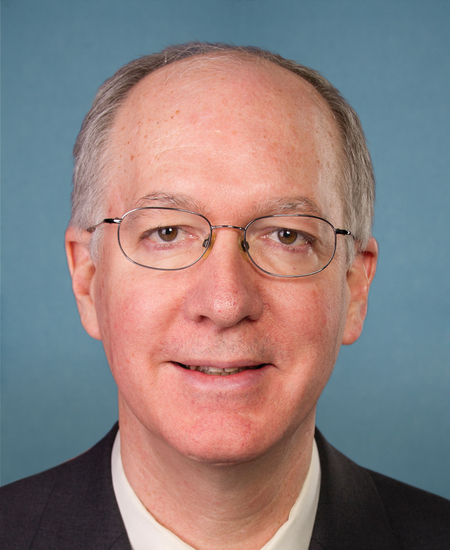
Photo of Bill Foster
D United States House · District 11 · Illinois On the 2026 ballot

Rep. Bill Foster

Compare
Total votes
2,837
all sessions
Attendance
99%
19 missed
Higher than 82% of chamber peers
With party
98%
of cast votes
Near the chamber average
Bipartisan score
1%
crosses aisle rarely
Near the chamber average
Sponsored
1,003
bills & resolutions
Near the chamber average
Committees
5
assignments
1,003 bills and resolutions

Sponsored bills

Total
1,003
Primary
119
Co-sponsor
884
This page
1,003
matching current filters
Primary HR 7283
In committee · United States House · Lead sponsor
Examining Opioid Treatment Infrastructure Act of 2024

Maddy summaryHR 7283, the Examining Opioid Treatment Infrastructure Act of 2024, directs the Comptroller General to conduct a comprehensive study and report to Congress within 24 months of enactment. The study will evaluate the capacity, availability, and needs of inpatient and outpatient opioid treatment services across the U.S., including geographic disparities, evidence-based treatment options, access for specific populations (like pregnant women, adolescents, and American Indian/Alaska Native communities), and barriers to overdose data reporting. This bill does not create new programs or funding but mandates a detailed assessment to inform future policy decisions on opioid treatment infrastructure.

In committee Feb 9, 2024 0 co-sponsors
Primary HR 7282
In committee · United States House · Lead sponsor
Medicaid Coverage for Addiction Recovery Expansion Act

Medicaid Coverage for Addiction Recovery Expansion Act This bill allows state Medicaid programs to cover residential addiction treatment facility services for adults between the ages of 22 and 64 if such services are offered as part of a full continuum of evidence-based treatment services. Residential addiction treatment facility services are medically necessary inpatient services provided in an accredited, size-limited facility for the purpose of treating a substance-use disorder within a specified time period. In addition, the bill establishes a grant program for states to expand infrastructure and treatment capabilities of existing youth addiction treatment facilities that (1) provide addiction treatment services to youths under Medicaid or the Children's Health Insurance Program (CHIP), and (2) are located in communities with high numbers of medically underserved populations of at-risk youths. At least 15% of grant funds awarded to a state must be used for making payments to rural facilities.

In committee Feb 9, 2024 0 co-sponsors
Co-sponsor HRES 1002
In committee · United States House · Co-sponsor
Recognizing the cultural and historical significance of Lunar New Year in 2024.

Maddy summaryHRES 1002 is a symbolic House resolution recognizing the cultural and historical significance of Lunar New Year (celebrated as the Year of the Dragon in 2024). It acknowledges the holiday's 4,000-year history in China, its celebration across Asia (including Seollal and Tết), and its significance to Asian Americans and others in the U.S. The resolution expresses respect for those observing the holiday and wishes them a happy new year, but it does not create new laws, policies, or funding. As a ceremonial resolution, it has no direct effect on legislation or constituents.

In committee Feb 7, 2024 1 co-sponsor
Co-sponsor HR 7297
In committee · United States House · Co-sponsor
Homebuyers Privacy Protection Act

Maddy summaryThis bill restricts how credit reporting companies share homebuyers' credit reports during mortgage applications. It prevents companies from sending these reports to third parties (like marketers) just because a lender requested them for a mortgage. Only specific entities can receive the reports: the mortgage lender who originated the loan, the company servicing the loan, or the bank holding the homebuyer's account. This directly protects homebuyers' privacy by limiting unauthorized sharing of their financial data.

In committee Feb 7, 2024 1 co-sponsor
Primary HR 7201
In committee · United States House · Lead sponsor
WISE Government Act of 2024

Maddy summaryThis bill requires federal agencies with scientific libraries (including Executive departments, military departments, and agencies like EPA and NASA) to make journal subscription costs transparent and improve employee access to scientific journals. Specifically, it prohibits contracts hiding subscription costs, mandates agencies to provide clear intranet access to library subscriptions for all employees within six months, and requires a 12-month report on improving access to scientific journals. The report must survey current subscriptions, identify barriers like purchasing inefficiencies or regional access issues, and propose solutions. These changes aim to increase transparency and efficiency in how government agencies access scientific research.

In committee Feb 1, 2024 0 co-sponsors
Primary HR 7168
In committee · United States House · Lead sponsor
Investor Choice Act of 2024

Maddy summaryThe Investor Choice Act of 2024 prohibits financial firms (brokers, dealers, investment advisers) from requiring mandatory arbitration in disputes with retail investors. It bans clauses in contracts or bylaws that force investors to use arbitration instead of court or class action lawsuits. The bill voids such mandatory arbitration provisions in new agreements and existing contracts (except for arbitrations already started before enactment). This directly affects retail investors who gain the right to choose court or class action options for securities-related disputes.

In committee Jan 31, 2024 0 co-sponsors
Co-sponsor HR 7127
In committee · United States House · Co-sponsor
FAIR Act

Maddy summaryHR 7127, the FAIR Act, establishes pay adjustments for federal employees in 2025. It increases base pay by 4% for most federal workers under statutory pay systems and for "prevailing rate" employees (like those in specific geographic areas), while raising locality pay rates by 3.4%. The bill directly affects all federal employees receiving pay under these systems, as it modifies their 2025 salary calculations. These changes are based on statutory formulas under Title 5 of the U.S. Code, with no new policy mechanisms beyond the specified percentage increases. The adjustments apply to pay rates in effect as of the end of fiscal year 2024.

In committee Jan 30, 2024 1 co-sponsor
Co-sponsor HR 7075
In committee · United States House · Co-sponsor
HOME Investment Partnerships Reauthorization and Improvement Act of 2024

Maddy summaryThe HOME Investment Partnerships Reauthorization and Improvement Act of 2024 reauthorizes and updates the HOME Investment Partnerships Program, which provides federal funds to states and local governments to develop affordable housing. The bill increases annual funding from $5 billion in 2024 to $6.08 billion in 2028, modifies eligibility requirements for participating jurisdictions, and eliminates a deadline for committing funds. It reforms homeownership resale restrictions, establishes a home loan guarantee program with $2 billion in initial funding (increasing with inflation), and enhances protections for tenants in small-scale affordable housing (defined as housing with no more than 4 rental units). These changes aim to make the program more flexible and effective in creating and preserving affordable housing options for low- and moderate-income households.

In committee Jan 25, 2024 1 co-sponsor
Co-sponsor HR 6747
In committee · United States House · Co-sponsor
Clean Electricity and Transmission Acceleration Act of 2023

Maddy summary# Summary of the Clean Electricity and Transmission Acceleration Act of 2023 This comprehensive legislation establishes significant reforms across environmental policy, energy infrastructure, and community engagement frameworks. Key provisions include: 1. **Environmental Justice Framework**: - Creates an Office of Environmental Justice and External Civil Rights at EPA - Establishes a White House Environmental Justice Interagency Council - Prohibits disparate impact discrimination under Title VI of the Civil Rights Act - Requires community impact reports for Federal actions affecting environmental justice communities 2. **NEPA Reforms**: - Mandates 90-day public comment periods for environmental justice communities - Requires translation of documents into languages spoken by 5%+ of affected communities - Requires assessment of cumulative impacts, including historical pollution - Requires climate change impact assessments using social cost of carbon - Establishes searchable digital archives of NEPA documents 3. **Community Engagement Requirements**: - Creates "Senior Community Engagement Officers" and "Tribal Community Engagement Officers" at all federal agencies - Requires community benefits agreements for major projects - Establishes grants for capacity building in environmental justice communities - Creates an E-NEPA permitting portal for public access to documents 4. **Energy Policy Provisions**: - Includes reforms for FERC (Federal Energy Regulatory Commission) environmental justice liaison - Establishes requirements for intervenor funding at FERC - Contains provisions for transmission planning and infrastructure 5. **Tribal Consultation**: - Strengthens tribal consultation requirements for projects affecting tribal lands - Requires government-to-government relationships with tribal nations The legislation represents a significant shift toward integrating environmental justice considerations throughout the federal permitting and review process, with specific requirements for meaningful community engagement, transparency, and consideration of cumulative impacts on vulnerable populations. It also establishes new funding mechanisms and administrative structures to support these environmental justice goals.

In committee Jan 25, 2024 1 co-sponsor
Co-sponsor HR 7056
In committee · United States House · Co-sponsor
Access to Family Building Act

Maddy summaryHR 7056, the Access to Family Building Act, establishes federal rights for individuals to access assisted reproductive technology (ART) like IVF without unreasonable restrictions, directly affecting patients seeking fertility treatments and health care providers offering ART services. The bill prohibits states from imposing limitations on ART that are more burdensome than those for comparable medical procedures, fail to advance safety, or unduly restrict access, while allowing health and safety regulations that are necessary and least restrictive. It creates federal enforcement mechanisms, including lawsuits by the Attorney General or affected individuals to challenge violating state laws, and preempts conflicting state regulations. The bill explicitly preserves state authority over health/safety regulations and does not alter existing state insurance coverage laws for ART.

In committee Jan 19, 2024 1 co-sponsor
Showing 401 to 410 of 1,003 bills
Previous 1 … 40 41 42 … 101 Next