

Maddy summaryThe LIFT AI Act (HR 9211) provides federal funding to develop AI literacy education for K-12 students and teachers. It directs the National Science Foundation to award grants to colleges, nonprofits, or consortia for creating classroom curriculum, teacher training, and evaluation tools focused on AI skills like ethical use, critical interpretation, and problem-solving. The bill specifically targets schools (K-12) and aims to integrate AI literacy into existing lessons through project-based learning and professional development. Key provisions include developing learner-centered materials, training educators on AI proficiency, and creating tools to assess student progress in AI literacy.
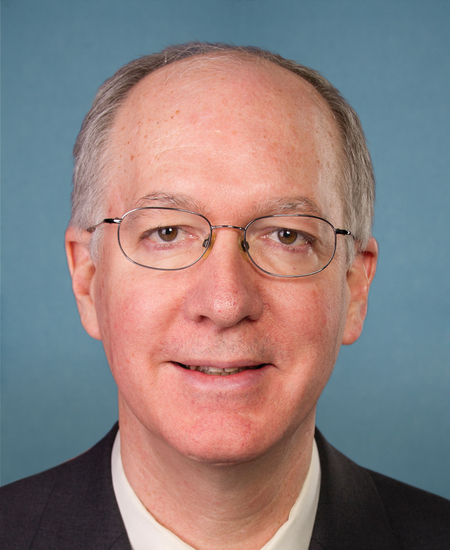
Rep. Bill Foster
Sponsored bills
Maddy summaryHR 9215, the Workforce for AI Trust Act, creates new fellowship programs at the National Science Foundation (NSF) to support graduate and postdoctoral researchers studying ethical AI development and governance. It requires institutions to recruit diverse candidates committed to "trustworthy AI" and funds tuition, stipends, and research expenses for up to three years. The bill also directs NSF to expand AI skills training for STEM students through workshops and professional development, while NIST is directed to develop technical standards for AI risk management careers like testing and evaluation. These provisions directly affect researchers, universities, and future AI professionals by building workforce capacity in ethics and governance.
Maddy summaryThe Small Business Artificial Intelligence Advancement Act directs the National Institute of Standards and Technology (NIST) to develop or identify free, practical resources to help small businesses understand and adopt artificial intelligence. These resources - including technical standards, best practices, case studies, and benchmarks - must be technology-neutral, applicable across business types, and based on international standards. NIST must review and update these resources every two years and report to Congress on their development and effectiveness within four years. The resources are voluntary, and NIST will coordinate with the Small Business Administration to distribute them through existing channels. This bill directly supports small business concerns as defined by the Small Business Act.
Maddy summaryThe CREATE AI Act of 2023 establishes a National Artificial Intelligence Research Resource (NAIRR) to improve access to AI research tools, computational resources, data, and educational materials for researchers and students across the United States. The NAIRR will provide computational resources, curated datasets, educational tools, and access to AI testbeds, with special emphasis on supporting groups historically underrepresented in STEM fields. Governed by a Steering Subcommittee chaired by the Director of the Office of Science and Technology Policy and managed by a Program Management Office within the National Science Foundation, the NAIRR includes specific requirements for ethical AI development, privacy protections, and security measures. The resource will be accessible to researchers at U.S. institutions of higher education, nonprofits, government agencies, and certain businesses, with priority given to projects addressing privacy, ethics, civil rights, and AI safety.
Maddy summaryThe AI Grand Challenges Act of 2024 creates a National Science Foundation program to award cash prizes for solving specific artificial intelligence challenges in critical U.S. priority areas like health, national security, energy, and cancer research. It requires the NSF to establish competitions with clear problem statements and success metrics, including a mandatory cancer-focused competition offering at least $10 million in prizes within one year of enactment. Eligible participants must be U.S. entities or U.S. citizens/permanent residents, and winners receive minimum $1 million prizes per competition. The NSF must publish competition details online, report annually to Congress on program outcomes, and ensure public accessibility of all challenges.
Maddy summaryHR 8658, the Emerging Digital Identity Ecosystem Report Act of 2024, requires the Transportation Security Administration (TSA) to submit a report to Congress within 180 days of the bill's enactment. The report must describe the current state of digital identity systems in transportation, evaluate their homeland security benefits and risks, and explore how they could enhance security and U.S. competitiveness. It specifically asks the TSA to include input from private companies, state/local governments, tribes, and territories. This bill does not create new regulations but mandates a study to inform future policy decisions. The report will focus on transportation sector applications, such as secure traveler verification systems.
Maddy summaryHR 3507, the "Yes In My Backyard Act," requires local governments receiving certain federal Community Development Block Grants (CDBG) to report on their progress toward adopting specific housing-friendly land use policies. It directly affects cities and counties that administer CDBG funds by mandating they submit plans tracking 22+ policy changes, such as allowing duplexes in single-family zones, reducing parking requirements, or streamlining permits. The bill does not require local governments to adopt these policies but requires them to document their current status and plans for implementation. This reporting mechanism aims to identify barriers to affordable housing without binding local governments to specific actions. The requirement applies to CDBG recipients starting one year after the bill's enactment.
Maddy summaryHR 9252 reauthorizes and updates the National Windstorm Impact Reduction Program through 2029, increasing annual funding from $6.2 million to $8.0 million for research and mitigation efforts. The bill expands the program’s focus to include wind-driven rain, storm surge, and climate change impacts on windstorms, requiring new research on interdisciplinary collaboration (e.g., social scientists with engineers) and emerging technologies like machine learning. It directs federal agencies to support community resilience, property owner adoption of protective building methods, and analysis of future research infrastructure needs. The legislation directly affects federal agencies, researchers, construction industry stakeholders, and communities vulnerable to windstorms by mandating specific research priorities and funding levels through 2029.
Maddy summaryHR 9205, the National Fab Lab Network Act of 2024, establishes a nonprofit corporation to create and connect digital fabrication facilities ("fab labs") across the United States. The bill directs the network to prioritize establishing at least one fab lab in each Congressional District, with special focus on underserved communities, while providing standardized guidelines, a national registry, and resources for sustainable operation. These facilities - equipped with tools for digital design and physical creation - aim to provide universal access to fabrication technology for education, entrepreneurship, job training, and community problem-solving. The nonprofit network will operate independently of the government but must report annually to Congress on its progress.
Maddy summaryThis bill establishes minimum annual funding and staffing requirements for two key financial oversight entities. It mandates the Office of Financial Research (OFR) maintain at least $124.6 million in annual funding (adjusted yearly using government wage data) and 231 full-time equivalent staff. It also requires the Financial Stability Oversight Council (FSOC) to receive a minimum $15.3 million annually from the OFR for staffing and operations, with similar annual adjustments. The bill prohibits Congressional Appropriations committees from reviewing these funding levels, aiming to preserve the independence of these bodies.